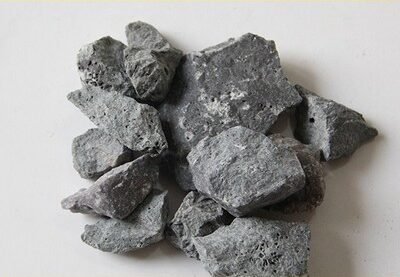
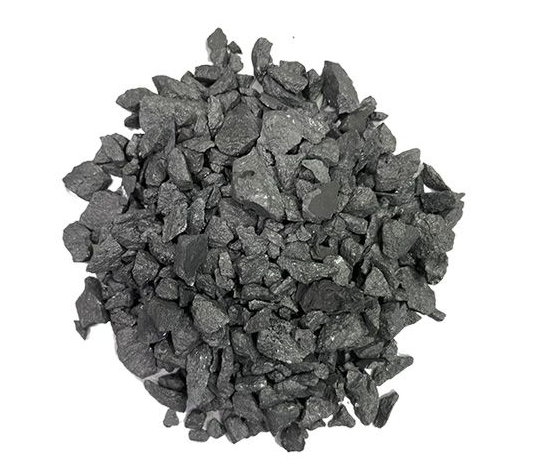
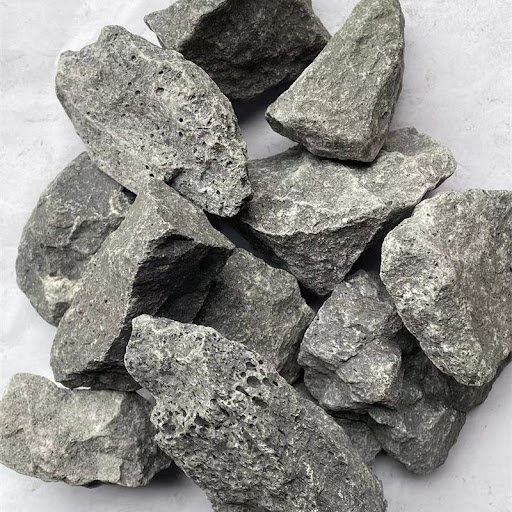
In steelmaking deoxidation, Si-Ca-Mn composite deoxidizers have drawn increasing attention from steel mills in recent years thanks to their unique synergistic deoxidation mechanism. Yet one question deserves serious consideration: Is Si-Ca-Mn deoxidizer truly suitable for every steel grade? And what do different Si:Ca:Mn ratios actually mean for deoxidation efficiency and steel quality?
This article examines the issue from four angles — procurement needs, industry research, procurement guide, and supplier comparison — to help you make a more scientific and pragmatic purchasing decision.
The core value of Si-Ca-Mn deoxidizer lies in its composite deoxidation mechanism. Calcium has an extremely strong affinity for oxygen, sulfur, and nitrogen, while silicon and manganese also deliver excellent deoxidation performance. Their synergy effectively purifies molten steel. Production data shows that after using Si-Ca-Mn deoxidation, steel fluidity improves markedly, continuous casting nozzle clogging is effectively alleviated, and cost per ton of steel can be reduced by roughly RMB 1.5–2.5 compared with using ferrosilicon, ferromanganese, and calcium-silicon separately.
But Si-Ca-Mn is not a “one-size-fits-all” solution. The following scenarios require careful evaluation: for plain carbon and low-alloy steels where Si-Mn plus aluminum deoxidation already meets requirements, the more expensive Si-Ca-Mn may not be necessary; for steel grades sensitive to residual calcium, the calcium addition must be strictly controlled; in induction furnaces with basic linings, calcium reacts with magnesia refractories and may damage the lining.
Before purchasing, answer a few key questions: Does your steel grade require high cleanliness? Has nozzle clogging occurred during continuous casting? Is your current deoxidation cost too high? Is your furnace lining compatible with calcium-bearing alloys? Could Si-Mn plus aluminum serve as a viable alternative?
Deoxidation performance verified. Trial data from a steel mill shows that in 6 heats using Si-Ca-Mn for normal deoxidation, average oxygen content before the argon station was 60.9 ppm with average silicon content of 0.19%; in the control group without Si-Ca-Mn, average oxygen content before the argon station rose to 73.9 ppm. The conclusion: Si-Ca-Mn can effectively control endpoint oxygen in the 50–70 ppm range.
Temperature sensitivity. Tapping temperature significantly affects deoxidation efficiency. Trials show that for every ~13°C increase in tapping temperature, oxygen content before the argon station rises accordingly. Strict control of tapping temperature is therefore critical when using Si-Ca-Mn.
Inclusion evolution patterns. Research on Q355B steel shows that with Si-Mn deoxidation, inclusions continuously agglomerate and grow during refining, with the proportion of large-particle inclusions gradually increasing. This indicates that although Si-Ca-Mn has excellent deoxidation capability, it must be paired with proper refining processes to control inclusion morphology.
The aluminum-free deoxidation trend. In recent years, aluminum-free deoxidation has begun partially replacing aluminum deoxidation routes to improve steel cleanliness. Although aluminum deoxidation can reduce oxygen content below 10 ppm, it may cause nozzle clogging and fatigue failure issues. Si-Ca-Mn deoxidation has found its position precisely within this trend.
Chemical composition control is core. Mainstream industry benchmarks require: Si ≥ 13%, Ca ≥ 10%, Mn ≥ 18%, with strict control of harmful elements S ≤ 0.4% and P ≤ 0.25%. In typical product specifications, Si content commonly ranges from 40–50%, Ca from 17–23%, and Mn from 16–23%.
Different steel grades have different sensitivities to ratio. Manganese-dominant formulations (Mn 50–70%, Ca 10–30%, Si 10–25%) suit deoxidation and desulfurization of carbon and low-alloy steels, with typical additions of 1.5–2.5 kg per ton of steel. Higher-silicon formulations (Si 40–60%, Ca 10–20%, Mn 10–20%) are better suited for deep deoxidation of quality steels, low-carbon steels, and wire-drawing steels, at roughly 3–5 kg per ton of steel.
Physical properties are equally critical. Particle size distribution should match the mill’s feeding equipment to ensure melting rate and reaction uniformity. Moisture content should be controlled within 2% to prevent introducing harmful gases such as hydrogen.
Matching with smelting processes. In converter tapping, Si-Ca-Mn is usually added to the ladle before ferroalloys. Addition rates for different steel grades (reference range: 1.0–2.5 kg/t steel) should be determined through actual trials. For grades requiring desulfurization, calcium assists desulfurization and improves slag fluidity while raising recovery rates of other elements by 2%–5%.
Facing a market of suppliers with widely varying quality, how do you identify a reliable partner? As a key member of the Anyang ferroalloy industrial cluster, Beifang Alloy (www.beifangalloy.com) offers advantages in the following areas:
Technical capability. Products from small workshops often have unstable composition, causing fluctuations in deoxidation performance. Beifang Alloy is equipped with fully automated batching systems and strict in-process quality control, ensuring batch-to-batch compositional stability and preventing steel grade rejections caused by composition segregation.
Balance between cost and price. The lowest price often means insufficient effective elements or crude processing. By optimizing formulations and scaling production, Beifang Alloy maintains price competitiveness while ensuring Ca, Si, and Mn effective elements meet standards — helping customers achieve true cost reduction rather than quality reduction.
Supply and service. Beifang Alloy maintains a complete production, warehousing, and logistics system, capable of flexibly responding to urgent orders and providing storage rotation guidance to prevent deoxidizers from absorbing moisture and oxidizing.
The fundamental difference between Si-Ca-Mn deoxidizers and traditional options lies not in the formulation itself, but in an upgraded steelmaking philosophy — moving from “merely meeting deoxidation requirements” toward “pursuing clean steel and comprehensive economic benefits.” The right Si:Ca:Mn ratio depends on your steel grade, process conditions, and quality objectives. Contact Beifang Alloy for technical recommendations and samples tailored to your specific steel grade.
Beifang Alloy | Ferroalloy Factory
🌐 www.beifangalloy.com
📧 info@hnxyie.com