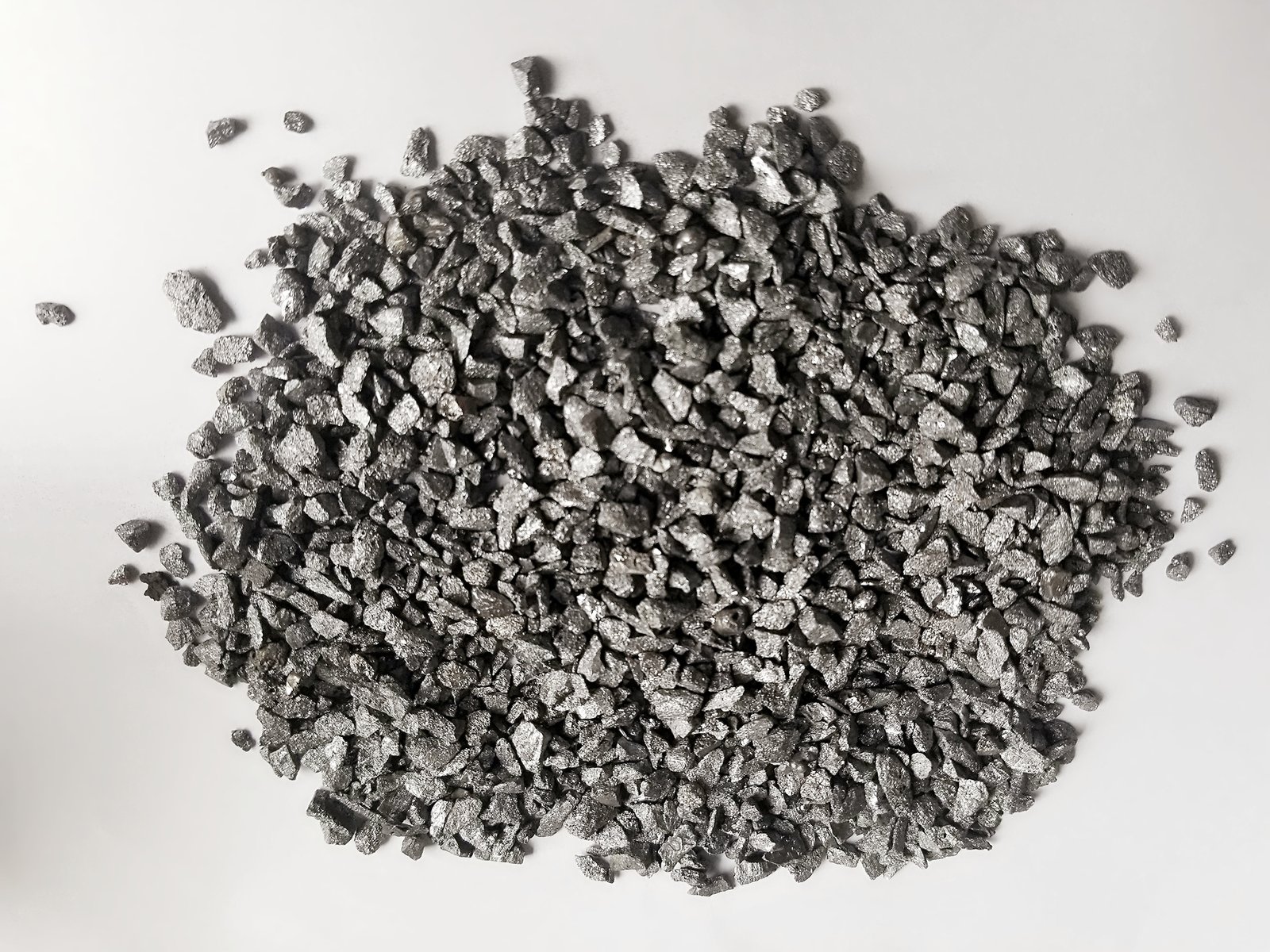
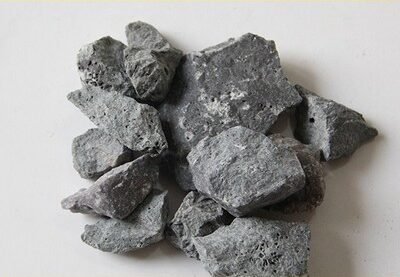
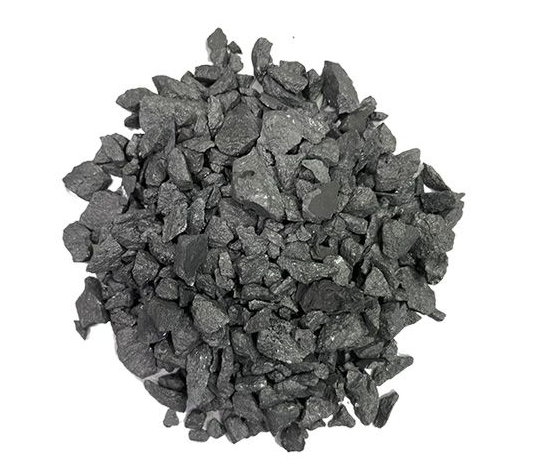
In steelmaking, oxygen content is one of the core indicators of steel cleanliness. Excessive oxygen leads to increased inclusions, which seriously affects the plasticity, impact toughness, and fatigue properties of steel. Traditionally, many steel mills rely on aluminum or Si-Al-Ba-Ca deoxidizers to control oxygen content, but each has its limitations. In recent years, Si-Ca-Mn composite deoxidizer has attracted increasing attention for its ability to reduce oxygen content from 220ppm to below 70ppm with just 1.2–1.5 kg per ton of steel. As a ferroalloy manufacturer, Beifang Alloy has organized the core value of this product for steel procurement professionals from four dimensions: procurement needs, industry research, procurement guide, and supplier comparison.
Aluminum is the most commonly used strong deoxidizer in steelmaking and can reduce oxygen content to very low levels. However, its deoxidation product Al₂O₃ has a high melting point and is difficult to float out, easily remaining in steel as brittle inclusions. It also causes continuous casting nozzle clogging, affecting production flow. Although Si-Al-Ba-Ca improves deoxidation effectiveness to some extent, there is still room for improvement in cost optimization and steel fluidity enhancement.
The core value of Si-Ca-Mn deoxidizer lies in its “composite synergy.” Silicon and calcium have an extremely strong affinity for oxygen, enabling deep deoxidation. Calcium can also react with sulfur and nitrogen, and its deoxidation products have lower melting points and are easier to float out, thereby purifying the steel and improving fluidity. Manganese offers an additional economic benefit: it can partially replace silicon-manganese alloy usage, completing manganese alloying simultaneously with deoxidation, reducing subsequent alloy addition steps.
In short, the core reason for purchasing Si-Ca-Mn is: achieve cleaner steel and smoother continuous casting at lower overall cost.
According to steel mill trial data, after using Si-Ca-Mn deoxidizer, the average oxygen content before argon station stirring can be stabilized at around 60.9ppm, with average silicon content of 0.19%. The control group (without Si-Ca-Mn) showed oxygen content of 73.9ppm. In converter smelting of plain carbon steel, adding 1.2–1.5 kg/ton of Si-Ca-Mn to the ladle can reduce oxygen content from 220ppm to below 70ppm.
It is important to note that tapping temperature significantly affects deoxidation efficiency. Tests show that for every ~13°C increase in tapping temperature, the oxygen content before the argon station rises correspondingly. Therefore, tapping temperature must be strictly controlled when using Si-Ca-Mn to avoid excessive steel oxidation.
In recent years, to improve steel cleanliness and solve nozzle clogging issues, non-aluminum deoxidation routes have gained more attention. Although aluminum deoxidation can reduce oxygen content to below 10ppm, the fatigue failure and continuous casting problems caused by Al₂O₃ inclusions remain difficult to avoid. Si-Ca-Mn deoxidizer has found its positioning in this trend—not pursuing extremely low oxygen content, but achieving better inclusion morphology and process stability while controlling oxygen content within a reasonable range.
Si-Ca-Mn currently has no unified national standard, and specifications vary by manufacturer. Common specifications include: Ca 25-30%, Si 18-23%, Mn 8-13%; also Ca 16%, Si 50%, Mn 16% and other ratios. When purchasing, the content range of core elements must be clearly defined with the supplier based on specific steel grades and smelting processes. For particle size, common supply size is 2-8mm, and can also be customized according to user requirements.
Si-Ca-Mn is not a “universal deoxidizer.” The following scenarios require careful evaluation:
Plain carbon steel and low-alloy steel: If silicon-manganese plus aluminum deoxidation already meets requirements, using the more expensive Si-Ca-Mn may not be necessary. Research shows that for Q355B and similar steel grades, silicon-manganese deoxidation alone can meet production requirements.
Steel grades sensitive to residual calcium: Calcium addition must be strictly controlled; excess may negatively affect mechanical properties.
Medium-frequency furnaces with alkaline linings: Calcium reacts with magnesia refractory to form monticellite, which may damage the furnace lining.
Before deciding to purchase, evaluate the following questions: Does the steel grade require high cleanliness? Has nozzle clogging been encountered in continuous casting? Is the current deoxidation solution cost too high? Is the furnace lining compatible with calcium-containing alloys? Can silicon-manganese plus aluminum serve as a viable alternative?
When selecting a Si-Ca-Mn supplier, consider the following dimensions:
Product Line Completeness. Quality ferroalloy suppliers typically offer not only standard Si-Ca-Mn but can also adjust composition ratios and particle sizes according to customer needs. As a specialized manufacturer of steelmaking deoxidizers, Beifang Alloy (Anyang County Beifang Ferroalloy Factory) offers a product line covering Si-Ca-Mn, Si-Ca-Mn-Al, Si-Ca-Al, and more. The company has large dry-pressing production lines that can press various alloys into flat spheres according to required compositions, meeting different smelting scenarios.
Technical Support Capability. The effectiveness of deoxidizers is closely related to specific process conditions at steel mills. Whether a supplier can provide formula recommendations and technical guidance is an important indicator distinguishing “selling products” from “providing services.” Beifang Alloy’s commitment to “providing deoxidizer formulas free of charge” reflects confidence in its product application technology.
Cost-Effectiveness Record. Whether a supplier is willing to provide trial products for steel mills to verify deoxidation results and overall cost savings under actual working conditions is an effective way to reduce procurement risk. According to industry data, proper application of Si-Ca-Mn deoxidizer can help steel mills reduce cost by 20-30 RMB per ton of steel.
Supply Stability. Si-Ca-Mn production depends on stable supply of raw materials such as silicon, calcium, and manganese. Choosing a manufacturer with a mature production system and raw material channels helps ensure long-term supply stability.
If you would like to learn more about Si-Ca-Mn deoxidizer selection recommendations or request samples, please visit Beifang Alloy’s website at www.beifangalloy.com or email us at info@hnxyie.com.