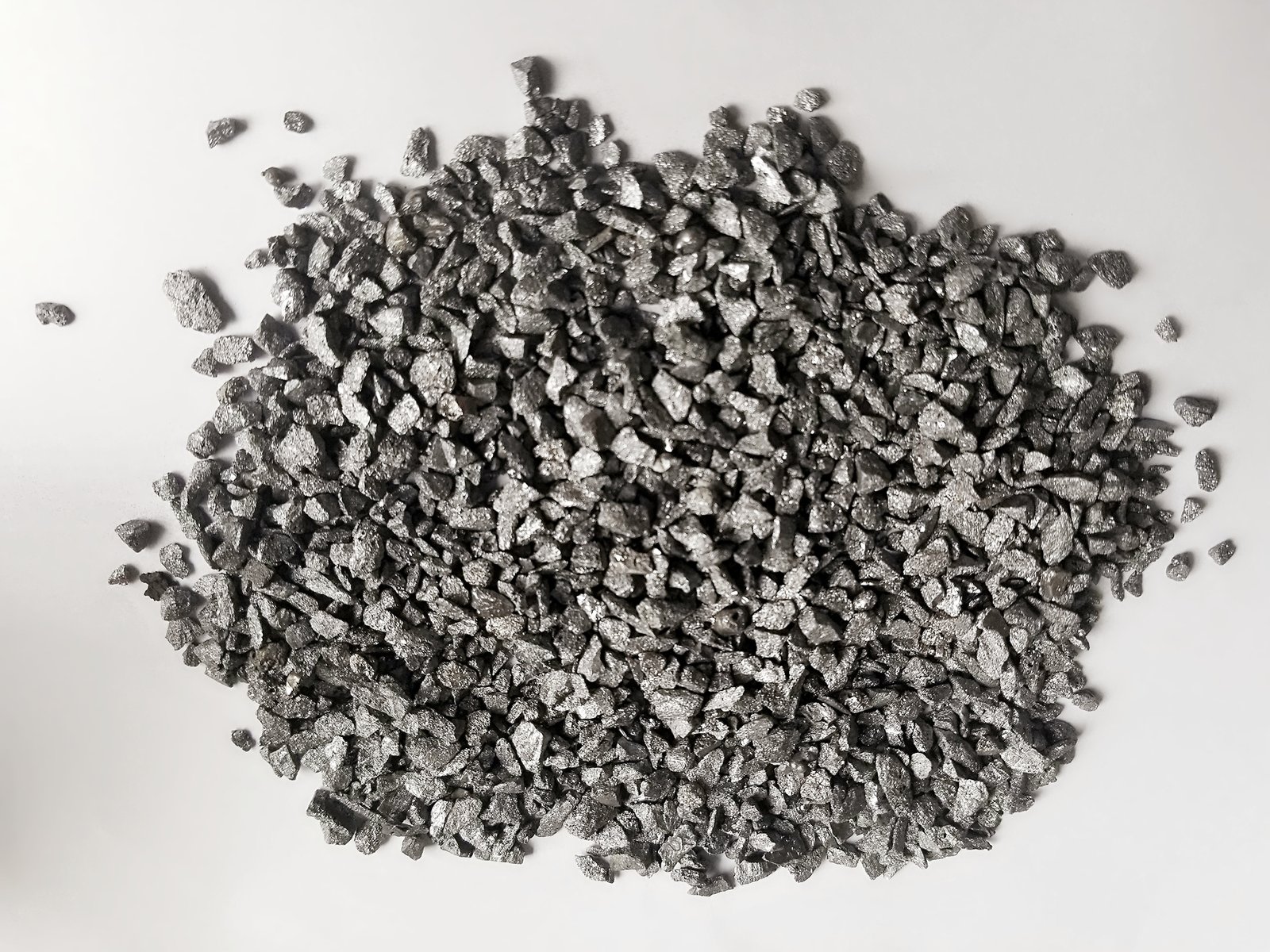
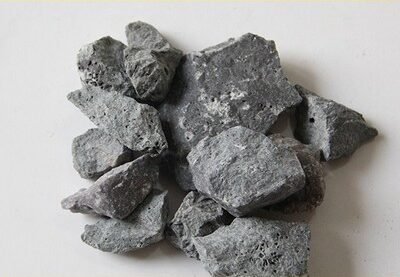
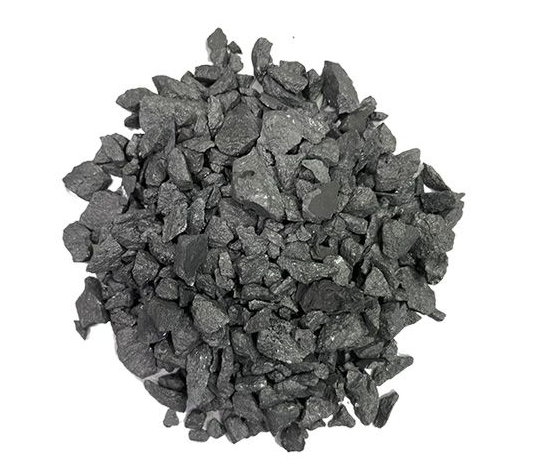
In ductile iron and cast steel production, nodulizers and inoculants are almost universally recognized as standard practice. But many foundries and steel mills still rely on traditional aluminum blocks, ferrosilicon, or Si-Al-Ba for deoxidation. If you are struggling with nozzle clogging in continuous casting, subsurface blowholes in castings, or persistently high deoxidation costs, Si-Ca-Mn deoxidizer may be an option worth serious evaluation.
Beifang Alloy (Anyang County Qugou Town Beifang Ferroalloy Factory), as a professional manufacturer of steelmaking deoxidizer raw materials, draws on years of experience serving electric furnace, converter, and induction furnace customers to systematically break down the application value and selection logic of Si-Ca-Mn deoxidizer across four dimensions: procurement needs, industry research, procurement guide, and supplier comparison.
Not every steel mill needs Si-Ca-Mn. Blindly replacing your existing deoxidation process may bring unnecessary cost increases. The following three core questions can help you quickly determine whether it is worth evaluating:
First, is your steel grade sensitive to inclusions?
Steel deoxidized with pure aluminum generates solid Al₂O₃ inclusions with a high melting point (approximately 2050°C). These hard, brittle particles not only degrade steel toughness but also readily deposit on nozzle walls, causing “nozzle clogging” in continuous casting and even casting interruptions. If your products include bearing steel, alloy structural steel, stainless steel, or grades with fatigue life requirements, the calcium in Si-Ca-Mn can modify high-melting-point Al₂O₃ into low-melting-point calcium aluminates (such as 12CaO·7Al₂O₃, melting point approximately 1400°C), keeping them liquid in the steel bath for easy flotation and removal.
Second, is your continuous casting operation plagued by nozzle clogging?
This is a repeatedly verified causal chain: aluminum deoxidation → solid Al₂O₃ inclusions → nozzle clogging. The essence of calcium treatment is “modification” rather than “removal” — by converting solid inclusions into liquid ones, it fundamentally changes their adhesion behavior on nozzle walls. Industry practice data shows that after adopting Si-Ca-Mn composite deoxidation, nozzle clogging can be significantly alleviated and continuous casting sequence length markedly improved.
Third, is your overall deoxidation cost too high?
In traditional processes, ferrosilicon, ferromanganese, and calcium-silicon alloy must be purchased separately and added separately. Si-Ca-Mn composite deoxidizer combines all three through pre-melting alloying. Some mills report comprehensive cost reductions of 20-30 RMB per ton of steel. These savings come from multiple sources: improved alloy recovery rates, reduced alloy consumption, and improved continuous casting efficiency from better steel fluidity.
Procurement Needs Self-Assessment Checklist:
| Assessment Item | Yes/No |
|---|---|
| Steel grades sensitive to inclusions (bearing steel, alloy steel, stainless steel, etc.) | ☐ |
| Nozzle clogging issues in continuous casting | ☐ |
| Current deoxidation process has high comprehensive cost | ☐ |
| Induction furnace lining is basic and calcium-containing alloys may attack the lining | ☐ |
| Si-Mn + Al deoxidation already meets quality requirements | ☐ |
Synergistic effects of deoxidation capability. Manganese itself has weak deoxidation ability, but it can significantly enhance silicon’s deoxidation effect. Thermodynamic calculations show that when manganese content in steel increases from zero to 0.8%, under a silicon content of 0.05%, the equilibrium oxygen content can drop from 0.023% to 0.016%. When manganese and silicon deoxidize simultaneously, the MnO·SiO₂ produced has a melting point of only 1270°C, far lower than MnO (1785°C) and SiO₂ (1713°C). Low-melting-point liquid products are easier to coalesce and float out. The addition of calcium further modifies deoxidation products into calcium aluminates and calcium silicates that are even easier to discharge.
Verification from measured data. In six heats where a steel mill used Si-Ca-Mn for normal deoxidation, the average oxygen content before the argon station was 60.9 ppm, with average silicon content of 0.19%. In the control group (without Si-Ca-Mn), oxygen content before the argon station rose to 73.9 ppm. This means Si-Ca-Mn can consistently control endpoint oxygen in the 50-70 ppm range — precisely the “sweet spot” that avoids both nozzle clogging (too low oxygen leading to excess Al₂O₃) and subsurface blowholes (too high oxygen leading to CO bubbles).
Temperature sensitivity cannot be ignored. For every approximately 13°C increase in tapping temperature, oxygen content before the argon station rises correspondingly. This means that when using Si-Ca-Mn, tapping temperature must be more strictly controlled to avoid over-oxidation of steel that would offset the deoxidation effect.
Industry trend: non-aluminum deoxidation is gaining more attention. In the pursuit of cleaner steel, some mills have begun replacing or partially replacing aluminum deoxidation routes with Si-Ca-Mn. Although aluminum can deoxidize down to below 10 ppm, the nozzle clogging and fatigue failure risks from its Al₂O₃ inclusions are prompting the industry to re-examine the balance between “deoxidation depth” and “inclusion controllability.”
Step One: Clarify chemical composition requirements.
Different steel grades require different Si-Ca-Mn ratios. Common specifications are: Si 18-35%, Ca 16-30%, Mn 8-20%. Aluminum content should be controlled to avoid forming separate Al₂O₃. For aluminum-killed steel, Ca ≥ 10% is typically needed to ensure sufficient calcium treatment capability.
Step Two: Choose the physical form.
For induction furnaces and refining furnaces, 1.5×2.5×3 cm flat-spherical briquettes or 1-5 mm granules are recommended — fast melting, low dust, suitable for automatic feeding. For converter tapping additions, 10-50 mm lumps can be used. Beifang Alloy has large dry-pressing production lines that can formulate various alloys into required compositions and press them into briquettes, supporting customized specifications.
Step Three: Calculate comprehensive cost, not just unit price comparison.
High-quality Si-Ca-Mn products can achieve Si recovery rates of ≥85% and Mn recovery rates of ≥90%, while reducing ferrosilicon-manganese alloy consumption by approximately 0.3 kg per ton of steel. Pure unit price comparison easily falls into the “low price, low quality” trap — products with large calcium content fluctuations and high powder rates often have burn-off and waste during actual use that offset the price difference at procurement.
Step Four: Request analysis reports and conduct small-batch trials.
Beifang Alloy offers free trials (Si-Ca-Mn-Al, Si-Ca-Mn, Si-Ca-Al, Si-Ca, and other products), with the buyer covering freight. Before bulk procurement, we recommend conducting small-batch heat trials for specific steel grades, recording data on oxygen content, inclusion ratings, and nozzle condition.
Choosing a Si-Ca-Mn supplier is essentially choosing a partner that can supply consistently, control composition reliably, and provide technical support. Compare across the following dimensions:
| Comparison Dimension | Ordinary Supplier | Professional Ferroalloy Manufacturer (Beifang Alloy Standard) |
|---|---|---|
| Composition Consistency | Large batch-to-batch calcium content fluctuations, unstable modification effect | Strict raw material control, customized ratios supported, stable batch-to-batch composition |
| Physical Form | High powder rate, large burn-off, environmental pollution | Dry-pressing production line, uniform particle size, significantly reduced dust |
| Metallurgical Performance | Surface deoxidation only, limited inclusion morphology improvement | Precise calcium treatment, modifies high-melting-point Al₂O₃ into low-melting-point liquid inclusions |
| Technical Support | Supply only, no process recommendations | Free deoxidizer formula, addition method recommendations for electric furnace/converter/induction furnace |
| Trial Policy | Not available or paid trials | Free trial (freight at buyer’s expense), reducing selection risk |
Beifang Alloy, as a production-oriented enterprise within the Anyang ferroalloy industry cluster, operates dry-pressing production lines that can formulate various alloys that cannot be smelted into required compositions and press them into briquettes — providing flexible solutions for developing new steel grades and saving alloys. Our product line covers Si-Ca-Mn-Al, Si-Ca-Mn, Si-Ca-Al, Si-Ca, and more, and we can recommend the most suitable solution based on your furnace type, steel grade, and process conditions.
Nodulizers and inoculants solve the “nucleation” problem in cast iron, while Si-Ca-Mn deoxidizer solves the “cleanliness” problem in cast steel and steelmaking. The two operate at different metallurgical stages but serve the same goal: making final product performance more reliable and more consistent.
If you are already using nodulizers and inoculants, it shows you have a clear commitment to casting quality. So, is Si-Ca-Mn deoxidizer also worth trying? The answer depends on your steel grades, your continuous casting conditions, and your understanding of “comprehensive cost” rather than “procurement unit price.”