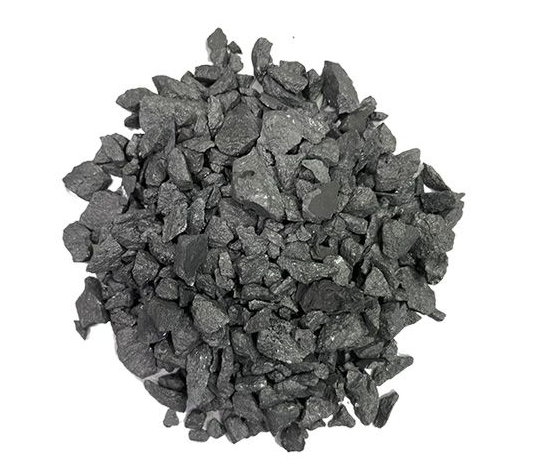
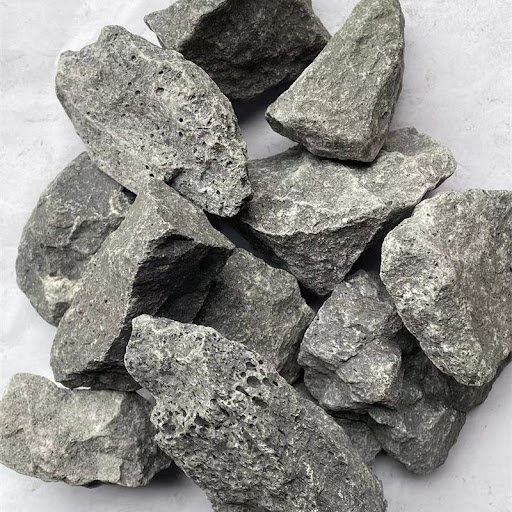
In ferroalloy export trade, buyers often come across terms like “Class A Export Qualification” or “Class A Managed Enterprise” in a supplier’s credentials. For alloy materials such as Si-Ca-Mn deoxidizer, which serve the steelmaking industry, what this qualification label actually represents is directly tied to risk control and supply chain stability in procurement decisions.
As a ferroalloy manufacturer, Beifang Alloy has long served the steelmaking and casting industries both domestically and internationally. This article examines the practical meaning of “Class A Export Qualification” in Si-Ca-Mn deoxidizer exports from four perspectives: procurement needs, industry research, procurement guide, and supplier comparison.
Si-Ca-Mn deoxidizer, used as a composite deoxidizer and desulfurizer in steelmaking, has several distinctive procurement characteristics: large order volumes (typically measured in tons), high requirements for quality consistency, and high costs associated with supply interruption. Once a steel mill selects a deoxidizer supplier, switching costs include re-qualification, process adjustments, and potential quality risks.
As a result, when screening suppliers, buyers increasingly look beyond product specifications alone and focus on a supplier’s export compliance capabilities. A supplier holding a high-level export qualification means it has passed systematic official reviews in customs clearance efficiency, tax compliance, foreign exchange management, and quality control. For importers, this directly reduces the risk of customs delays, cargo detention, or even trade disruption caused by supplier compliance issues.
“Class A Export Qualification” is not an isolated certificate. It is the combined result of China’s customs enterprise classification management system and export tax rebate classification management system. Understanding its meaning requires examining two institutional dimensions.
According to the Measures of the Customs of the People’s Republic of China on the Classification of Enterprise Management Categories, customs assigns enterprises to five management categories — AA, A, B, C, and D — based on their compliance with laws and regulations, customs rules, and business management conditions. An A-class import and export goods consignee or consignor must simultaneously meet multiple conditions:
Has been under B-class management for more than 1 year
No smuggling crimes, smuggling acts, or violations of customs supervision regulations for 1 consecutive year
No customs administrative penalties for importing or exporting goods infringing intellectual property rights for 1 consecutive year
No arrears in payable taxes or confiscated fines for 1 consecutive year
Total import and export value of over USD 500,000 in the previous year
Import and export declaration error rate below 5% in the previous year
Sound accounting system with authentic and complete business records
No adverse records in administrative departments and institutions including commerce, the People’s Bank, industry and commerce, taxation, quality inspection, foreign exchange, and supervision for 1 consecutive year
AA-class and A-class enterprises enjoy corresponding customs clearance facilitation measures, meaning their goods receive more efficient processing in customs inspection and release procedures.
In the tax dimension, export enterprises are classified into Category One, Two, Three, and Four. The assessment standards for Category One export enterprises are equally strict. For production enterprises, the requirements include:
The enterprise’s production capacity matches its export tax rebate (exemption) scale declared in the previous year
No fraudulent issuance of VAT special invoices or other VAT deduction vouchers, and no export tax rebate fraud in the past 3 years
Tax credit rating of A or B at the time of assessment
A relatively complete internal export tax rebate (exemption) risk control system established within the enterprise
Category One enterprises enjoy priority and accelerated processing for export tax rebates, which directly affects a supplier’s cash flow capacity and pricing competitiveness.
In everyday business communication, “Class A Export Qualification” is typically a supplier’s summary expression of holding high credit ratings in both the customs and tax management systems.
For overseas buyers procuring Si-Ca-Mn deoxidizer, evaluating a supplier’s export qualification can be approached from the following levels:
First, verify the qualification status. Request the supplier’s customs enterprise credit management category certification documents, or verify through China’s Customs Enterprise Credit Information Publicity Platform. Note that “Class A” is a dynamically managed status, and its current validity needs to be confirmed.
Second, pay attention to the impact of export tax rebate rates. The export tax rebate rate policy for deoxidizer-type ferroalloy products directly affects a supplier’s pricing space. The advantages of Category One export enterprises in the tax rebate process can translate into more stable prices and faster delivery rhythms.
Third, examine actual export records. Qualification level is the “threshold,” while actual export records are the “capability.” Suppliers can be asked to provide export declaration summaries or historical transaction references for similar products (Si-Ca-Mn or similar composite deoxidizers).
Fourth, verify the quality control system. A high level of export qualification usually accompanies more standardized internal management, but the product quality itself still requires independent verification. Excellent suppliers set up multiple inspection points at raw material intake, production process, and finished product release stages.
When selecting a Si-Ca-Mn deoxidizer supplier, “Class A Export Qualification” is an important screening criterion, but it should not be the only one. The following dimensions are equally worth including in comparison:
Match of product specifications. The standard composition of Si-Ca-Mn deoxidizer is typically Si 40-50%, Ca 17-23%, Mn 16-23%. Different steel mills have different requirements for composition and particle size due to differences in steel grades and processes. Whether a supplier can customize specifications according to customer needs is a key capability in actual cooperation.
Production capacity and delivery stability. The per-ton steel consumption of Si-Ca-Mn deoxidizer is typically in the range of 3-5 kg. For large steel enterprises, a supplier’s production scale and delivery cycle directly relate to the execution of production plans. Suppliers with their own factories generally have more advantages in supply stability.
Quality testing capability. The effectiveness of a deoxidizer directly affects molten steel quality and final steel performance. Whether a supplier is equipped with testing equipment such as X-ray fluorescence spectrometers, and whether it conducts multiple inspections of chemical composition and physical properties for each batch, are basic guarantees of quality consistency.
Industry experience and service responsiveness. Ferroalloy export involves complex logistics, commodity inspection, and documentation processes. Suppliers with long-term export experience can more efficiently handle port operations, third-party inspection coordination, and emergency response.
For Si-Ca-Mn deoxidizer suppliers, “Class A Export Qualification” is an officially reviewed “credit card” that reflects a company’s systematic capabilities in customs compliance, tax standards, and internal management. For buyers, this qualification reduces compliance risks and delivery uncertainties in cross-border transactions.
If you are looking for a Si-Ca-Mn deoxidizer supplier with stable export qualifications and reliable product quality, welcome to contact Beifang Alloy. We provide product specifications that meet industry standards and can customize composition and particle size according to customer requirements.
Contact Us:
Website: www.beifangalloy.com
Email: info@hnxyie.com