In steelmaking deoxidation, “alloy recovery rate” is one of the core indicators determining production cost. If deoxidation is incomplete and oxygen content remains high, the ferromanganese, ferrosilicon, ferrochrome, and other alloying elements added will preferentially participate in deoxidation reactions rather than alloying—causing expensive alloys to burn off for nothing. Silicon-calcium-manganese (Si-Ca-Mn) composite deoxidizer tackles this problem at its root: through efficient deoxidation and steel liquid purification, it helps steel plants increase alloy recovery by 10%–20%. This article analyzes from four dimensions—procurement needs, industry research, procurement guide, and supplier comparison.
Many steel plants face a common dilemma: even when sufficient silicon-manganese, ferromanganese, and other alloys are added according to standard, the finished product composition consistently runs low, forcing supplementary additions and driving up cost per ton of steel. The root cause is often not the alloy itself, but insufficient deoxidation depth.
Dissolved oxygen in molten steel is the “invisible killer” of alloying elements. When oxygen content is high, added alloying elements preferentially react with oxygen to form oxides that enter the slag, rather than dissolving in the steel to perform their alloying function. Industry data shows that if oxygen content after converter tapping is controlled at 10–50 ppm, recovery of precious alloys improves significantly; if oxygen content reaches 400–1000 ppm, large amounts of alloying elements will be “consumed” during deoxidation.
The core value of Si-Ca-Mn deoxidizer lies precisely here: it is composed of silicon, calcium, and manganese in composite form, with deoxidizing power far exceeding single deoxidizers. Calcium has an extremely strong affinity for oxygen and sulfur, and its deoxidation product (CaO) floats out easily; manganese can form low-melting-point manganese silicates with SiO₂, keeping deoxidation products liquid and promoting their aggregation and flotation. More importantly, after using Si-Ca-Mn, the oxygen content in molten steel is effectively suppressed, and subsequently added alloys such as silicon-manganese and ferromanganese are no longer heavily oxidized—recovery naturally improves.
Some suppliers explicitly market “improving alloy recovery by 10%–20%” as a core selling point of Si-Ca-Mn deoxidizer. This is not marketing hype—when deoxidation is more thorough and the steel is “cleaner,” improved utilization of alloying elements is a predictable metallurgical outcome.
The deoxidizer market continues to grow. The global deoxidizer market is projected to expand at a compound annual growth rate of approximately 3.53% from 2025 to 2035, with steel smelting being one of the main drivers. The Asia-Pacific region holds about 25% of global market share, with China being the largest market in the region—directly tied to the country’s massive steel production capacity.
The ferroalloy industry has entered a “quality-first” phase. In 2025, ferroalloy prices trended downward overall, driven primarily by excessive supply growth and downward cost support. Against a backdrop of overcapacity, ferroalloys struggle to break free from cost-based pricing logic. This means steel plants will become more pragmatic in deoxidizer procurement—looking at comprehensive benefits rather than unit price—and Si-Ca-Mn’s “recovery improvement” value fits this trend perfectly.
The shift from “aluminum deoxidation” to “non-aluminum deoxidation.” Although aluminum deoxidation achieves high deoxidation depth (down to below 10 ppm), the resulting Al₂O₃ inclusions have high melting points and easily cause continuous casting nozzle clogging. The low-melting-point liquid deoxidation products formed by Si-Ca-Mn improve steel fluidity and effectively overcome nozzle clogging. This process trend is creating greater application space for Si-Ca-Mn.
When purchasing Si-Ca-Mn deoxidizer, comparing unit prices alone is far from sufficient. To achieve the expected “10%–20% alloy recovery improvement,” the following points require attention:
Typical Si-Ca-Mn addition is 0.8–1.5 kg per ton of steel. Manufacturer data shows that adding 1.2–1.5 kg of Si-Ca-Mn can reduce oxygen content from 220 ppm to below 70 ppm. When endpoint oxygen is stably controlled in the “sweet spot” of 50–70 ppm, it both avoids porosity defects from insufficient deoxidation and creates a favorable low-oxygen environment for alloying.
Proper addition method is key to improving recovery. It is recommended to add directly to the ladle bottom before tapping, using the steel stream’s impact and stirring to promote melting and reaction; alternatively, add all at once when molten steel reaches one-third of the ladle. Improper addition causes the deoxidizer to float on the surface with insufficient reaction, affecting deoxidation effectiveness and subsequent alloy recovery.
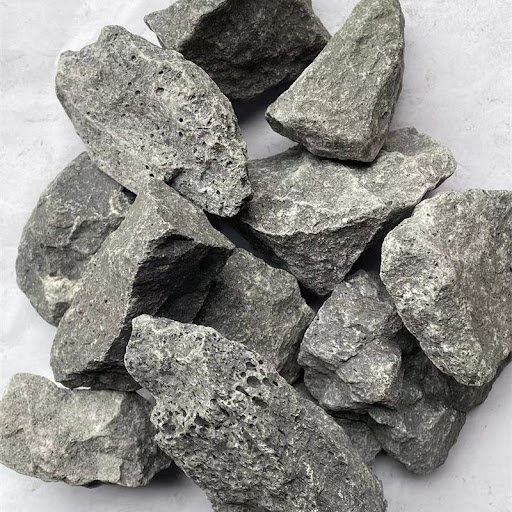
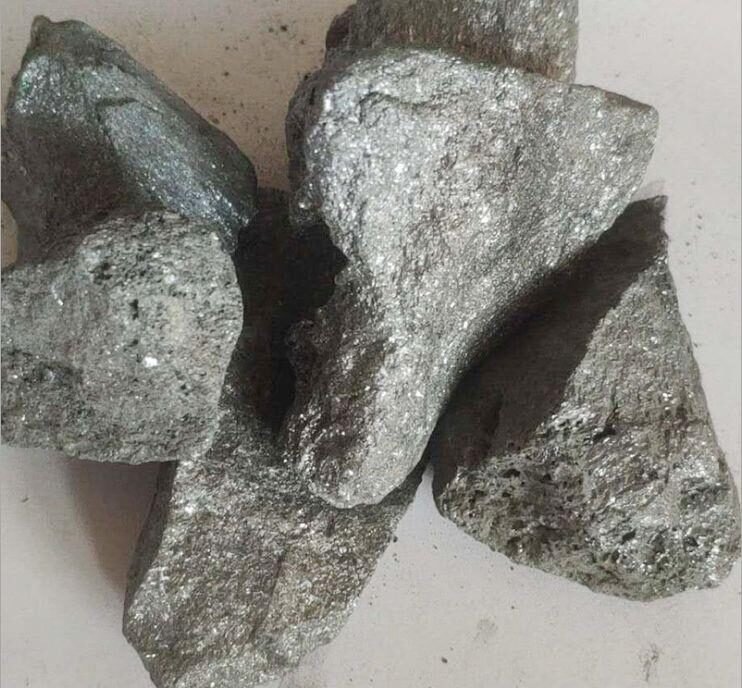
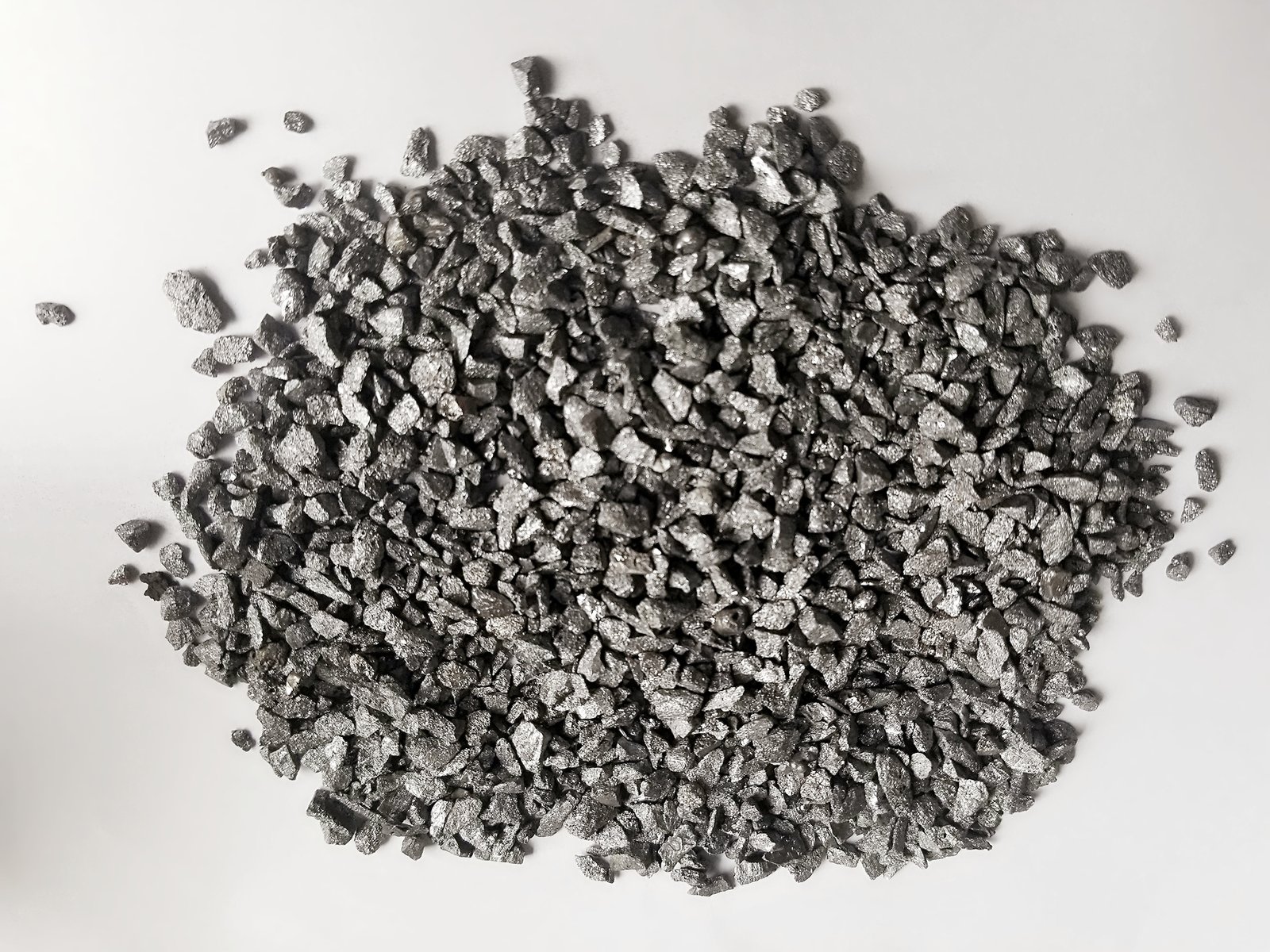
Si-Ca-Mn particle size can be customized to customer requirements. Size must match the plant’s addition method—manual addition and bin feeding have different size requirements. Regarding composition, beyond the main elements Si, Ca, and Mn, impurity control is equally important. Sulfur and phosphorus content must be strictly controlled to avoid secondary contamination of the steel.
Production data shows that for every approximately 13°C increase in tapping temperature, pre-argon-station oxygen content rises correspondingly. When using Si-Ca-Mn, tapping temperature must be controlled to avoid excessive oxidation offsetting the deoxidizer’s recovery improvement effect.
Industrial cluster distribution. Domestic Si-Ca-Mn deoxidizer suppliers are concentrated in the Anyang region of Henan Province, where multiple ferroalloy enterprises simultaneously supply Si-Ca-Mn along with Si-Al-Ba, Si-Ca-Ba, and other composite deoxidizer products. As a ferroalloy industrial cluster, Anyang enjoys locational advantages in raw material procurement and logistics.
Key dimensions for supplier screening:
Composition consistency. The nominal composition of Si-Ca-Mn is the baseline, but batch-to-batch fluctuation control is the real test. Before purchasing, request multi-batch inspection reports and confirm that Si, Ca, and Mn content remain stable within the standard range.
Alloy recovery verification. Ask suppliers to provide trial data or reference cases from similar steel plants. Recovery improvement varies with different plant process conditions—suppliers with actual case support are more credible.
Technical service capability. The effectiveness of deoxidizers is closely related to addition method, timing, and steel grade compatibility. Suppliers who can provide technical guidance are more likely to help steel plants genuinely achieve “10%–20% alloy recovery improvement.”
The logic behind Si-Ca-Mn deoxidizer improving alloy recovery by 10%–20% is clear: deep deoxidation → reduced alloy oxidation burn-off → improved alloying element utilization. As the ferroalloy industry enters cost competition and steel plants pursue comprehensive benefits, the standard for choosing a deoxidizer is shifting from “cost per ton of steel” to “comprehensive cost per ton of steel.” The value of Si-Ca-Mn lies precisely in making every kilogram of alloy added afterward do more work.
Beifang Alloy is a ferroalloy factory supplying Si-Ca-Mn, Si-Al-Ba, and other composite deoxidizer products, with customizable composition and particle size.
🌐 www.beifangalloy.com
📧 info@hnxyie.com