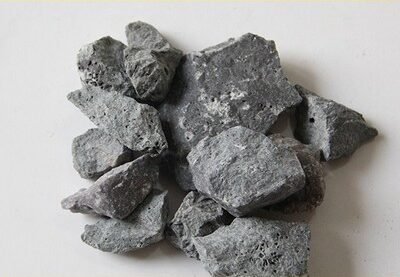
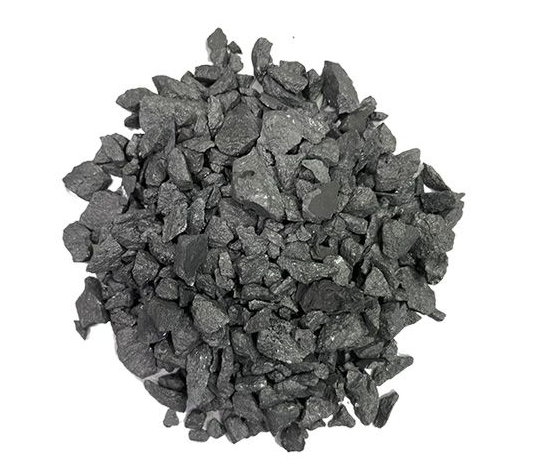
In ferroalloy procurement, particle size is often a parameter that buyers ask about “in passing.” But its impact on the actual performance of deoxidizers is far greater than many procurement teams expect.
Direct answer: Particle size matters a lot — but it is not simply “the finer the better” or “the coarser the better.” The key is matching it to the steel grade, addition method, and furnace type. Oversized particles dissolve slowly and delay the deoxidation reaction; undersized particles generate excessive dust, cause material loss, and may even create safety hazards.
This article examines the real impact of particle size on Si-Ca-Mn deoxidizer performance from four perspectives: procurement needs, industry research, procurement guide, and supplier comparison.
Many steel mills focus on chemical composition (Si, Ca, Mn content) and price when purchasing Si-Ca-Mn, treating particle size as a “negotiable item.” But this approach overlooks one fact: particle size directly affects the actual recovery rate and cost of use of the deoxidizer.
Common problems caused by mismatched particle size:
Oversized particles: The deoxidizer dissolves slowly in molten steel, the deoxidation reaction is incomplete, and oxygen content control becomes unstable. More seriously, undissolved particles may be wrapped by slag or entrapped into the continuous casting billet, forming inclusion defects.
Undersized particles: A large amount of dust is generated during addition, causing material loss. The actual amount of deoxidizer entering the molten steel is less than the theoretical addition amount, leading to the phenomenon that “the cost calculated per ton of steel consumption looks low, but the actual comprehensive cost is higher.”
Too wide a particle size distribution: Mixed coarse and fine particles cause fine particles to react first and coarse particles to react later, making the deoxidation process uneven and affecting stable control of molten steel oxygen content.
For steel mills using hoppers or powder injection systems, mismatched particle size can also cause material blockage and uneven feeding, further affecting production rhythm.
The dissolution behavior of a deoxidizer in molten steel is the first step in its deoxidation function. The smaller the particle size, the larger the specific surface area, the greater the contact area with molten steel, and the faster the dissolution and reaction. However, too large a specific surface area also means the deoxidizer is more prone to moisture absorption and oxidation during storage and transportation, reducing storage stability.
An important advantage of Si-Ca-Mn deoxidizer is that the deoxidation products formed have a low melting point and are liquid or spherical, making them easy to aggregate and float up. Studies show that the products formed by Ca-Si deoxidation (mainly calcium aluminate and calcium silicate) are mostly spherical, with a maximum size of about 10μm. The floating speed of these small spherical products in molten steel follows Stokes’ law, and the floating speed is limited.
This means: if the deoxidizer particle size is not properly controlled and the deoxidation products formed are too small or too dispersed, the efficiency of floating removal will be reduced. Conversely, a reasonable particle size design helps the deoxidation products have appropriate aggregation conditions at the initial stage of formation.
Research data show that Si-Mn deoxidation can reach apparent equilibrium after 8~12 minutes. This time window imposes requirements on particle size design: the deoxidizer needs to complete dissolution and reaction within a relatively short time after addition, otherwise it will miss the optimal deoxidation timing. Oversized particles extend dissolution time and may cause the deoxidation reaction to lag behind subsequent alloying and refining steps.
Based on actual industry supply conditions, common particle size specifications for Si-Ca-Mn deoxidizer include:
| Particle Size Specification | Typical Application Scenario |
|---|---|
| 0-10mm | Converter/EAF carbon steel and low-alloy steel, full-process deoxidation |
| 5-50mm | Manual or hopper addition during tapping, carbon steel and low-alloy steel |
| 1-6mm | Fine batching and powder injection systems |
| 2-8mm | Continuous casting use, balancing dissolution speed and operational performance |
| 10-60mm | Furnace types with less demanding dissolution time requirements |
Look at the addition method: For manual charging or hopper addition, particle size can be larger (5-50mm) for convenient operation and less dust; for powder injection or automatic feeding systems, particle size needs to be finer (1-10mm) to ensure flowability.
Look at furnace type and steel grade: For addition during converter tapping, where molten steel agitation is strong and temperature is high, particle size can be appropriately larger; for LF refining furnace addition, where molten steel is relatively calm, finer particle size is needed to ensure rapid dissolution.
Look at deoxidation depth requirements: For steel grades requiring deep deoxidation to 50-70ppm, particle size should be selected to match the dissolution speed, ensuring the deoxidation reaction completes within the effective time window.
Look at storage conditions: Fine particle size products have higher moisture absorption risk. If steel mill storage conditions are limited, medium particle size specifications should be prioritized.
Whether a supplier can consistently control particle size reflects the maturity of its production process. Suppliers with large particle size fluctuations usually indicate insufficient precision in crushing and screening equipment or an incomplete quality control system. This fluctuation is directly transmitted to the steel mill’s usage end: uneven particle size within the same batch and obvious particle size differences between batches both affect the stability of deoxidation performance.
Si-Ca-Mn is usually produced by electric furnace pre-melting followed by crushing and processing. The crushing method (jaw crushing, roll crushing, impact crushing) directly affects particle shape and particle size distribution. Suppliers using multi-stage crushing + precise screening have more concentrated particle size distribution and more consistent performance.
When evaluating Si-Ca-Mn suppliers, it is recommended to ask the following questions directly:
What is your particle size control range? Can the supplier provide accurate particle size distribution data (not just “maximum particle size” or “minimum particle size”), reflecting its testing capability?
Do you support customized particle size? Suppliers capable of adjusting particle size according to customer furnace type and addition method usually have a deeper understanding of downstream applications.
How is particle size consistency guaranteed? Ask about their screening equipment configuration and control standards for batch-to-batch particle size fluctuation.
Do you provide particle size-recovery rate data? Experienced suppliers can provide recovery rate reference data for different particle size specifications in actual use.
The particle size of Si-Ca-Mn deoxidizer is not a parameter that can be “set to any range.” It directly affects dissolution speed, deoxidation reaction efficiency, material recovery rate, and operational safety. If particles are too large, deoxidation lags and oxygen content runs out of control; if particles are too small, dust flies and costs are inflated.
The scientific approach is: determine the particle size specification that matches your own process based on addition method, furnace type, steel grade, and deoxidation depth requirements, and select a supplier with stable particle size control capability.
If you have questions about particle size selection for Si-Ca-Mn deoxidizer, welcome to contact Beifang Alloy. We can provide particle size customization recommendations based on your specific furnace type and process conditions.
Contact Us:
Website: www.beifangalloy.com
Email: info@hnxyie.com