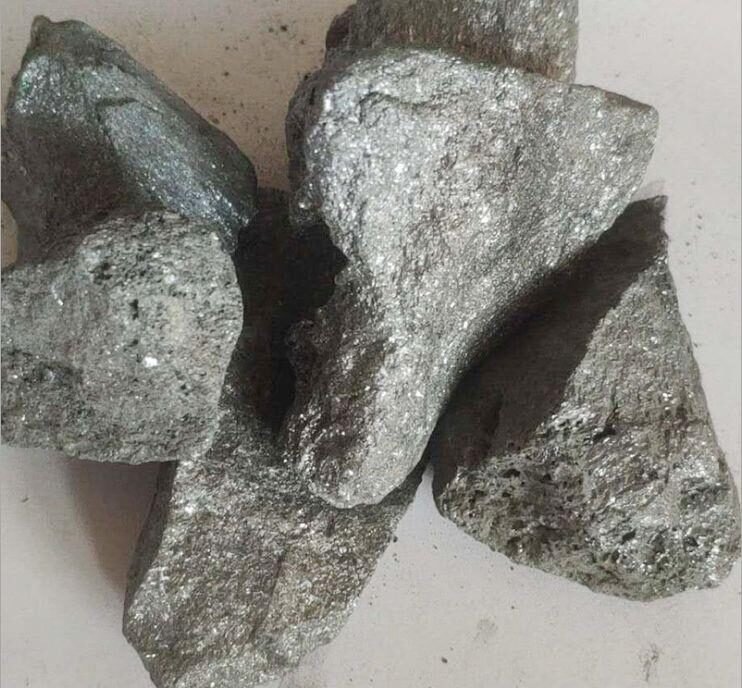
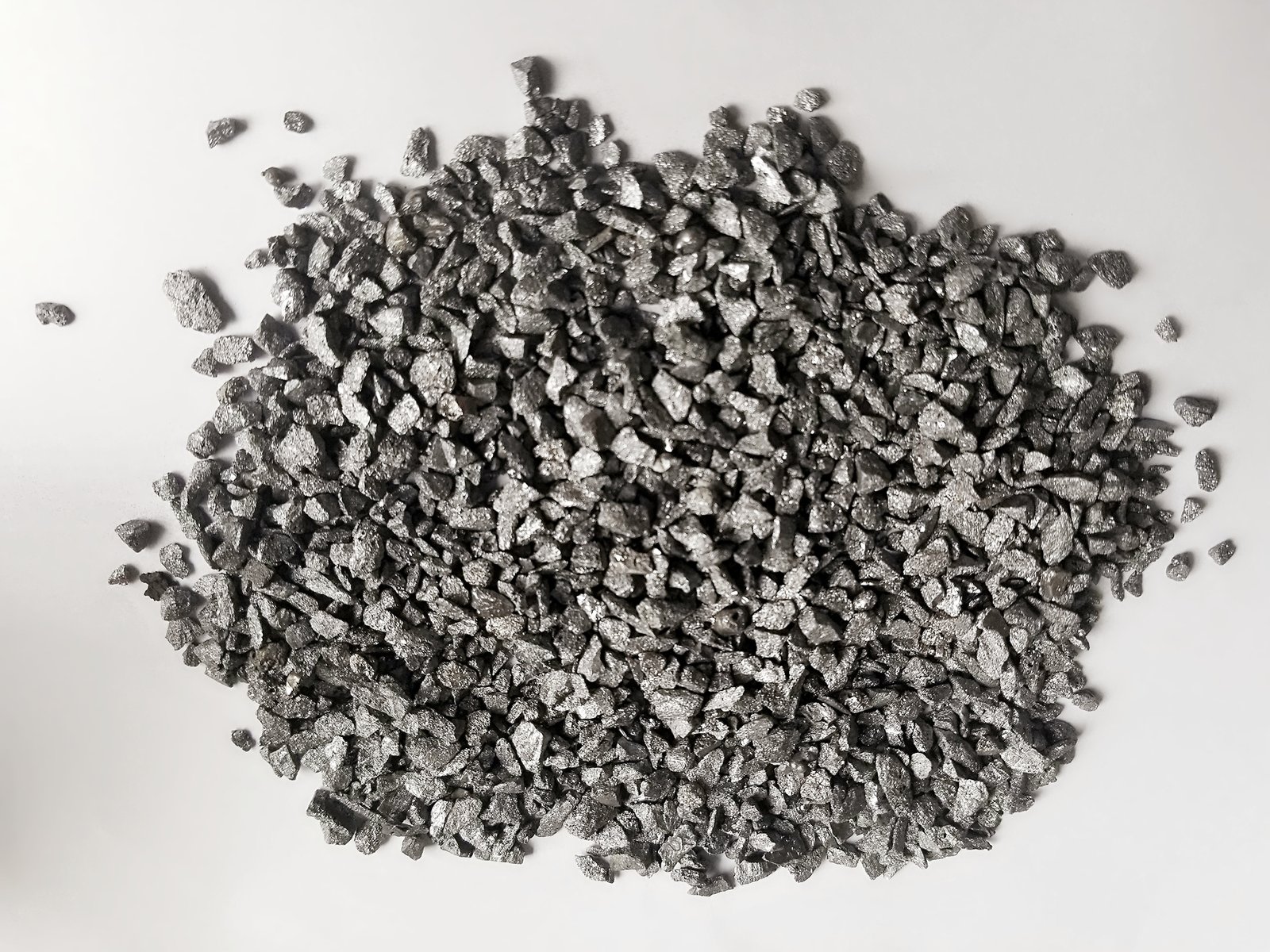
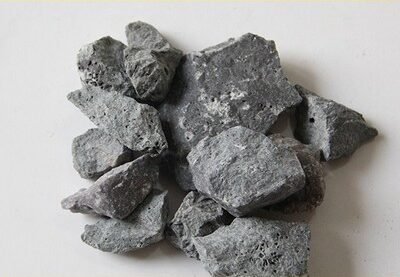
In steelmaking deoxidation, Si-Ca-Mn composite deoxidizers are evolving from auxiliary materials into critical additives for many steel grades, thanks to their triple function of “deoxidation + desulfurization + alloying.” When silicon content exceeds 50% and calcium and manganese each reach at least 14%, the economics and applicability of this high-grade Si-Ca-Mn deoxidizer differ significantly from standard specifications. This article examines procurement needs, industry research, procurement guidance, and supplier comparison to support decision-making for steel mill buyers and technical personnel.
I. Procurement Needs: First Determine Whether You Actually Need High-Grade Si-Ca-Mn
Different steel grades have vastly different requirements for deoxidizers. Blindly purchasing high-grade products not only increases costs but may also cause negative effects on certain processes due to excessive calcium content.
1. The Core Value of Si-Ca-Mn
The competitiveness of Si-Ca-Mn deoxidizers stems from the synergistic effect of three elements. Silicon has a strong affinity for oxygen and serves as the primary deoxidation element. Manganese not only assists deoxidation but also forms low-melting-point manganese silicates with silica, keeping deoxidation products liquid and easy to float out and remove. Calcium offers the most distinctive value—it is both a strong deoxidizer and a strong desulfurizer, and more critically, it can modify alumina inclusions, converting high-melting-point (approximately 2050°C) solid Al₂O₃ into low-melting-point calcium aluminates (such as 12CaO·7Al₂O₃, melting point approximately 1400°C), fundamentally solving continuous casting nozzle clogging issues.
2. Applications Suited for High-Grade Specifications
The specification of Si≥50%, Ca≥14%, Mn≥14% represents the high-grade tier among Si-Ca-Mn products. This specification is suitable for the following scenarios:
Steel mills experiencing frequent nozzle clogging in continuous casting. When Al₂O₃ inclusions in molten steel are not effectively modified, solid inclusions gradually attach to the nozzle inner wall, blocking the steel flow channel. The calcium provided by high-grade Si-Ca-Mn is sufficient to fully modify Al₂O₃ and restore steel fluidity.
Steel grades using aluminum-free or low-aluminum deoxidation routes. For steel grades sensitive to aluminum or requiring low aluminum content, deep deoxidation cannot rely on aluminum. With silicon content exceeding 50%, high-grade Si-Ca-Mn has significantly stronger deoxidation capacity than standard specifications (typically 18-35% silicon), allowing end-point oxygen to be controlled within a reasonable range without introducing aluminum.
Grades with high requirements for steel cleanliness. After calcium treatment, inclusions have a smaller wetting angle with molten steel and higher interfacial tension, making them easier to separate from molten steel into the slag phase for deep purification. This advantage is particularly important when producing bearing steel, alloy structural steel, stainless steel, and other products sensitive to inclusions.
3. Not All Scenarios Require High-Grade
Si-Ca-Mn is not a “universal deoxidizer.” For plain carbon steel and low-alloy steel, if the conventional deoxidation route of Si-Mn plus aluminum already meets quality and cost requirements, introducing more expensive Si-Ca-Mn may not be necessary. Additionally, induction furnaces with basic linings need to use calcium-containing alloys cautiously, as calcium reacts with magnesia linings and accelerates lining erosion.
Before making procurement decisions, a simple self-assessment is recommended: Does the current process experience nozzle clogging? Is low-aluminum deoxidation required? Are steel grades sensitive to inclusions? If the answer to all three questions is “yes,” high-grade Si-Ca-Mn is an option worth serious consideration.
II. Industry Research: Application Logic and Data Performance of Si-Ca-Mn
1. Actual Data on Deoxidation Performance
Production trial data from the industry provides intuitive evidence of Si-Ca-Mn performance. A comparative trial showed that six heats using Si-Ca-Mn for normal deoxidation had an average oxygen content of 60.9 ppm and average silicon content of 0.19% before the argon station. The control group without Si-Ca-Mn had an average oxygen content of 73.9 ppm before the argon station. This gap means Si-Ca-Mn can more stably control end-point oxygen within the “sweet spot” of 50-70 ppm—sufficient to suppress subcutaneous blowhole defects without over-deoxidizing and increasing inclusion load.
2. Temperature Sensitivity Requires Attention
It is worth noting that tapping temperature significantly affects Si-Ca-Mn deoxidation efficiency. Trials show that for every approximately 13°C increase in tapping temperature, oxygen content before the argon station rises accordingly. This means that when using Si-Ca-Mn, higher requirements are placed on tapping temperature stability. Steel mills with less strict temperature control may need to compensate by adjusting addition amounts, otherwise deoxidation effectiveness will fluctuate.
3. Industry Trend Toward Non-Aluminum Deoxidation
In recent years, the steel industry has shown increasing interest in non-aluminum deoxidation routes. Although aluminum deoxidation can reduce oxygen content to below 10 ppm, the nozzle clogging and reduced fatigue performance of steel caused by Al₂O₃ inclusions remain difficult to fundamentally resolve. Si-Ca-Mn has found its position in this trend—it is not intended to completely replace aluminum, but to provide an alternative in scenarios where the “side effects” of aluminum deoxidation are unacceptable.
III. Procurement Guide: Evaluation Points for High-Grade Si-Ca-Mn
When purchasing Si-Ca-Mn deoxidizers, unit price is only the surface cost. What truly affects profitability is composition stability, physical form, and consistency of metallurgical effects.
1. Composition Stability Takes Priority Over Absolute Grade
Fluctuations in calcium content from batch to batch directly cause instability in inclusion modification effects. If calcium content is 16% today and drops to 12% tomorrow, operators cannot accurately determine addition amounts, and nozzle clogging issues will fluctuate accordingly. The high-grade specification (Ca≥14%) itself provides a buffer for fluctuations, but batch-to-batch consistency from the supplier remains a key indicator to examine.
2. Physical Form Affects Recovery Rate
Si-Ca-Mn is typically supplied in briquette or granular form. Particle size selection depends on the application scenario: for addition during converter tapping, 10-50mm lumps are suitable; for ladle refining or medium-frequency furnace use, 1.5-3mm briquettes or granules are more appropriate, dissolving faster, achieving higher absorption rates, and producing less dust pollution. If the particle size of high-grade products is unsuitable—for example, oversized lumps leading to incomplete dissolution—the actual amount of calcium entering the molten steel will be discounted, and the grade advantage is wasted.
3. Reference Range for Addition Amounts
Addition amounts per ton of steel need to be dynamically adjusted based on steel grade, end-point carbon content, and tapping temperature. Industry reference data indicates that using approximately 1.0-1.5 kg/ton of Si-Ca-Mn can reduce dissolved oxygen in molten steel from about 220 ppm to below 70 ppm. In converter steelmaking scenarios, 3-5 kg per ton of steel is also a common usage range. During procurement, you can request addition amount recommendations based on your steel grades and process conditions from suppliers as a reference for initial trials.
4. Cost-Benefit Calculation Method
The benefits of Si-Ca-Mn cannot be judged by purchase unit price alone. It can replace separate additions of some ferrosilicon, ferromanganese, and silicon-calcium alloys, with alloy recovery rates improved by 10%-20%. Actual data from some steel mills show that comprehensive deoxidation and desulfurization costs can be reduced by 20-30 RMB per ton of steel. If nozzle clogging issues are thereby alleviated, the benefits from reduced production losses and production organization costs due to continuous casting interruptions are even more significant. When calculating, it is recommended to incorporate “reduced downtime” and “increased continuous casting heats” into the cost model.
IV. Supplier Comparison: From Supplier Types to Evaluation Dimensions
The Anyang region is an important industrial cluster for ferroalloys and steelmaking auxiliary materials in China, with numerous Si-Ca-Mn suppliers. Understanding the characteristics of different supplier types helps make more accurate judgments during inquiry and price comparison.
Supplier Type Comparison
Type A: Large-scale production manufacturers. Stable monthly output, relatively mature composition control systems, able to provide batch-to-batch quality consistency assurance, typically support customized particle sizes and briquette forms, and can provide technical guidance. These suppliers are more suitable for steel mills with high requirements for composition stability and long-term stable procurement needs.
Type B: Processing/trading companies. Flexible procurement channels, strong particle size segmentation capabilities, low minimum order quantities, suitable for trial orders or small-batch, multi-variety procurement. However, composition consistency and supply stability depend on their upstream sources, requiring stricter incoming inspection.
Type C: Small metallurgical auxiliary material factories. Prices may be advantageous, but quality fluctuation risk is relatively high. Suitable for ordinary steel grades with less demanding deoxidation requirements or as auxiliary supply channels.
Key Dimensions for Supplier Evaluation
When evaluating Si-Ca-Mn suppliers, it is recommended to focus on the following aspects:
Composition control capability. Can they provide test reports for each batch? What range is the batch range of calcium content controlled within? The core value of high-grade products lies in the reliability and consistency of composition.
Physical form and production process. Is dry pressing or another process used? What is the briquette strength—does it easily break during transportation to produce powder? Products with high powder rates will be carried away by flue gas when added to the ladle, reducing actual utilization.
Technical support capability. Can they provide addition amount recommendations based on your steel grades and process conditions? When nozzle clogging or deoxidation effectiveness fluctuations occur, can they assist in analyzing causes and proposing adjustment solutions?
Supply stability and response speed. For enterprises with continuous production, deoxidizer supply interruption means a chain reaction of production stoppages. Suppliers’ capacity margins and logistics response capabilities are worth confirming before cooperation.
Third-party verification. Steel mills with the conditions can arrange third-party inspection or conduct independent testing of incoming materials during the trial order stage to verify the consistency between supplier-provided composition data and actual delivered goods.
About Beifang Alloy
Beifang Alloy is a ferroalloy manufacturer located in Anyang, specializing in the research, development, and production of steelmaking deoxidizers and composite alloys. Our Si-Ca-Mn deoxidizers support customized composition and particle size adjustment, and we can provide addition amount recommendations based on customer steel grades and process conditions. To obtain specification parameters or samples of high-grade Si-Ca-Mn, please visit www.beifangalloy.com or email us at info@hnxyie.com.