In refractory procurement and technical exchanges, we frequently see customers confuse “refractoriness” with “refractoriness under load” . For high-temperature industries such as steelmaking and ferroalloy production, specifying the wrong index can sharply shorten lining life or even cause safety incidents. As a supplier serving the ferroalloy and high-temperature sectors, Beifang Alloy (www.beifangalloy.com) clarifies the distinction between these two core concepts, drawing on procurement practice and industry standards, and offers practical procurement guidance.
Refractoriness characterizes a material’s ability to resist melting at high temperature under no load. It is a “limit index” — the threshold determining whether a material qualifies as a refractory (typically ≥1500°C). In testing, the material is formed into a cone and heated under its own weight alone; the temperature at which the cone bends and touches the base is the refractoriness. A critical caveat: refractoriness is by no means the upper limit of service temperature. When a material reaches its refractoriness, 70–80% liquid phase has already formed internally, and it has completely lost mechanical strength and corrosion resistance.
Refractoriness under load (RUL) simulates actual kiln conditions. After refractory bricks are laid, they constantly bear their own weight plus the pressure of the furnace charge. RUL measures the temperature at which a specimen deforms by a specified amount under a constant compressive load (e.g., 0.2 MPa). It reflects the material’s structural stability under the combined action of high temperature and load. For procurement, this index is far more valuable as a reference than refractoriness.
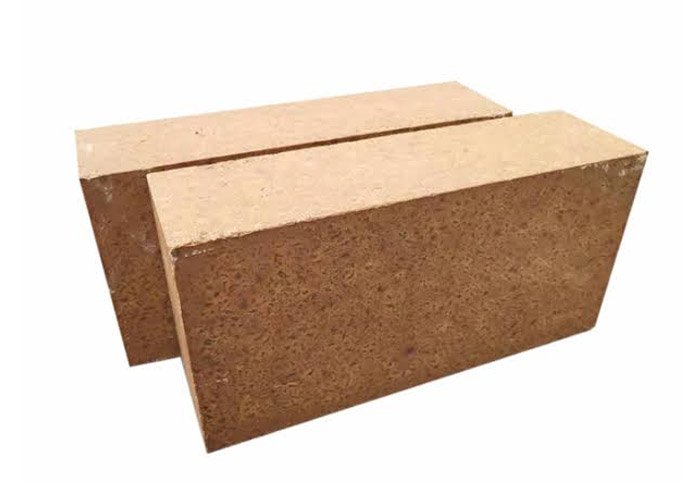
Take Chinese national standard data for high-alumina bricks: grade LZ-75 requires refractoriness ≥1790°C, but RUL (0.2 MPa) of only ≥1520°C — a gap of nearly 300°C. If a buyer mistakes 1790°C for the design service temperature, the lining will already have softened and collapsed under load long before that.
The linings of ferroalloy furnaces, blast furnaces, steel ladles and similar thermal equipment are all under load. Lining bricks must resist not only high temperature but also charge impact, molten metal and slag erosion, and thermal stress.
Refractoriness only answers “will it melt?” RUL answers “will it deform and fail before melting?”
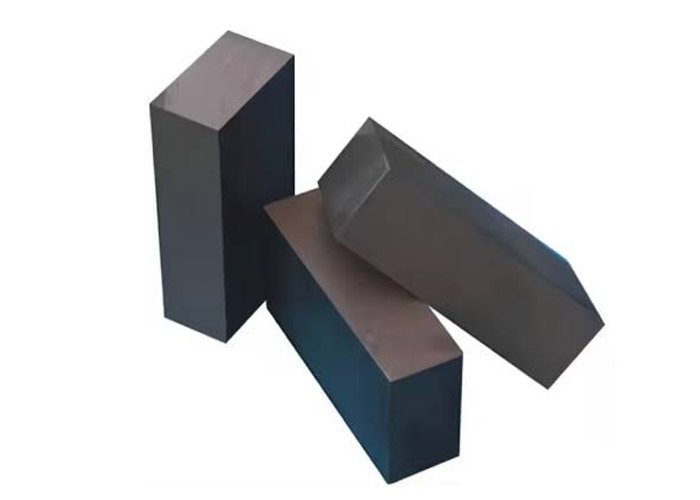
The differences between materials are dramatic. For silica bricks, RUL is only 60–70°C below refractoriness, because their tridymite crystals form a robust network skeleton. For magnesia bricks, RUL can be more than 1000°C below refractoriness, because their bonding phase is low-melting-point silicate whose liquid viscosity drops sharply at high temperature — the skeleton disintegrates before it melts. This means: for magnesia, magnesia-carbon and some high-alumina refractories, ordering on the basis of passing refractoriness alone carries extremely high risk.
According to industry market analysis, the global refractory brick market is undergoing a structural shift: procurement behavior is becoming more disciplined, and users increasingly favor higher-value, longer-life specialty grades — high-alumina, magnesia and insulating bricks — to reduce downtime frequency and heat loss. The logic behind this trend is total cost of ownership (TCO): every day a lining fails early costs far more in lost production than the price difference between brick grades.
At the same time, tightening environmental regulations are driving adoption of low-cement, cement-free and lightweight insulating solutions. Note, however, that insulating bricks generally have lower RUL than dense bricks; when substituting them in load-bearing locations, re-verification is essential.
Step 1: Request “dual-index” test reports, not refractoriness alone.
Ask suppliers for third-party test data per GB/T 5989 (RUL) and GB/T 7322 (refractoriness). Focus on the initial deformation point of RUL (reports are usually given at 0.6% or 4% deformation — confirm the standard is consistent). For high-alumina bricks, you can pre-screen against the RUL lower limits for the corresponding grade in GB/T 2988.
Step 2: Match index priority to furnace service conditions.
Load-bearing masonry zones (furnace bottom, lower walls): RUL is the primary disqualifying criterion. For ferroalloy furnace linings, we recommend no less than 1500–1550°C (depending on furnace type and load).
Non-load-bearing or insulating layers: RUL requirements may be relaxed somewhat, but refractoriness must still meet the atmosphere and temperature ceiling.
Beware the “high refractoriness trap”: some suppliers promote products on high refractoriness, yet if the microstructure consists of isolated crystals dispersed in a liquid phase, high-temperature load capacity is in fact poor.
Step 3: Assess the supplier’s quality control system.
Prefer suppliers with a product quality control capability grading assessment. The standard T/CBMF 208.2, issued by the China Building Materials Federation, grades suppliers from equipment configuration (automatic batching, automatic pressing) and control operation (batching error, temperature control level) to product physical statistics (porosity, mean and stability of RUL). Suppliers able to provide this grading certificate or equivalent QC data offer more reliable batch-to-batch consistency.
At the inquiry stage, we recommend including the following dimensions in your comparison table:
| Comparison Dimension | Quality Supplier Characteristics | Warning Signs |
|---|---|---|
| Completeness of test data | Provides refractoriness, RUL, apparent porosity and cold crushing strength together, with test standards and batch numbers | Only verbal promises of “withstands 1800°C,” no written report or expired reports |
| Microstructure explanation | Can explain crystal phase composition and bonding mode (e.g., mullite network, degree of direct bonding) | Avoids technical detail; emphasizes Al₂O₃ content only |
| Batch stability | Provides range of RUL across the last 3 batches | Provides only a single batch’s “best value” |
| Application case relevance | Has service-life records for the same type of ferroalloy furnace/blast furnace/ladle | Cases span unrelated industries with no specific furnace campaign data |
Beifang Alloy’s position: As a participant in the ferroalloy and metallurgical raw materials sector, we understand well how refractory performance affects smelting costs. While supplying ferroalloy products, if you have technical questions about refractory procurement, feel free to contact us at info@hnxyie.com. We will help you prioritize indices based on our understanding of downstream operating conditions — not just “sell bricks.”
Conclusion: Refractoriness is the “threshold”; RUL is “real-world performance.” In pressurized high-temperature furnaces, make RUL the core disqualifying criterion for material selection, and require traceable test data from suppliers. Every bit of care in procurement translates directly into extended lining life.