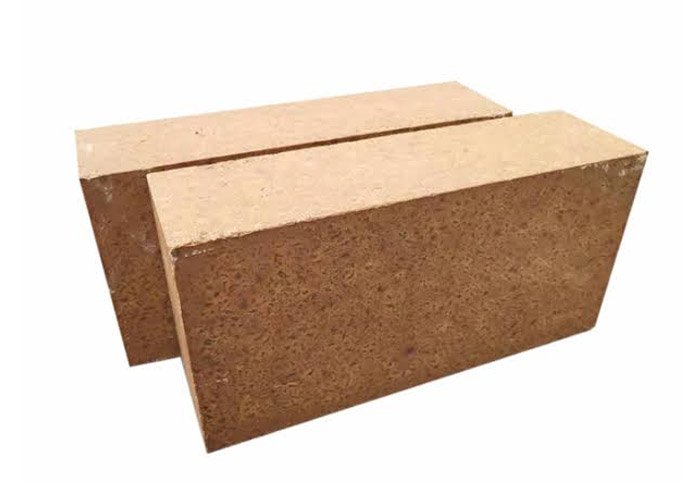
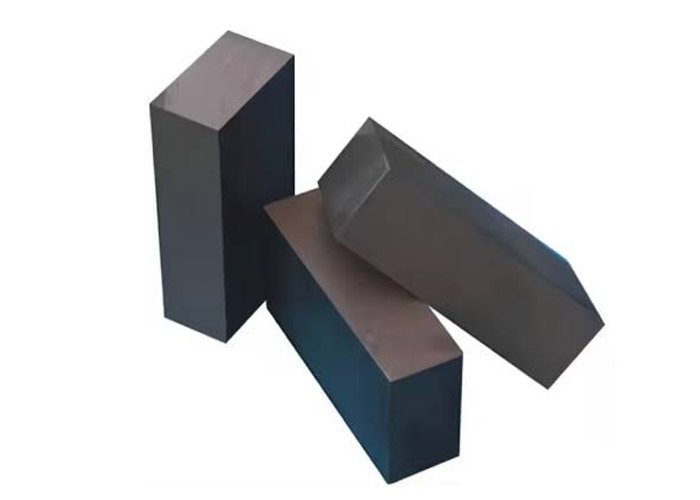
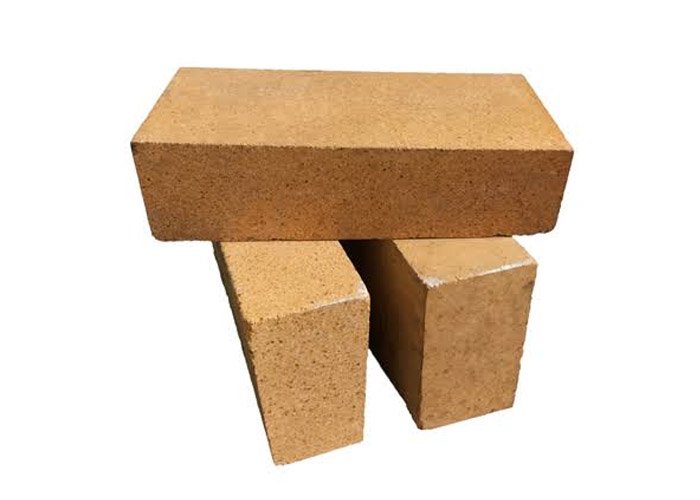
If you work in refractory procurement, you have likely encountered this scenario: you request quotations for “high alumina bricks” from three or four suppliers, and the prices range from 1,200 RMB/ton to over 4,000 RMB/ton. The specifications appear identical—same size, same T3 shape, and all labeled as “high alumina bricks.” Yet the price gap is staggering.
As a ferro alloy and refractory supplier serving steel, cement, and nonferrous customers, Beifang Alloy sees this confusion regularly. This article breaks down the real reasons behind the price dispersion, from procurement needs and industry standards to supplier evaluation, so you can make informed purchasing decisions.
The first and most fundamental reason for price variation is that “high alumina brick” is an umbrella term, not a precise specification. According to Chinese national standard GB/T 2988-2023, high alumina bricks are classified by alumina (Al₂O₃) content into three grades: Grade I (>75%), Grade II (60–75%), and Grade III (48–60%). Some suppliers further subdivide into 50, 60, 70, and 80 grades based on Al₂O₃ content.
This means a “Grade III high alumina brick” with 48% Al₂O₃ and a “Grade I high alumina brick” with 75% Al₂O₃ are technically both called high alumina bricks—but their performance and cost are fundamentally different.
From a procurement standpoint, the key questions are:
What is the actual operating temperature of your furnace or kiln?
What is the chemical environment (alkaline slag, acidic slag, molten metal)?
Does the application involve frequent thermal cycling or continuous high-load operation?
Is this a critical zone where failure causes major downtime, or a non-critical area where replacement is easy?
Only after answering these questions can you determine which grade of high alumina brick is appropriate. Buying a Grade I brick for a low-temperature application wastes money; buying a Grade III brick for a 1,450°C load-bearing zone risks premature failure and even safety incidents.
Even within the same grade designation, prices can differ significantly. Industry data from 2026 shows the following typical ex-works price ranges for standard straight bricks in the Zhengzhou area:
| Grade | Al₂O₃ Content | Price Range (RMB/ton) |
|---|---|---|
| 50 (Grade III) | ≥50% | 1,100–1,400 |
| 60 (Grade II) | ≥60% | 1,700–2,100 |
| 70 (Grade I) | ≥70% | 2,600–3,200 |
| 80 (Special) | ≥80% | 3,700–4,500 |
Source: Industry pricing survey, 2026
Market intelligence from Mysteel for the same period confirms similar levels: Grade III (55% Al₂O₃) at around 1,200 RMB/ton in Henan, Grade II (65%) at 1,850 RMB/ton, and Grade I (75%) at 2,950 RMB/ton.
Why does the price multiply as alumina content rises?
Raw material cost is the primary driver. High-purity bauxite clinker required for 80-grade bricks costs more than twice as much as the low-grade bauxite used for 50-grade bricks. Higher grades also require stricter control of impurities such as Fe₂O₃ and TiO₂, which increases screening losses and rejection rates.
Sintering energy consumption escalates. Higher-grade bricks require higher firing temperatures and longer soaking times. The firing temperature for 80-grade bricks is over 100°C higher than for 50-grade bricks, significantly increasing fuel costs per ton.
Yield rates drop. High-alumina formulations are more difficult to form and fire. Cracking, deformation, and rejection rates are higher, and those losses are passed through to the unit cost of acceptable product.
But alumina content is not the only variable. Even within the same grade, bulk density can vary significantly. Industry insiders note that for Grade III high alumina bricks alone, each 0.01 g/cm³ increase in bulk density can add several hundred RMB per ton to the price, because higher density means lower porosity, higher strength, and better performance in service. Load softening temperature is another hidden cost driver: improving this metric by 100°C can add 500–700 RMB/ton.
The procurement trap: Some suppliers quote prices based solely on alumina content while ignoring physical indicators. A brick with 55% Al₂O₃ but low bulk density and poor load softening temperature may technically meet the “Grade III” label but will fail prematurely under real kiln conditions. As one industry source puts it: “If you only compare alumina content, the price is lowest—but even clay bricks can reach the alumina content of Grade III high alumina bricks. If physical indicators are required, comparing only price loses the meaning of quality requirements”.
Given the complexity, how should a procurement team approach high alumina brick sourcing? Beifang Alloy recommends a structured evaluation framework.
Step 1: Define the application, not just the product name.
Provide suppliers with your actual operating conditions: maximum temperature, thermal cycling frequency, slag composition, and mechanical load. A responsible supplier will recommend the appropriate grade and specify the physical indicators that matter for your application.
Step 2: Require full technical data sheets, not just Al₂O₃ content.
For each quotation, demand the following parameters:
Al₂O₃ content (and impurity levels if relevant)
Bulk density (g/cm³)
Apparent porosity (%)
Cold crushing strength (MPa)
Refractoriness under load (0.2 MPa, T0.6, °C)
Permanent linear change after reheating
A supplier who cannot or will not provide these data points is a risk, regardless of price.
Step 3: Compare total cost of ownership, not unit price.
A lower-priced brick that lasts half as long in a critical zone is not a saving—it is an expensive mistake. Calculate the cost per month of service life, factoring in:
Brick price per ton
Installation labor and downtime
Expected campaign life
Risk of unplanned failure
For non-critical zones where replacement is easy and downtime is minimal, a lower-grade brick may be perfectly adequate. For critical zones, the higher-grade product almost always pays for itself.
Step 4: Verify with samples and third-party testing.
Before committing to a full order, request samples from shortlisted suppliers and arrange independent testing against the agreed specification. This is especially important when switching suppliers or trying a new grade.
The high alumina brick market includes legitimate manufacturers with consistent quality control, as well as traders and small workshops that source from multiple mills with variable standards. Price differences often reflect these structural differences.
Raw material sourcing and consistency. Reliable suppliers have stable bauxite supply relationships and can trace clinker quality batch by batch. Suppliers who buy from spot markets may produce bricks with inconsistent density and impurity levels from one shipment to the next.
Firing capability. Tunnel kilns with precise temperature control and sufficient firing length produce bricks with consistent density and strength. Small-scale or intermittent kilns may cut corners on firing time or temperature to reduce costs—directly compromising load softening temperature and thermal shock resistance.
Quality control and documentation. A serious supplier provides batch-specific test reports and maintains traceability. If a quality issue arises, they can identify the batch and root cause. Price-only suppliers often disappear when problems occur.
Application support. The best suppliers ask about your furnace conditions before quoting. They may recommend a different grade or a modified formulation if your application requires it. Suppliers who simply quote the lowest price for the stated Al₂O₃ content are not helping you manage risk.
At Beifang Alloy, we work with customers to match refractory specifications to actual operating conditions. As a ferro alloy and refractory supplier, we understand that the cheapest brick per ton is rarely the cheapest solution per campaign. Our role is to help procurement teams cut through the “same name, different price” confusion and select products that perform reliably in service.
Contact us for application-specific recommendations and current pricing.
Beifang Alloy
🌐 www.beifangalloy.com
✉️ info@hnxyie.com
This article is intended as a general procurement reference. Specific product selection should be based on detailed operating conditions and technical consultation.