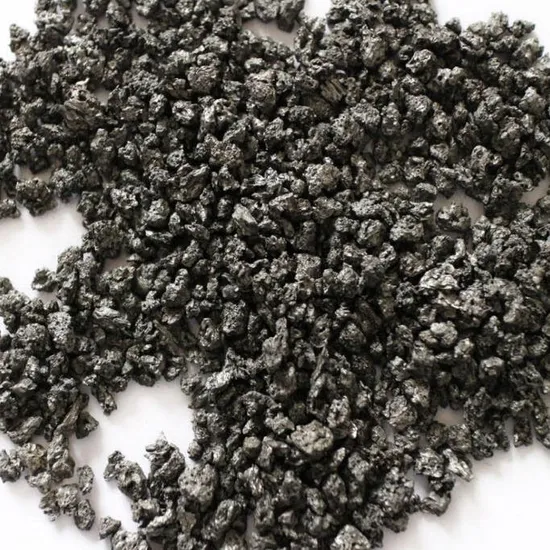
In the precise world of ferroalloy production, the choice of carbon additive is far from a trivial decision. It is a critical operational variable that directly impacts product quality, furnace efficiency, and your bottom line. At Beifang Alloy, we understand that navigating the options—primarily Graphite, Petroleum Coke, and Charcoal-Based carbons—can be complex. This guide breaks down the decision from procurement to production, helping you select the optimal carbon source for your specific furnace and product goals.
Before comparing materials, clearly define your operational and quality requirements. Key questions include:
Product Specifications: What is the target alloy (e.g., Ferrosilicon, Ferrochrome, Siliconanganese) and required purity level? The sulfur, ash, and volatile matter content of your carbon additive can directly contaminate the final alloy.
Furnace Type & Operation: Are you operating a Submerged Arc Furnace (SAF), an Electric Arc Furnace (EAF), or another system? The electrical conductivity and reactivity of the carbon impact slag resistance, electrode penetration, and overall energy efficiency.
Critical Parameters:
Fixed Carbon Content: The primary useful component; higher is generally better.
Ash Content: Low ash is crucial to minimize slag volume and unwanted element intake.
Sulfur & Phosphorus: Must be extremely low to avoid brittle, off-spec alloys.
Volatile Matter: Affects the stability of the furnace atmosphere and charge consistency.
Particle Size & Consistency: Influences charge permeability, reaction surface area, and smelting kinetics.
| Property | Graphite (Natural/Artificial) | Petroleum Coke (Calcined) | Charcoal-Based (Biochar/Charcoal) |
|---|---|---|---|
| Fixed Carbon | Very High (90-99%) | High (98-99%) | Moderate to High (75-90%) |
| Ash Content | Very Low (<1%) | Low (0.5-1.5%) | Variable, Can be High (2-10%+) |
| Sulfur Content | Very Low | Can be High (1-3%+) | Very Low |
| Volatile Matter | Very Low | Low | Low to Moderate |
| Electrical Conductivity | Excellent | Good | Moderate to Low |
| Reactivity | Lower | Moderate | Higher |
| Cost | Premium | Most Cost-Effective | Moderate to High |
| Key Advantage | Purity, Conductivity, Consistency | High Fixed Carbon, Availability | Renewable, Low Sulfur, High Reactivity |
| Primary Concern | Price | Sulfur & Ash Variability | Ash Variability, Density, Supply Scale |
Industry Trend Note: Growing environmental and regulatory pressures are increasing interest in Charcoal-Based biochar as a renewable, low-sulfur option, especially for high-quality alloys. Meanwhile, Graphite remains the gold standard for precision, and Petroleum Coke dominates for large-volume, cost-sensitive production where sulfur can be managed.
Use this flowchart to guide your initial selection:
Step 1: Prioritize Alloy Purity.
Producing ultra-low sulfur/phosphorus alloys (e.g., high-grade Ferrosilicon)? → Immediately consider Graphite or high-grade Charcoal-Based. Petroleum coke is often unsuitable.
Step 2: Evaluate Furnace & Efficiency Goals.
Need superior electrical conductivity for electrode performance and stable furnace operation in large SAFs? → Graphite is advantageous.
Optimizing for reaction speed and reduction efficiency in certain processes? → The high reactivity of Charcoal-Based can offer benefits.
Running high-tonnage production where ultimate cost-per-ton of carbon is the driver, and sulfur can be mitigated? → Petroleum Coke is the traditional workhorse.
Step 3: Factor in Stability & Supply.
Require absolute batch-to-batch consistency? → Graphite and premium Petroleum Coke from reliable suppliers lead.
Have ESG (Environmental, Social, Governance) goals or face carbon tax regimes? → Charcoal-Based (from sustainably managed sources) provides a compelling narrative and potential long-term advantage.
Choosing the right material is half the battle; selecting the right partner is the other. When comparing suppliers, go beyond the datasheet:
For GRAPHITE Suppliers:
“What is your process for ensuring consistently low ash and sulfur levels?”
“Can you provide customized sizing to match our furnace burden profile?”
“What is the geographic origin, and how do you ensure supply chain stability?”
For PETROLEUM COKE Suppliers:
“What is the typical sulfur range, and how do you control variability?”
“What level of calcination do you provide, and how does it affect volatile content?”
“Can you share historical data on consistency from multiple shipments?”
For CHARCOAL-BASED Suppliers:
“What is the raw material source (wood type, process), and how does it affect ash composition?”
“What is your process for achieving high fixed carbon and low volatile matter?”
“What is your scalable, sustainable supply capacity, and can you provide certification?”
At Beifang Alloy, we believe there is no universal “best” carbon additive. The right choice is a strategic fit between your product portfolio, furnace technology, cost framework, and quality ethos.
For premium, specification-critical alloys, the investment in high-purity Graphite often pays dividends in yield and quality.
For large-volume, standard-grade production, expertly sourced and consistent Petroleum Coke remains the economic pillar.
For forward-thinking producers targeting green alloys or operating in strict regulatory environments, developing a qualified supply chain for Charcoal-Based carbon is a strategic move.
Partner with Expertise. The most successful ferroalloy producers treat carbon additives as a key metallurgical component, not just a commodity. Collaborate with suppliers who understand metallurgy, invest in rigorous incoming material testing, and be prepared to adjust your blend as raw materials and markets evolve.
Ready to optimize your carbon additive strategy?
Contact Beifang Alloy’s technical procurement team today at info@hnxyie.com.
Let’s analyze your specific furnace parameters and product mix to identify the most efficient and cost-effective carbon solution for your operation.
Visit our resource center: www.beifangalloy.com