Is your foundry struggling with unexpected casting defects, inconsistent results, and rising rejection rates? You’ve recalibrated machinery, reviewed your processes, and trained your team—yet the problem persists. Often, the root cause lies not in your core operations, but in a foundational material: your carbon additive.
Carbon additives, crucial for achieving the desired carbon content and metallurgical properties in molten iron and steel, are far from a commodity. Variations in their fixed carbon content, ash, volatile matter, sulfur levels, and particle size can dramatically affect fluidity, nucleation, and the final integrity of your casting. At Beifang Alloy, with our deep expertise as a ferro alloy factory, we understand that this single procurement decision can define your product quality and profitability.
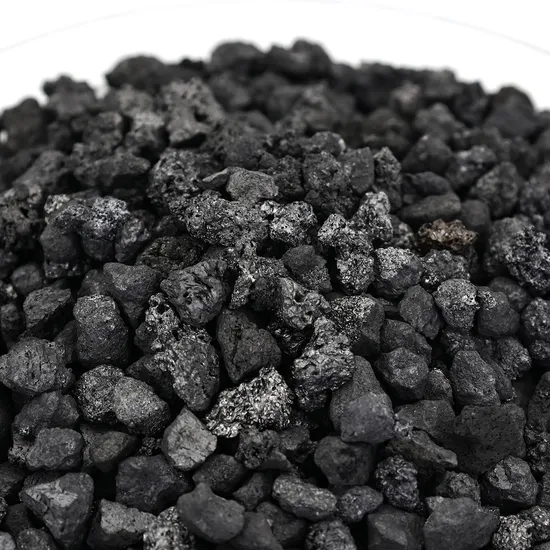
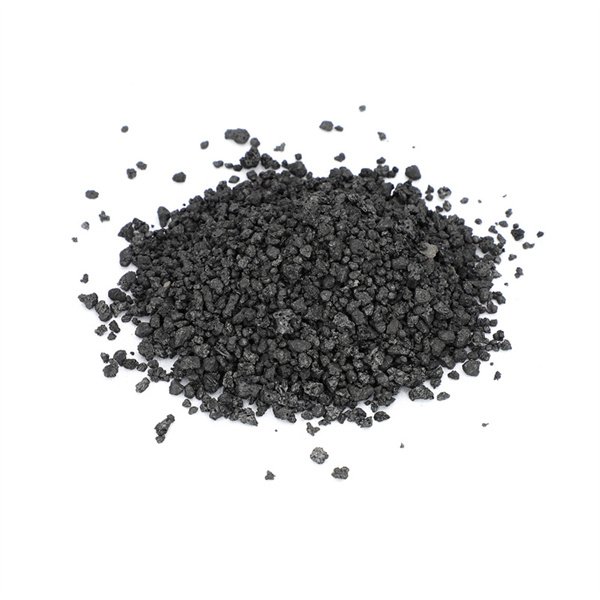
Foundries and steel mills procure carbon additives—such as Recarburizers, Graphite Petroleum Coke (GPC), Calcined Petroleum Coke (CPC), and Artificial Graphite—primarily to introduce carbon into the melt. The core need, however, is precision and predictability.
Consistent Metallurgical Outcomes: Each casting specification demands precise carbon equivalents. An inconsistent additive leads to unacceptable variations in hardness, tensile strength, and machinability.
Defect Minimization: High sulfur or nitrogen in low-quality additives can lead to pinholes, shrinkage porosity, and cracks. Excessive ash increases slag inclusion, creating surface and internal defects.
Cost Efficiency in the Long Run: While a cheaper additive saves upfront cost, the resulting rejection rates, rework, energy waste, and production delays create a far greater total cost of ownership (TCO). The true need is for a material that ensures first-pass quality.
Recent industry analyses and feedback from leading foundries highlight a clear trend:
The Rejection Rate Correlation: Studies indicate that up to 30% of casting defects related to composition and gas porosity can be traced back to inconsistent or low-purity carbon additives.
The “Green” Pressure: Modern foundries are increasingly evaluated on their environmental footprint. High-ash additives generate more slag waste, while efficient, high-purity additives like premium GPC or synthetic graphite improve yield and reduce waste volume.
Supply Chain Volatility: The market is flooded with products of varying origin and processing quality. Suppliers without integrated production control struggle to guarantee batch-to-batch consistency, passing risk onto your production floor.
Don’t just buy “carbon additive.” Specify and verify. Here is your checklist for the next procurement review:
Fixed Carbon Content: Aim for ≥98.5% for critical applications. This is the primary useful material; higher purity means more predictable results and less contamination.
Sulfur (S) & Nitrogen (N) Levels: Demand ultra-low sulfur (<0.05%) and nitrogen (<100 ppm) to drastically reduce gas defect formation.
Ash Content: <1.0% is ideal. Lower ash means fewer inclusions and less slag interference with the melt chemistry.
Moisture & Volatile Matter: Controlled low levels (<0.5%) ensure stable weighing, prevent hydrogen pickup, and ensure safe, splash-free addition.
Particle Size Distribution: Ensure the sizing matches your absorption kinetics. Well-calibrated, dust-free granules (e.g., 1-5mm, 0.5-2mm) ensure uniform dissolution and recovery rates.
Certification & Traceability: Insist on Mill Test Certificates (MTC) or Chemical Analysis Reports for every batch. Know the source and its proof.
Not all suppliers are created equal. Here’s how to differentiate:
| Evaluation Criteria | Generic Trader / Broker | Standard Processor | Integrated Manufacturer like Beifang Alloy |
|---|---|---|---|
| Source Control | Buys from spot market; source varies. | May process sourced raw materials. | Direct control from raw material selection through calcination, crushing, and grading. |
| Consistency Guarantee | Low; dependent on third parties. | Moderate; limited to processing. | High; vertically integrated production ensures batch-to-batch uniformity. |
| Technical Support | Limited to logistics. | Basic product data. | In-depth metallurgical support, defect analysis, and application optimization. |
| Cost Focus | Upfront price only. | Price + basic processing cost. | Total Cost of Ownership (TCO) – focusing on your yield, rejection rate, and energy efficiency. |
| Customization | Seldom available. | Limited sizing options. | Tailored sizing, packaging, and blends to suit your specific furnace and process. |
High rejection rates are a complex alarm system. Before overhauling your entire process, investigate the fundamental inputs. Your carbon additive is a pivotal variable.
At Beifang Alloy, we engineer solutions from the ground up. As a professional ferro alloy factory, we don’t just supply materials; we provide guaranteed consistency, expert-backed performance, and a partnership aimed at lowering your total production costs.
Ready to transform your casting quality from the foundation up?
Visit our website to explore our premium range of Graphite Petroleum Coke, Calcined Petroleum Coke, and other precision ferro alloys: www.beifangalloy.com
Contact our technical sales team for a personalized consultation and sample testing: info@hnxyie.com