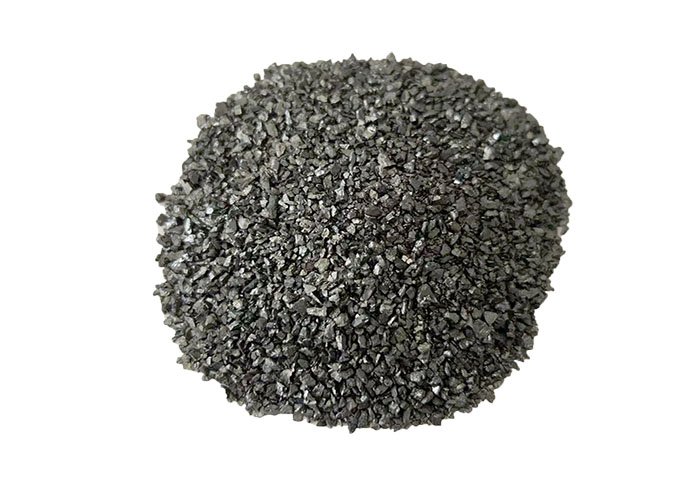
In the precise science of steel and foundry production, every input matters. Among ferroalloys and additives, the carbon raiser—a critical material for adjusting carbon content—holds a unique place. While its chemical composition (fixed carbon, ash, sulfur) is rightly scrutinized, one physical property often underestimated is particle size. At Beifang Alloy, a leading ferroalloy factory, we understand that the granularity of a carbon raiser is not just a shipping specification; it is a key determinant of dissolution rate, yield efficiency, and the final mechanical properties of your product. This article explores the critical link between particle size and performance, providing a framework for smarter procurement decisions.
When your procurement team issues a request for carbon raiser, the focus typically revolves around price, fixed carbon percentage, and impurity levels. However, integrating particle size distribution into your core requirements addresses fundamental operational needs:
Dissolution Rate & Absorption Efficiency: Finer particles have a larger surface area-to-volume ratio, leading to faster dissolution in molten iron or steel. This improves carbon recovery yield and allows for more precise control during the tapping ladle or furnace adjustment process.
Slag Formation and Cleanliness: Ultra-fine particles (dust) can be easily carried away into the slag, reducing yield and potentially increasing slag volume. Oversized lumps may dissolve incompletely, leading to carbon heterogeneity and inclusion risks. The right size minimizes waste and promotes cleaner metal.
Process Consistency & Predictability: Consistent particle size ensures repeatable dissolution behavior from batch to batch. This stability is crucial for automated feeding systems and for maintaining tight quality control in final product chemistry.
Handling and Feeding System Compatibility: The particle size must align with your plant’s material handling infrastructure—whether it’s pneumatic conveying, belt feeding, or manual addition. Incorrect sizing can cause clogging, dust emissions, or uneven flow.
Key Procurement Question: Are you buying just a chemical compound, or a process-engineered additive designed for optimal performance in your specific application?
Extensive metallurgical research and practical experience confirm a direct correlation between carbon raiser particle size and furnace dynamics.
The Dissolution Dynamics: Carbon dissolution is an interfacial reaction. Smaller particles (e.g., 1-5mm) melt and diffuse rapidly, making them ideal for secondary refining and ladle furnace operations where time is limited. Larger particles (e.g., 10-50mm) dissolve more slowly, providing a more gradual carbon release, which can be beneficial in certain EAF (Electric Arc Furnace) charging practices to prevent excessive boiling and lining erosion.
Impact on Final Product Quality:
Homogeneity: Uniform particle size promotes even carbon distribution throughout the melt, reducing the risk of segregated “hard spots” or micro-inclusions.
Mechanical Properties: Consistent carbon content, achieved through controlled dissolution, leads to predictable and uniform tensile strength, hardness, and machinability in the final steel or cast iron.
Cost-in-Use: Higher effective yield from optimal particle sizing reduces the total kg/ton requirement, lowering the effective cost despite a potentially higher upfront price per ton.
Industry Trend: Leading producers are moving towards “application-specific gradation,” where suppliers like Beifang Alloy provide tailored size ranges for different process stages (e.g., lump for charge, medium for ladle, fine for wire injection).
Here is a practical guide for procurement and production teams to specify carbon raiser particle size:
Define Your Primary Process:
EAF Charge Carbon: Larger lumps (15-50mm) are common. They survive the initial charge and dissolve throughout the melt-down period.
Ladle/Secondary Metallurgy: Medium to fine sizes (1-10mm) are preferred for quick dissolution and accurate carbon trimming.
Cupola or Induction Furnace (Foundry): A blend or specific mid-range size (5-20mm) is typical, depending on the furnace geometry and charging method.
Specify Distribution, Not Just a Range: Require a sieve analysis certificate. “5-25mm” is a start, but the proportion within each sub-range (e.g., >85% between 10-20mm) matters more for consistency. Limit fines (e.g., <1mm) to below 3-5%.
Match Your Feeding System: Consult with your plant engineers. Pneumatic systems may require a dried, granular 0.5-2mm product, while skip-charged systems can handle larger lump.
Balance Cost and Performance: Recognize that advanced crushing and screening to ensure tight size control adds value. The optimal size that maximizes your yield often delivers the lowest total cost per ton of steel produced.
Partner for Trials: Work with suppliers who can provide samples of different gradations for controlled plant trials to measure the actual yield and efficiency impact.
When evaluating carbon raiser suppliers, their capability in particle size management is a key differentiator. Compare them on these factors:
| Comparison Factor | Standard Supplier | Engineered Supplier (e.g., Beifang Alloy) |
|---|---|---|
| Size Specification | Offers broad, standard ranges (e.g., 0-10mm, 10-50mm). | Provides multiple, tightly controlled grades and can customize based on your process. |
| Consistency Guarantee | Relies on general processing; batch-to-batch variation possible. | Implements advanced screening technology and provides sieve analysis with each batch for guaranteed consistency. |
| Technical Support | Focuses on chemical specs and price. | Offers metallurgical consultation on optimal particle size for your application to improve yield and quality. |
| Product Range | May have limited physical forms. | Offers a full portfolio: calcined petroleum coke, graphite, and other raisers in various engineered sizes. |
| Value Proposition | Sells a commodity. | Sells a process solution aimed at reducing your total cost of production. |
The Strategic Dimension of a Physical Property
Choosing the correct carbon raiser particle size is a strategic decision that bridges procurement, production, and quality control. It is a tangible lever to pull for improving efficiency, consistency, and bottom-line results.
At Beifang Alloy, we engineer our carbon raisers with the understanding that physics is as important as chemistry. Our controlled crushing and screening processes deliver not just high fixed carbon content, but the optimal physical form for rapid, efficient dissolution and superior final results.
Optimize your process from the ground up. Contact Beifang Alloy today to discuss your specific application and receive tailored samples of our precision-graded carbon raisers.
Beifang Alloy – Your Partner in Precision Metallurgy.
Website: www.beifangalloy.com
Email: info@hnxyie.com