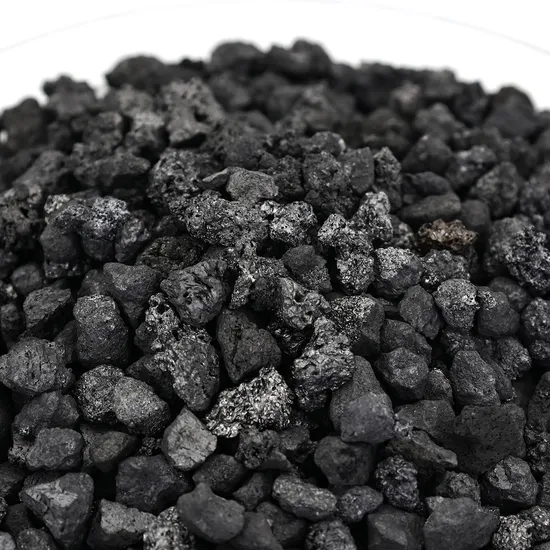
In the competitive and energy-intensive world of ferroalloy production, every operational detail counts. While much focus is rightly placed on primary raw materials like ferro silicon and silicon metal, the strategic selection of auxiliary materials can unlock significant efficiency gains. Among these, the carbon raiser is a critical yet often underestimated component. This article explores how making an informed choice about your carbon raiser can directly lead to a longer furnace lining life and a lower energy consumption per ton (kWh/ton), translating to substantial cost savings and operational stability.
Procuring a carbon raiser based on price alone is a common pitfall. True value is measured by its impact on your production metrics. From the perspective of a ferroalloy producer, here are the key technical parameters that should define your procurement needs:
Fixed Carbon Content (The Core Metric): This is the percentage of pure carbon available for the reduction reaction. A higher fixed carbon content (e.g., 98-99.5%) means more efficient metallurgy, requiring less additive to achieve the desired carbon level in your alloy. This directly reduces slag volume and associated energy waste.
Ash Content (The Enemy of Lining): Ash is the inorganic impurity that does not participate in the reaction. High ash content leads to increased slag formation. This slag is chemically corrosive and can accelerate the wear and erosion of your furnace’s refractory lining, shortening its campaign life and necessitating costly, downtime-heavy repairs.
Volatile Matter (The Efficiency Thief): Volatiles are released as gases during heating. A high volatile content causes puffing, delays the reaction, and can lead to inconsistent carbon recovery. This unpredictability forces operators to over-compensate, wasting energy and increasing the kWh/ton metric.
Sulfur & Phosphorus (The Quality Compromisers): These harmful elements can transfer into the final ferroalloy product, degrading its quality and market value. They can also contribute to lining degradation and environmental control issues.
Particle Size & Distribution (The Consistency Factor): Optimal and consistent sizing ensures uniform dissolution and reaction in the melt. Incorrect sizing can cause carbon to either float (too large) or be lost in fumes (too fine), both leading to poor recovery, longer processing times, and higher power consumption.
Industry practices are evolving from using generic carbons to specialized, high-performance carbon raisers. Research and leading-edge production consistently show:
Graphitized Petroleum Coke is Gaining Traction: Compared to standard calcined petroleum coke, graphitized varieties offer significantly higher fixed carbon, near-zero volatile matter, and lower sulfur. This results in faster, more predictable carbon absorption, reduced slag, and less thermal shock to the lining—a direct path to energy savings and lining protection.
The Rise of Synthetic/Specialty Graphite: For premium alloy production, synthetic graphite raisers provide the pinnacle of purity and performance. Their ultra-low impurity levels maximize lining protection and minimize energy waste from processing contaminants.
Data-Driven Correlation: Plant studies increasingly quantify the relationship. For instance, a documented case showed that switching to a high-purity, low-ash carbon raiser reduced specific power consumption by 3-5% and extended lining life by an estimated 15-20% in a ferrosilicon furnace, delivering a return on investment far exceeding the initial material cost premium.
Turning knowledge into action requires a systematic approach. Follow this guide to evaluate and select the right partner and product:
Define Your Specification: Start from your furnace type (submerged arc furnace, electric arc furnace), the alloy being produced, and your target output quality. This will dictate the required fixed carbon, ash, and sulfur limits.
Prioritize Consistency: Demand certified mill test reports (MTRs) for every batch. Consistency in chemistry and size is as important as the specs on paper.
Initiate a Trial: Before committing to a large order, arrange a controlled production trial. Monitor key parameters: carbon recovery rate, power consumption trends, slag fluidity/volume, and any observable changes in lining wear patterns.
Evaluate Total Cost, Not Unit Price: Calculate the effective cost per unit of carbon delivered to the melt. A cheaper product with low fixed carbon and high ash often ends up costing more in wasted power, extra material handling, and shortened lining life.
Choosing a supplier is choosing a long-term partner for operational stability. Use the matrix below to compare potential suppliers objectively.
| Comparison Dimension | Low-Cost / Generic Supplier | Technical / Quality-Focused Supplier (e.g., Beifang Alloy) | Why It Matters to You |
|---|---|---|---|
| Product Specifications | Meets basic grade; higher variance in batch-to-batch consistency. | High & Consistent Purity: Guarantees high fixed carbon (>98.5%), strictly controlled low ash and sulfur. | Determines process efficiency, product quality, and lining impact directly. |
| Technical Data & Support | Provides basic COA; limited application guidance. | Provides Full MTRs & Technical Consulting: Offers data-driven advice on grade selection and usage optimization for your furnace. | Enables you to fine-tune operations for maximum efficiency and cost savings. |
| Production Capability | May source from multiple mills; less control over raw material origin. | Integrated Control: Often controls key production stages from raw material selection to calcination/graphitization. | Ensures traceability, reliability, and the ability to customize products if needed. |
| Value Proposition | Low initial price per ton. | Lower total cost of operation (TCO): Focus on kWh/ton reduction, lining life extension, and yield improvement. | Delivers true, measurable long-term savings and competitive advantage. |
| After-Sales Service | Transaction-focused. | Partnership-focused: Willing to conduct joint trials, analyze results, and provide ongoing support. | Mitigates your risk and ensures you achieve the promised performance benefits. |
The right carbon raiser is not merely a consumable; it is a strategic tool for enhancing ferroalloy production efficiency. By shifting the procurement focus from upfront price to total operational value—encompassing energy efficiency, lining longevity, and product quality—producers can unlock significant, sustainable cost advantages.
As a manufacturer deeply embedded in the ferroalloy ecosystem, Beifang Alloy understands this intricate balance. We are committed to providing carbon raiser solutions engineered not just to meet specifications, but to actively contribute to extending your lining campaigns and reducing your power consumption per ton. We invite you to evaluate your current consumables through this lens.
Ready to calculate your potential savings? Contact our technical team at info@hnxyie.com or visit www.beifangalloy.com to discuss how a tailored carbon raiser solution can optimize your furnace performance.