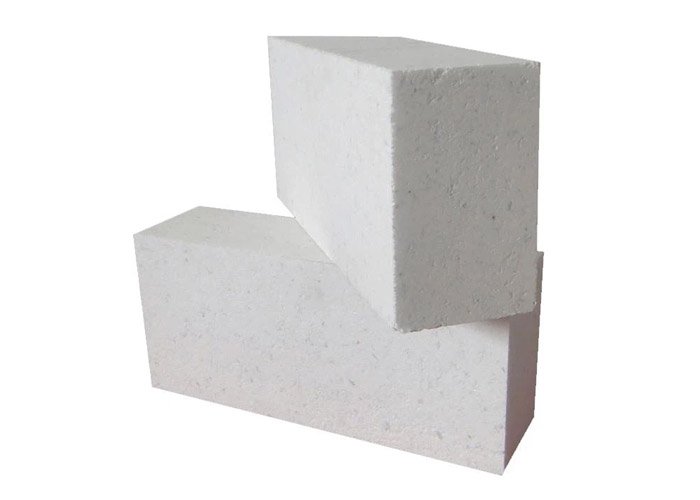
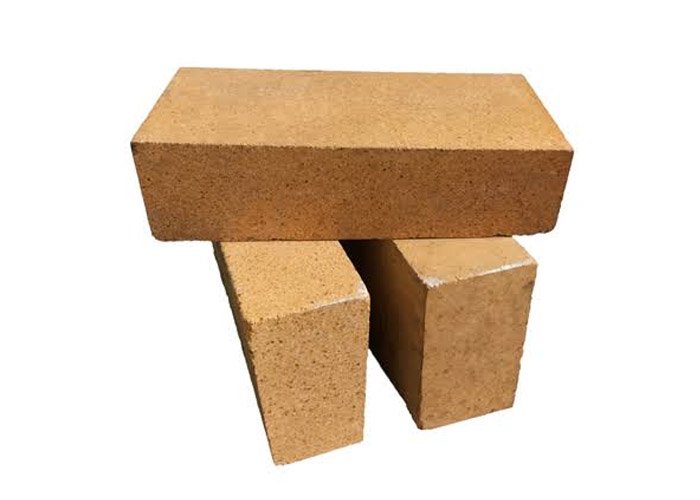
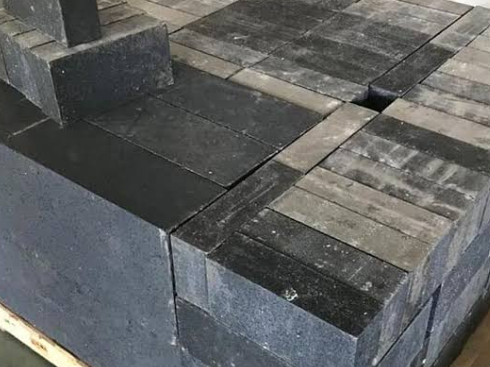
When buying refractory bricks, buyers usually focus on dimensional tolerance and physical properties. Joint width tends to be an afterthought—something the installation crew figures out on site. But by the time the mortar is mixed and the first course is going up, it’s too late to discover that the brick tolerance can’t hold the specified joint width. The bricks are already at the job site.
Joint width is not an isolated construction parameter. It works backward to determine the dimensional precision you need from your bricks, and whether your supplier’s sorting and machining capability matches your project’s masonry class. Confirming joint standards at the procurement stage is more valuable than “figuring it out” on site.
The Chinese national standard GB 50211-2014 “Code for Construction and Acceptance of Industrial Furnace Masonry” classifies refractory masonry into five classes by precision level, with progressively looser joint thickness limits:
Special class: ≤ 0.5 mm
Class I: ≤ 1 mm
Class II: ≤ 2 mm
Class III: ≤ 3 mm
Class IV: > 3 mm
The procurement implication is direct: the joint class you specify determines the dimensional precision your supplier must deliver. Special-class masonry requires bricks to be finely machined and sorted by thickness and length. Class I requires sorting by thickness and length, with machining where dimensional deviation exceeds the limit. Class II requires sorting by thickness, with machining where necessary. Class III and IV have looser sorting requirements.
The most common industrial furnace masonry is Class II, with joints no wider than 2 mm. In cement rotary kilns, grate coolers, preheaters, and calciner sections, joint width is typically controlled within 2 mm. Hot air duct masonry also specifies joints no thicker than 2 mm.
The practical takeaway: if your project specification states “Class II masonry, joint ≤ 2 mm,” you cannot assume the bricks the supplier ships will meet that requirement. Brick dimensional tolerance must match the joint class. Stating the joint class and the corresponding sorting requirements in the technical annex of your inquiry is far more enforceable than writing “conforms to GB 50211.”
Joint compliance is not judged by visual inspection. GB 50211-2014 specifies a feeler gauge method: a gauge 15 mm wide and equal in thickness to the specified joint thickness is inserted into the joint. If it penetrates no more than 20 mm, the joint is considered compliant. The check is designed to detect over-thick joints, not to measure every joint precisely.
A limited number of out-of-tolerance joints is permitted, but the density is capped. Ten locations per 5 m² of masonry surface are checked with the feeler gauge. For Class I and II masonry, no more than 4 locations may have joints exceeding the specified thickness by up to 50%. For Class III and IV, the limit is 5 locations. The logic is that minor localized deviations are acceptable in engineering practice, but the density of deviations must be controlled.
Mortar fullness is the other half of joint quality. A compliant joint thickness does not guarantee masonry integrity. For general industrial furnaces and general locations, refractory mortar fullness should exceed 90%. For locations with strict gas-tightness requirements or exposure to molten material and slag, fullness should exceed 95%. A thin joint that is not completely filled still provides a path for gas or slag penetration at high temperature.
One frequently confused number: residential and industrial joint standards are different. Some refractory mortar products marketed for fireplaces and pizza ovens recommend joint widths of 3–5 mm. That is an empirical value for small combustion appliances and hand-built masonry, not directly transferable to industrial furnaces. Industrial furnace joint control follows the GB 50211-2014 classification, where 2 mm is the upper limit for Class II, not a “recommended value.” If a buyer encounters “refractory brick joints 3–5 mm” online, the first step is to confirm the applicable scenario before adopting the number.
Step 1: Confirm the masonry class at design review. Require the designer or end customer to specify the masonry class (Special through Class IV) for each furnace section, rather than a generic “per national standard.” Different sections may have different requirements: kiln bottom and walls are typically Class III (≤ 3 mm), high-temperature or slag-exposed areas are Class II (≤ 2 mm), and arch crowns are Class II for wet masonry or Class I (≤ 1.5 mm) for dry masonry.
Step 2: Translate the joint requirement into a brick tolerance requirement. Class II masonry with joints ≤ 2 mm means the sum of brick dimensional deviation and installation error must fall within that limit. The purchase contract should require the supplier to state its product’s dimensional tolerance range and confirm whether it can support the target joint class. If the supplier’s tolerance approaches or exceeds the joint limit, the site will inevitably require extensive machining or sorting—affecting both schedule and cost.
Step 3: Confirm the supplier’s sorting and machining capability. Special-class and Class I masonry explicitly require brick sorting, with machining where dimensional deviation exceeds limits. If your project requires Class II or better, ask whether the supplier offers sorting services, what machining capability it has, and how it ensures machined brick thickness does not fall below two-thirds of the original thickness. A supplier without sorting capability may ship bricks that “pass sampling inspection” but produce joints of inconsistent width on site.
Step 4: Write joint-related acceptance terms into the contract. If the buyer is responsible for masonry or has quality requirements for installation, the contract can specify: joint thickness judged by the GB 50211-2014 feeler gauge method; mortar fullness accepted at the location-specific requirement (90% or 95%); the maximum number of out-of-tolerance joints per masonry class. These terms look like construction specifications, but in a brick quality dispute, they are the basis for distinguishing “a brick problem” from “an installation problem.”
Question 1: “Our project requires Class II masonry with joints ≤ 2 mm. Can your brick dimensional tolerance meet this directly, or will on-site sorting or machining be required?” A supplier who answers this specifically understands the relationship between joint class and dimensional tolerance. A supplier who says “all our bricks are qualified” without addressing the tolerance-to-joint relationship likely has no experience supplying to masonry-class requirements.
Question 2: “If some bricks exceed the joint requirement, can you provide sorting or machining services? How do you ensure machined thickness?” Special-class and Class I masonry explicitly require sorting and machining. Suppliers with this capability offer more reliable supply for high-end projects. Suppliers who only sell “standard bricks” without sorting are suitable for Class III and below, where joint requirements are less strict.
Question 3: “Can you provide supply records or customer feedback for projects of the same masonry class?” Joint control depends not only on individual brick precision but on batch consistency. Suppliers with experience in similar projects have typically had their batch dimensional stability verified on site. A new supplier’s sample may pass, but that does not mean every brick in the production batch will meet the joint requirement.
About Beifang Alloy. As a ferroalloy factory, our core products are deoxidizers and alloy additives for steelmaking. The logic of refractory joint control shares common ground with ferroalloy grain size control: in both cases, the dimensional precision of the upstream product determines the executability of the downstream process. If you encounter similar specification-to-process matching questions in ferroalloy procurement, reach us at info@hnxyie.com.
Joint width looks like a construction parameter, but it is actually part of the procurement specification. The joint class you specify determines the precision of the bricks your supplier should ship; the precision of the bricks your supplier ships determines whether the specified joint can be achieved on site. Sorting out this chain at the order stage is far less trouble than measuring joint by joint with a feeler gauge at the job site.
Beifang Alloy | Ferroalloy products and high-temperature materials sourcing
info@hnxyie.com | www.beifangalloy.com