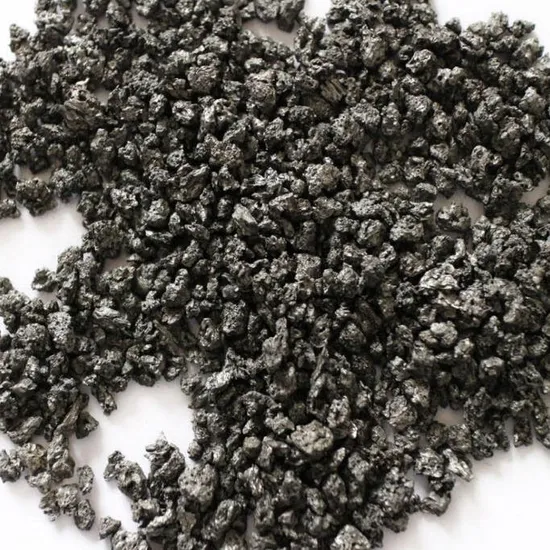
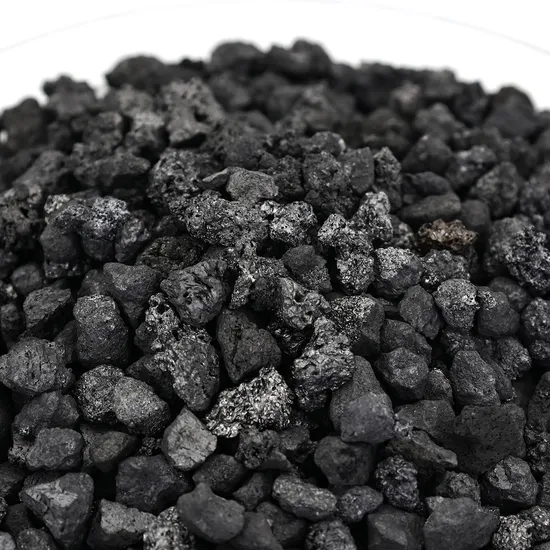
In the competitive world of steel and foundry production, efficiency is everything. One of the most critical – yet often overlooked – factors impacting your bottom line is the performance of your carbon additives. A low absorption rate doesn’t just mean wasted material; it means burned cash, compromised metallurgy, and inconsistent end products. For procurement managers and metallurgists, selecting a carbon additive that efficiently dissolves into the melt is a direct lever on profitability.
At Beifang Alloy, a leading ferroalloy factory, we understand that true value isn’t just in the price per ton, but in the performance per kilogram added to your furnace.
Before comparing suppliers or products, you must define your needs beyond the price tag. The “real cost” of a carbon additive includes:
Effective Carbon Recovery (ECR): The percentage of carbon that actually enters the melt. Low absorption means you’re paying for material that ends up as slag or dust.
Consistency & Predictability: Batch-to-binary variation disrupts your chemistry control, leading to costly corrections and potential scrap.
Impact on Operational Efficiency: Poor dissolution can increase slag volume, lining wear, and tap-to-tap time.
Environmental & Handling Factors: Dust generation and high moisture content are indirect costs affecting workplace safety and energy consumption.
Key Question: Are you buying tons of carbon or units of effective carbon?
Not all carbon is created equal. Absorption and dissolution rates are primarily influenced by:
Fixed Carbon Content & Purity: Higher fixed carbon (typically 98%+ for premium grades) means less ash, which impedes dissolution and can introduce undesirable elements.
Porosity & Surface Area: A porous structure allows molten metal to infiltrate, promoting faster dissolution. Dense, low-porosity materials resist absorption.
Particle Size Distribution: A controlled, consistent size ensures even melting. Fines can oxidize or be lost in fumes; overly large lumps dissolve too slowly.
Crystalline Structure: The arrangement of carbon atoms (amorphous vs. graphitic) affects solubility speed. Calcined Petroleum Coke (CPC) and high-quality Gas Calcined Anthracite (GCA) are engineered for optimal dissolution.
Insight: The industry is shifting from commoditized carbon sources to engineered dissolution solutions. Premium additives may cost more upfront but deliver significantly lower effective cost per ton of steel/iron.
Move from guesswork to a data-driven selection process.
Benchmark Your Current Additive: Calculate your current Effective Carbon Recovery. (Weight of carbon added vs. carbon increase in melt analysis).
Set Technical Specifications:
Fixed Carbon: Minimum 98%.
Ash Content: Below 1% for critical applications; lower is always better.
Volatile Matter: Low and stable (<1%) to prevent violent reactions.
Moisture: As low as possible (<0.5%) to avoid energy waste and spattering.
Size: Specify a tight range (e.g., 1-4mm, 5-10mm) suited to your furnace and feeding system.
Request Performance Data: Ask suppliers for dissolution rate test results or typical ECR figures from similar customers. A reputable supplier will have this data.
Insist on Samples for Trial: A production-scale trial is the only way to validate performance in your specific conditions. Monitor absorption, slag behavior, and effect on final chemistry.
Analyze Total Cost of Ownership (TCO): Factor in the adjusted price based on actual absorption, handling costs, and impact on productivity.
When evaluating suppliers like Beifang Alloy, scrutinize these critical differentiators:
| Comparison Factor | Commodity Supplier | Technical Partner (e.g., Beifang Alloy) |
|---|---|---|
| Product Focus | Sells bulk material based on basic specs. | Provides engineered solutions tailored to furnace type and melt goals. |
| Quality Consistency | May vary batch-to-batch; focused on volume. | Rigorous process control (calcination temperature, sizing) ensures identical performance every shipment. |
| Technical Data | Provides standard certificate of analysis. | Offers dissolution insights, application support, and metallurgical assistance. |
| Value Proposition | Low price per ton. | Lowest effective cost per unit of carbon dissolved, improving your overall yield and cost structure. |
| Supply Chain Reliability | May have multiple intermediaries. | As a direct factory (www.beifangalloy.com), we ensure stable supply, traceability, and direct technical communication. |
Choosing the right carbon additive is a strategic decision. By focusing on absorption performance and dissolution efficiency, you transform a raw material cost into a value-adding component of your process. The goal is to stop budget burn and start fueling precision and profitability.
Partner with a supplier who understands metallurgy, not just logistics. At Beifang Alloy, we leverage our expertise as a ferroalloy manufacturer to produce carbon additives that meet the exacting standards of modern foundries and steel mills. We don’t just supply carbon; we supply predictable, efficient, and cost-effective carbon dissolution.
Ready to optimize your carbon addition and improve your bottom line?
Contact our technical team at info@hnxyie.com to discuss your specific needs, request performance data, or arrange a trial. Let’s ensure every kilogram you pay for goes into your product, not your slag.