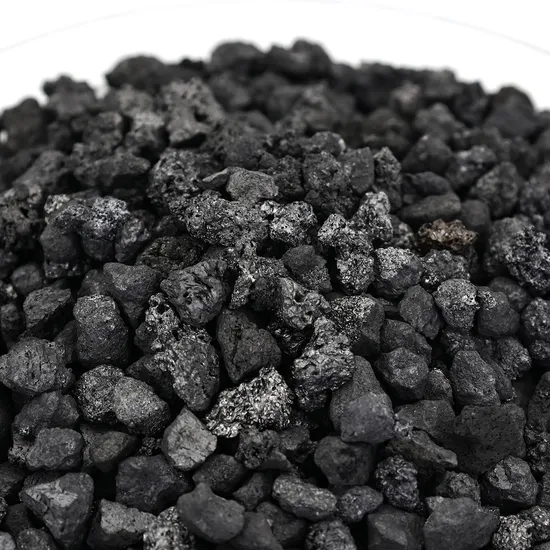
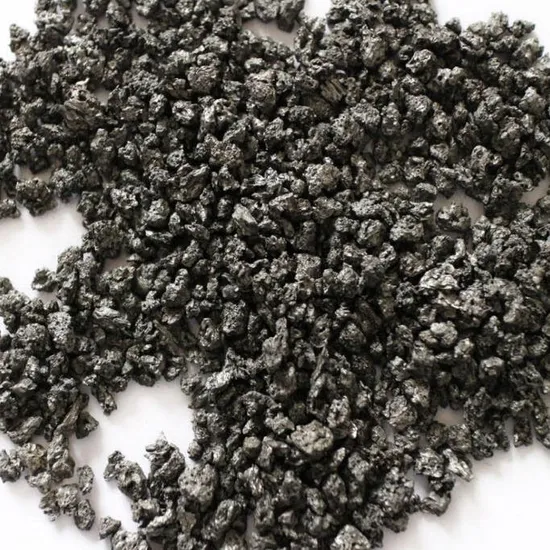
For steelmakers and foundry operators, achieving the perfect melt is a precise science where timing is everything. The addition of carbon raisers—a critical step in adjusting final carbon content—is far from a mere procedural task. Getting it wrong can lead to inconsistent chemistry, increased costs, and compromised product quality. As a leading ferroalloy factory, Beifang Alloy understands that the question isn’t just what carbon raiser to use, but when to add it for peak efficiency and performance. This article delves into the strategic timing of carbon raiser addition, expanding from procurement needs to supplier comparison, to help you optimize your Electric Arc Furnace (EAF) or Induction Furnace operations.
Before analyzing timing, you must first clearly define what you need from a carbon raiser. This goes beyond bulk ordering and focuses on how the material’s properties interact with your process.
Process Integration and Predictability: Your primary need is a material that integrates seamlessly into your existing melting practice. The carbon raiser must have a consistent and predictable dissolution rate that aligns with your furnace’s energy input and slag chemistry. An unpredictable product makes optimal timing impossible to achieve.
Key Performance Indicators (KPIs): Define your success metrics. These typically include:
Carbon Recovery Rate: The percentage of carbon from the additive that ends up in the molten metal. Higher recovery improves yield and cost-efficiency.
Inclusion Control: The additive should minimize the introduction of undesirable impurities (ash, sulfur, nitrogen) that can create harmful inclusions.
Slag Interaction: The product should not adversely affect slag foaming (in EAF) or basicity, which are crucial for furnace efficiency and lining life.
Total Cost of Ownership (TCO): Procurement must look beyond price per ton. Calculate TCO by factoring in consumption rate (influenced by recovery efficiency), impact on refractory life, potential for re-carburization, and its effect on overall power-on time.
Extensive industry research and practical experience have pinpointed timing as a major lever for controlling the cost and quality outcome of the melting process.
The Science of Dissolution and Absorption: Carbon dissolves into liquid iron more readily than into solid scrap. Early addition onto a cold charge or solid scrap leads to excessive oxidation from the furnace atmosphere, resulting in low yield, high consumption, and unnecessary cost. Research shows that carbon yield improves significantly when added to a molten bath or late in the melt-down phase.
EAF vs. Induction Furnace Dynamics:
In EAF Operations: The focus is on leveraging the carbon for slag foaming. Here, timing is often staged. An initial charge may be added with the scrap to aid early slag formation, but the primary carbon adjustment for chemistry is made after a molten pool is established, typically during the flat bath period. This protects the carbon from oxidation by the arcs and ensures efficient transfer into the steel.
In Induction Furnace Operations: The environment is less oxidative. However, best practice is still to add the carbon raiser after the charge is mostly or fully molten. This ensures rapid dissolution and homogeneous mixing due to the furnace’s vigorous electromagnetic stirring, leading to highly consistent and predictable carbon recovery.
Impact on Furnace Health and Efficiency: Correctly timed addition minimizes temperature loss and reduces the need for “temperature correction” holding times. In EAFs, properly timed carbon aids in maintaining an optimal foamy slag, which shields the walls and roof from arc radiation, improving energy efficiency and extending refractory life.
Armed with this technical understanding, your procurement strategy should evolve to prioritize suppliers who are true technical partners.
Technical Specification Audit: Move beyond fixed carbon content. Require detailed data sheets that include:
Fixed Carbon: Minimum 95-99% depending on grade.
Ash Content: Lower is better (<1% for premium grades).
Sulfur & Nitrogen Content: Critical for clean steel production.
Particle Size Distribution (PSD): Consistency is key. Fines lead to losses, while overly large pieces dissolve slowly.
Moisture Content: Should be minimal and consistent to avoid hydrogen pickup and bath explosions.
Supplier Qualification Checklist:
Proof of Consistency: Request multiple Certificates of Analysis (CoAs) from different production batches to verify product uniformity.
Technical Support Capability: Can they provide application engineers to help audit your process and recommend optimal addition points and methods?
Manufacturing Process Understanding: Prefer suppliers who control the entire production chain (from raw material to calcination/graphitization) for superior quality control.
Trial Protocol for Validation: Before full-scale adoption, establish a structured trial:
Define Baselines: Measure current carbon recovery rate, consumption, and consistency.
Isolate Variables: Test the new product/timing recommendation on similar heats under controlled conditions.
Measure Holistically: Assess not just chemistry hit rate, but also any observable effects on slag condition, power consumption, and tap-to-tap time.
The market offers various carbon raisers (Calcined Petroleum Coke, Graphitized Petroleum Coke, Artificial Graphite, Natural Graphite). Choosing a supplier requires a multi-dimensional comparison.
| Comparison Dimension | Traditional CPC Supplier | Specialized Graphite Supplier | Technical Partner (e.g., Beifang Alloy) |
|---|---|---|---|
| Primary Focus | Price-driven, volume sales. | Product performance for niche applications. | Total process optimization and cost-in-use. |
| Product Range | Often limited, standard grades. | High-purity graphite products. | Broad portfolio (CPC, GPC, Graphite) tailored for EAF/Induction. |
| Technical Support | Limited or reactive. | Product-specific data. | Proactive process audits, timing recommendations, trouble-shooting. |
| Value Proposition | Low initial cost. | Superior purity for high-end steels. | Maximized yield, improved furnace efficiency, reduced TCO. |
| Ideal For | Standard products where cost is the sole driver. | Specialty steelmaking with strict purity requirements. | Operators seeking to optimize the entire melting process for reliability and profitability. |
The optimal timing for carbon raiser addition is not a single universal minute mark. It is a strategic variable determined by your furnace type, slag practice, and desired endpoint. By deepening your procurement needs with technical KPIs, understanding the industry science behind timing, and partnering with a supplier that offers more than just a product, you transform a routine material addition into a lever for significant competitive advantage.