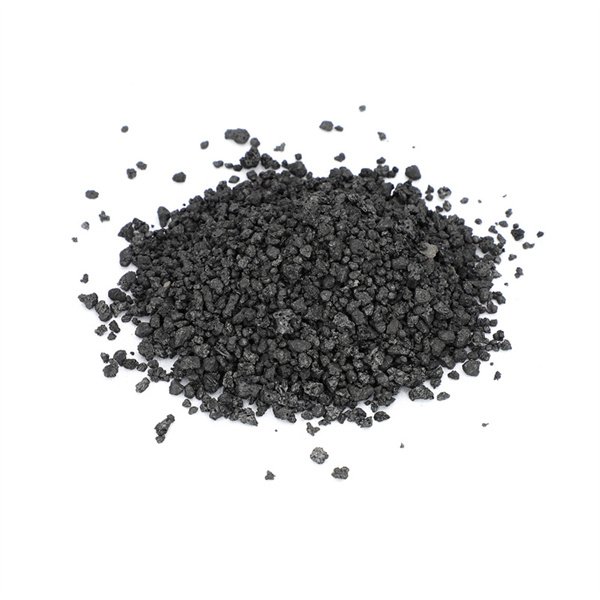
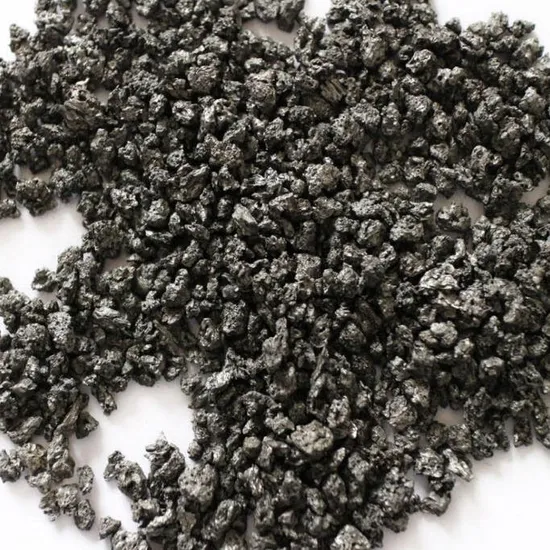
In the fast-paced world of steelmaking, efficiency is everything. As smelting cycles shrink from the traditional 60–70 minutes to just 40–50 minutes, the margin for error in carbon additive feeding has disappeared . Getting it wrong means off-spec chemistry, wasted materials, and lost production time. Getting it right? That’s where competitive advantage is built.
At Beifang Alloy, we recently partnered with a forward-thinking steel plant to transform their carbon additive feeding strategy. The results were dramatic: steel consumption reduced by 8.2 kg per ton, comprehensive power consumption cut by 23.83 kWh per ton, and overall carbon powder consumption decreased by 1.08 kg per ton . This article explores how they achieved these gains and what it means for your operation.
Before any optimization can begin, procurement teams must understand what they’re truly buying. Carbon additives aren’t a commodity—they’re a strategic input that directly impacts melt quality, energy consumption, and final product performance.
Today’s steel plants face three fundamental challenges that shape their procurement needs:
1. The Time Crunch
With production acceleration, the feeding window for carbon additives has compressed dramatically. Late feeding means incomplete dissolution; early feeding means oxidation losses. Your carbon additive must be engineered for rapid, predictable absorption .
2. Compositional Precision
The target for carbon content hit rates has moved from 85-90% to over 95% . This requires additives with consistent chemistry and predictable recovery rates—not batch-to-batch variability that forces last-minute adjustments.
3. Total Cost of Ownership
Forward-thinking procurement teams now calculate “effective carbon cost” rather than unit price. The formula is simple but revealing:
Effective Carbon Cost = Price ÷ Fixed Carbon Content
A cheaper additive with lower fixed carbon or inconsistent recovery is almost always more expensive in the long run.
Based on real-world procurement tenders from major steel enterprises, here are the specifications that separate adequate suppliers from exceptional ones :
| Specification | Premium Grade | Standard Grade | Why It Matters |
|---|---|---|---|
| Fixed Carbon (C固) | ≥98.5% | ≥96.0% | Higher = more value per kg |
| Sulfur (S) | ≤0.05% | ≤0.10% | Low sulfur protects magnesium efficiency |
| Nitrogen (N) | ≤100 ppm | ≤300 ppm | Critical for nodularity in ductile iron |
| Moisture (Mad) | ≤0.50% | ≤1.00% | Moisture causes hydrogen pickup |
| Particle Size (1-5mm) | ≥92% | ≥90% | Consistency ensures predictable dissolution |
At Beifang Alloy, we don’t just meet these specs—we engineer our production to exceed them. Our ultra-low sulfur carbon additives (S ≤ 0.05%) and strict nitrogen control ensure that your magnesium works on nodularization, not fighting impurities.
The steel industry is undergoing a quiet revolution in how it approaches carbon addition. Several key trends are reshaping best practices.
Leading steel plants are moving from “empirical feeding” (based on operator experience) to “data-driven feeding” based on real-time analytics . Online monitoring technologies—including direct-reading spectrometers (results in ≤3 minutes) and continuous furnace gas analysis—now enable dynamic adjustment of feeding strategies.
The days of manual shovel-feeding are ending. Modern operations demand enclosed, automated feeding systems with precision weighing (error control ≤0.5%) and programmable logic controller (PLC) integration . This shift requires carbon additives engineered for consistent flow properties—no bridging, no dusting, no variability.
With the steel industry accounting for 7-9% of global CO₂ emissions, pressure to decarbonize is intensifying . Optimized carbon feeding directly supports sustainability goals by:
Reducing rework and remelting (saving energy)
Improving yield (less material waste)
Enabling lower total carbon consumption per ton of steel
Generic additives are giving way to tailored solutions matched to specific:
Furnace types (EAF vs. induction vs. ladle)
Steel grades (low-nitrogen requirements for specialty alloys)
Feeding systems (pneumatic injection vs. top charging)
Choosing a carbon additive supplier is a strategic decision. Here is a systematic approach to ensure you get the right product for your specific needs.
Different applications require different carbon additive types :
| Application | Recommended Additive | Key Specifications |
|---|---|---|
| Electric Arc Furnace (EAF) | Graphitized petroleum coke | C ≥98.5%, S ≤0.05%, fast dissolution |
| Induction Furnace (Cast Iron) | Calcined petroleum coke | C ≥96%, S ≤0.10%, cost-effective |
| Ductile Iron Production | Low-nitrogen graphite | N ≤100 ppm, S ≤0.05% |
| Ladle Metallurgy | High-purity graphitized | C ≥99%, minimal ash |
Before placing any order, conduct due diligence :
Certifications: ISO 9001 confirms robust quality management
Third-Party Testing: Request recent SGS, Intertek, or equivalent lab reports
Manufacturing Capability: Confirm they are a producer, not just a trader
Track Record: Look for established market presence and verifiable client references
Never skip the sample testing phase. Here’s how to do it right :
Request production-grade samples (not specially prepared “lab samples”)
Conduct small-scale furnace trials to verify:
Absorption rate and dissolution time
Impact on final chemistry
Consistency across multiple batches
Use third-party validation for sulfur, nitrogen, and fixed carbon verification
The cheapest additive per kilogram is rarely the cheapest per ton of finished steel. Use this framework :
Total Cost = (Price ÷ Fixed Carbon %) × (1 ÷ Recovery Rate %) + Hidden Costs
Hidden costs include:
Energy consumed by slower dissolution
Alloy waste from inconsistent recovery
Rework from off-spec chemistry
Downtime from feeding system disruptions
A supplier who provides process guidance—feeding recommendations, troubleshooting, and metallurgical expertise—is worth more than one who simply ships product .Part 4: Supplier Comparison — How Beifang Alloy Stands Out
When evaluating carbon additive suppliers, the differences go far beyond price lists. Here’s how leading suppliers compare and where Beifang Alloy excels.
Based on industry best practices, here are the key dimensions for supplier comparison :
| Evaluation Criteria | Typical Trader / Broker | Average Manufacturer | Beifang Alloy |
|---|---|---|---|
| Production Control | None – sources from multiple factories | Basic quality checks | Full process control from raw material to finished product |
| Quality Consistency | High batch-to-batch variability | Generally consistent | Rigorous ISO 9001 systems with full traceability |
| Specification Customization | Limited to available inventory | Standard grades only | Custom particle sizing, tailored chemistry |
| Technical Support | Transactional only | Minimal | Professional metallurgical team for process optimization |
| Sample Policy | Free samples (may not reflect production) | Paid samples | Production-representative samples with full documentation |
| Response Time | Variable | 2-4 hours typical | ≤2 hours with technical expertise |
| Supply Chain Stability | Vulnerable to market fluctuations | Stable for standard products | Long-term raw material partnerships ensure reliable supply |
What sets us apart isn’t just our product—it’s our partnership approach.
1. Integrated Manufacturing
Unlike many suppliers who simply resell, we control our production from raw material selection through final packaging. This means consistent chemistry, reliable sizing, and full traceability for every batch .
2. Technical Expertise
Our team doesn’t just understand carbon additives—we understand steelmaking. When you work with Beifang Alloy, you gain access to metallurgical expertise that helps you optimize your entire process .
3. Customization Capability
Every steel plant is different. We offer:
Tailored particle size distributions (1-5mm, 0.2-0.5mm, or custom)
Modified chemistries for specific applications
Specialized packaging for automated feeding systems
4. Global Reach, Local Support
With our base in Henan province—China’s premier industrial cluster for carbon materials—we combine world-class manufacturing with efficient logistics to ports worldwide .
The steel plant we partnered with didn’t just change suppliers—they transformed their process. By switching to Beifang Alloy’s ultra-low sulfur carbon additive and implementing optimized feeding methods, they achieved :
Steel consumption reduction: 8.2 kg per ton
Power consumption reduction: 23.83 kWh per ton
Carbon powder reduction: 1.08 kg per ton
Annual cost savings: Approaching $1.4 million USD (based on current pricing)
The steel industry is evolving rapidly. Faster production cycles, tighter quality requirements, and sustainability pressures demand a new approach to carbon additive feeding. The old way—empirical, manual, inconsistent—is no longer viable.
The new way is data-driven, automated, and optimized. It requires:
The right product: Ultra-low sulfur, consistent, application-matched
The right partner: A manufacturer with technical expertise and quality systems
The right process: Precision feeding with real-time adjustment
At Beifang Alloy, we provide all three. Our ultra-low sulfur carbon additives are engineered for the modern melt shop—consistent, predictable, and optimized for your specific process.
Ready to maximize your efficiency? Contact us today to discuss your application and schedule a sample trial.
Website: www.beifangalloy.com
Email: info@hnxyie.com
Beifang Alloy: Your Partner in Metallurgical Excellence