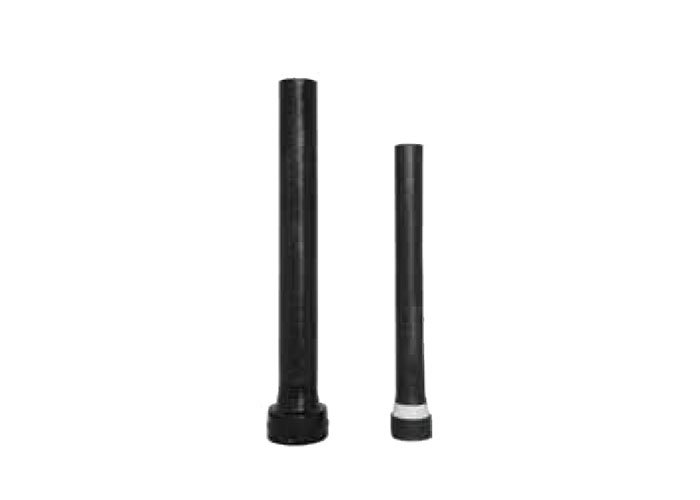
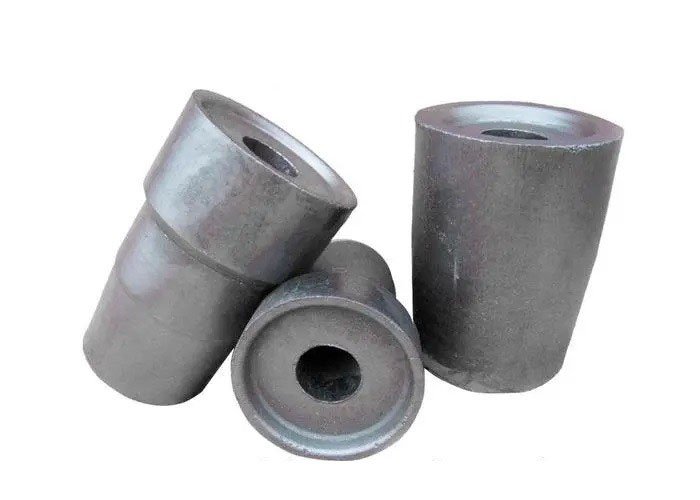
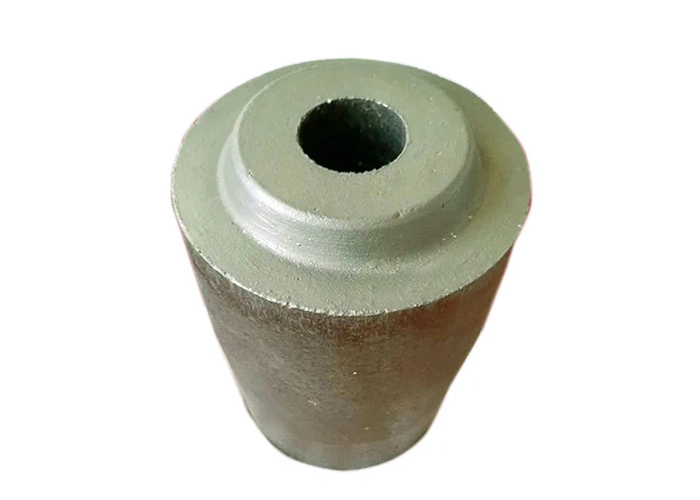
The tundish upper nozzle is a key flow-control refractory component installed inside the well block at the bottom of the tundish. Working together with the stopper rod or slide gate, it controls the flow rate of molten steel from the tundish to the mold. The upper nozzle directly withstands continuous scouring and erosion by high-temperature molten steel, and its performance directly affects the stability of the continuous casting rhythm and the cleanliness of the molten steel.
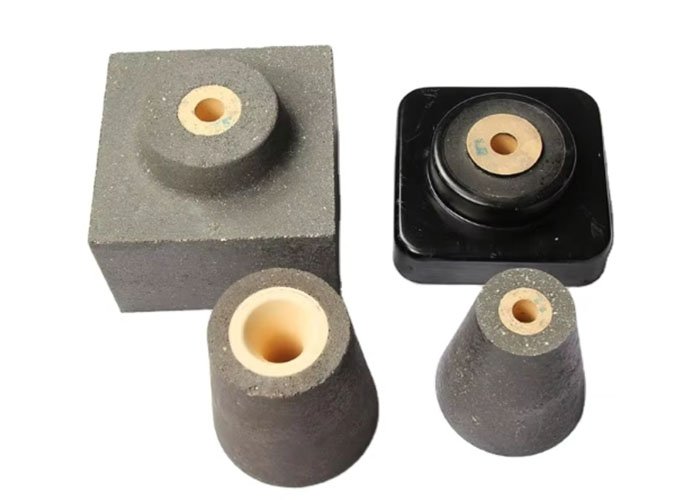

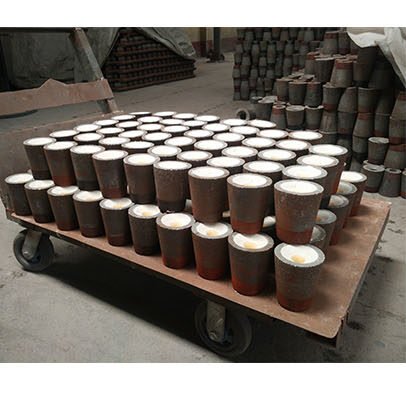
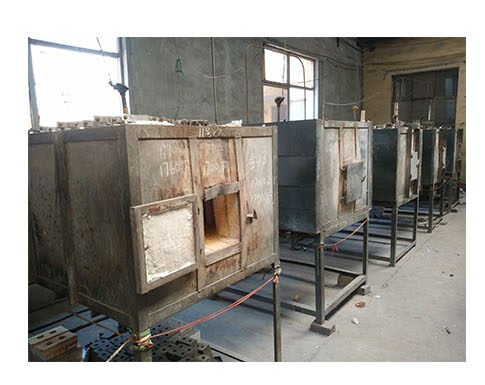
The tundish upper nozzle is a key flow-control refractory component installed inside the well block at the bottom of the tundish. Working together with the stopper rod or slide gate, it controls the flow rate of molten steel from the tundish to the mold. The upper nozzle directly withstands continuous scouring and erosion by high-temperature molten steel, and its performance directly affects the stability of the continuous casting rhythm and the cleanliness of the molten steel.
By function, the upper nozzle can be divided into permeable (argon-blowing) type and non-permeable type. The permeable upper nozzle blows argon into the molten steel, forming a uniform gas curtain on the nozzle inner wall, effectively preventing oxide inclusions in the molten steel (such as Al₂O₃) from adhering and depositing on the inner wall, thereby reducing and preventing nozzle turbulence and clogging, and extending casting time. By structural form, it can be divided into monolithic type and composite type (zirconia insert). The composite upper nozzle uses corundum or alumina-zirconia-carbon as the outer body and high-purity zirconia as the inner core. The inner core provides excellent erosion resistance and can significantly extend the continuous casting sequence time.
Tundish upper nozzle models are usually designed to match the tundish flow control system (stopper rod or slide gate). According to the China Refractory Association “high-end” standard, tundish nozzles must meet the following: the ratio of the bowl end plate outer diameter to the opposite end outer diameter is less than 1, the slide plate flexural strength is not less than 10MPa, and the aluminum content is not less than 80%.
Typical product grades and technical parameters :
| Item | HW-SLT-A | HW-SLT-M |
| Al₂O₃ (%) ≥ | 45 | 65 |
| MgO (%) ≥ | — | 60 |
| SiO₂ (%) ≤ | 15 | 10 |
| C+SiC (%) ≥ | 22 | 10 |
| Compressive strength (MPa) ≥ | 20 | 25 |
| Cold flexural strength (MPa) ≥ | 8 | 8 |
| Apparent porosity (%) ≤ | 18 | 16 |
| Bulk density (g/cm³) ≥ | 2.3 | 2.7 |
| Thermal shock resistance (1100℃ water cooling, cycles) ≥ | 5 | 5 |
Other specification references:
Permeable upper nozzle technical indicators: bulk density ≥2.3g/cm³, cold flexural strength ≥5.5MPa, cold compressive strength ≥19MPa, apparent porosity ≤19%, thermal shock resistance ≥5 cycles.
Alumina-zirconia-carbon upper nozzle: body bulk density (110℃×24h) ≥2.35g/cm³, Al₂O₃≥60%, F.C≥18%; bowl bulk density ≥2.5g/cm³.
Quick-change upper nozzle (for 130-ton converter): outer body Al₂O₃≥65%, bulk density ≥2.6g/cm³, apparent porosity ≤15%; inner core ZrO₂≥90%, bulk density ≥4.3g/cm³, apparent porosity ≤20%, service life requirement ≥3000min.
Zirconia insert specifications (ZrO₂ content options): 65%, 70%, 80%, 84%, 93%, 94%; bulk density 3.60~4.90g/cm³, compressive strength 80~100MPa.
The inner diameter and shape of the upper nozzle can be customized according to the tundish flow control system design. During installation, it is embedded in the well block at the bottom of the tundish.
The tundish upper nozzle is dedicated to tundish flow control systems in continuous casting processes in the iron and steel smelting industry. It is embedded in the well block at the bottom of the tundish and is one of the key functional refractory materials used in combination with the “three major components” of continuous casting (ladle shroud, submerged entry nozzle, and monolithic stopper rod).
Specific application scenarios:
Installation method: The upper nozzle is embedded in the well block at the bottom of the tundish and fixed by mechanical assembly. The permeable upper nozzle is provided with an argon blowing channel, and argon is continuously blown for protection during casting. Before use, it is heated together with the tundish during overall preheating.