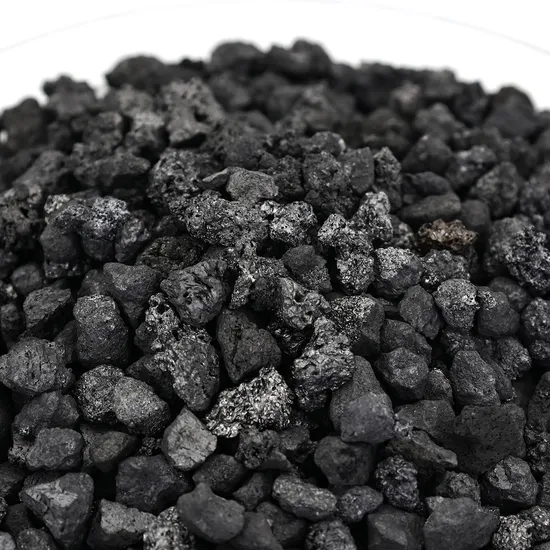
In a quality control lab at Henan Beifang Metal Co., Ltd., technicians meticulously test a newly arrived batch of carbon raiser, understanding that the performance of this critical raw material directly impacts the quality of steel for global clients. This is the daily reality at Beifang Alloy, a ferroalloy specialist with nearly two decades of industry expertise.
In an era of global energy transition and tightening environmental regulations, the procurement strategy for carbon raisers—a key raw material in ferroalloy production—has become a pivotal factor influencing production costs, product quality, and overall market competitiveness. The traditional approach to sourcing is no longer sufficient to navigate the triple challenges of volatile raw material prices, stricter environmental standards, and increasingly complex supply chains.
The global carbon raiser market is undergoing a structural transformation. Prices for traditional materials like coke, petroleum coke, and graphite electrodes are experiencing amplified fluctuations, driven by a confluence of factors including international energy prices, geopolitical tensions, and rising logistics costs. Industry data reveals that over the past three years, price volatility for major carbon raisers has exceeded 40%, creating significant cost pressure for ferroalloy producers.
Concurrently, environmental regulations are intensifying worldwide. Mechanisms like the EU’s Carbon Border Adjustment Mechanism (CBAM) and China’s “Dual Carbon” goals are making low-carbon emissions a critical purchasing criterion. Data from 2023 indicates that ferroalloy products manufactured using low-emission reductants command a price premium of 8-12% in international markets.
A clear trend toward supply chain diversification is emerging. The model of reliance on a single supplier is being replaced by a multi-supplier portfolio strategy, which not only mitigates risk but also secures more favorable commercial terms through competition.
The procurement needs of modern ferroalloy companies have evolved from a pure price focus to a triple-focus on “Performance-Cost-Sustainability.” At Beifang Alloy, we’ve observed that different product lines have distinct requirements for carbon raisers.
For ferrosilicon production, fixed carbon content, reactivity, ash content, and particle size distribution are paramount. For high-carbon ferrochrome, the control of impurity elements like sulfur and phosphorus becomes more critical. These technical parameters directly affect the purity and performance of the final alloy.
Economically, procurement decisions must balance “Visible Costs” and “Hidden Costs.” Visible costs include material price and logistics; hidden costs encompass process adjustment costs due to quality inconsistencies, costs of handling substandard products, and environmental compliance expenses.
Drawing on Beifang Alloy’s nearly twenty years of experience, we recommend four core strategies for carbon raiser procurement:
Establish a Multi-Dimensional Supplier Evaluation System, encompassing technical specifications, supply stability, environmental certifications, and commercial terms. We suggest assigning a 50% weight to technical specs, with no less than 20% for environmental certifications—a proportion that should increase annually.
Implement a Supplier Tier Management System, categorizing suppliers into Strategic Partners, Preferred Suppliers, Transactional Suppliers, and Under-Observation Suppliers. Develop differentiated cooperation strategies and resource allocation plans for each tier.
Optimize Inventory Management with a “Safety Stock + Dynamic Replenishment” model. Use historical data analysis to determine safety stock levels and establish a price alert mechanism to strategically increase reserves during market lows.
Foster Collaborative Innovation with Core Suppliers to co-develop new, environmentally friendly carbon raiser products. Such partnerships not only yield customized solutions but also ensure supply priority during market shortages.
| Evaluation Dimension | Traditional Supplier Model | Modern Preferred Supplier Model | Beifang Alloy’s Practice |
|---|---|---|---|
| Technical Capability | Fixed product specs, low customization | Customization ability, rapid technical response | Establishes joint labs for co-developing new reductants |
| Supply Stability | Vulnerable to single-point disruptions | Multi-site production layout, strong risk resilience | Implements dual/multi-sourcing strategy for supply chain韧性 |
| Environmental Performance | Meets only basic compliance standards | Proactively obtains low-carbon certifications, provides footprint data | Requires third-party environmental certifications as part of scoring |
| Cost Structure | Price-driven, high hidden costs | Transparent total lifecycle cost, optimal TCO | Uses Total Cost of Ownership (TCO) model for 3-year cost evaluation |
| Collaboration Level | Transactional relationship, limited info sharing | Data integration for joint optimization of inventory & logistics | Builds supply chain collaboration platform for real-time data sharing |
In the supplier selection process, qualification review, sample testing, small-batch trial runs, and full-batch validation are four indispensable steps. Particularly during sample testing, conditions should simulate actual production to evaluate the reductant’s performance at high temperatures and its impurity behavior.
A supplier’s commitment to continuous improvement is equally crucial. Beifang Alloy conducts regular on-site audits of core suppliers, assessing their quality control systems, environmental facilities, and progress in production process enhancements.
Back in Beifang Alloy’s plant, a new batch of low-carbon carbon raiser, sourced under the updated procurement strategy, is fed into the furnace. This material not only boasts a stable fixed carbon content above 88% and 15% lower ash content, but more importantly, its production process generates 30% less carbon emissions than traditional products.
In the logistics yard outside, raw materials from different suppliers arrive on schedule, avoiding both inventory pile-up and production delays. Behind this seamless operation is a modern procurement system, powered by data analytics, supplier collaboration, and deep market insight.
In the future competitive landscape of the ferroalloy industry, carbon raiser procurement is no longer merely about buying raw materials; it is a vital manifestation of strategic corporate capability. Companies that can flexibly adapt their procurement strategies, build resilient supply chains, and embrace the low-carbon transition will gain a competitive edge across all three dimensions: cost control, quality assurance, and sustainable development.