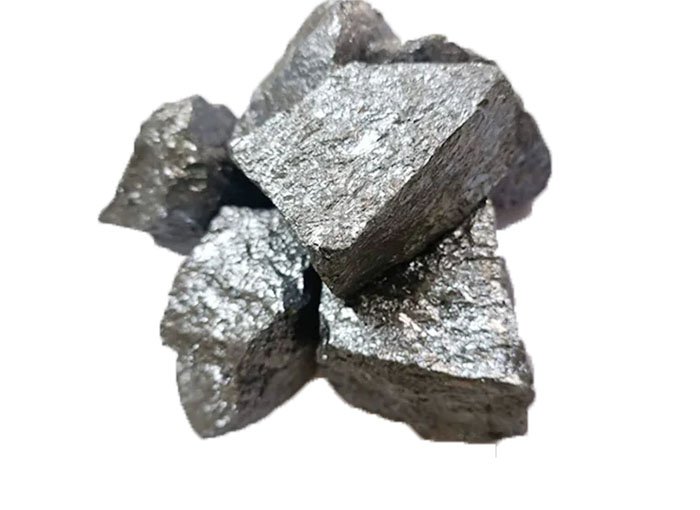
Silicon is one of the most abundant elements on Earth, playing a pivotal role in industries ranging from electronics to construction. However, a common question arises: Is silicon a metal or a metalloid? Understanding silicon’s classification helps us better appreciate its unique properties and applications.
Silicon (Si) is a chemical element with an atomic number of 14. It belongs to group 14 of the periodic table and is the second most abundant element in the Earth’s crust, primarily found in the form of silicates and silica. Silicon is the backbone of modern technology and is essential for making semiconductors, glass, ceramics, and more.
Silicon is classified as a metalloid, a group of elements that exhibit properties of both metals and nonmetals. Metalloids, also known as semimetals, are found along the “stair-step” line in the periodic table that separates metals and nonmetals. Other metalloids include boron, arsenic, and tellurium.
To further understand why silicon is a metalloid, let’s compare its properties with metals and nonmetals:
| Property | Metals | Nonmetals | Silicon |
|---|---|---|---|
| Electrical Conductivity | High | Poor | Moderate (semiconductor) |
| Malleability/Ductility | High | Low | Brittle |
| Luster | Shiny (metallic) | Dull | Metallic luster |
| Bonding | Metallic bonds | Covalent bonds | Covalent bonds |
| Thermal Conductivity | High | Low | Moderate |
Silicon’s dual properties make it indispensable in various fields:
Silicon’s metallic luster and electrical conductivity often lead to it being mistaken for a metal. However, its brittleness and covalent bonding behavior align it more closely with nonmetals. The term “metalloid” perfectly captures its intermediate nature.
Silicon is a metalloid, showcasing a fascinating blend of metallic and nonmetallic properties. This classification underscores its versatility, enabling its use in a broad range of applications, from electronics to construction. Understanding silicon’s unique characteristics helps industries harness its full potential, making it an irreplaceable element in modern technology and manufacturing.
For more insights into silicon and its applications, explore our website or contact us for detailed information!