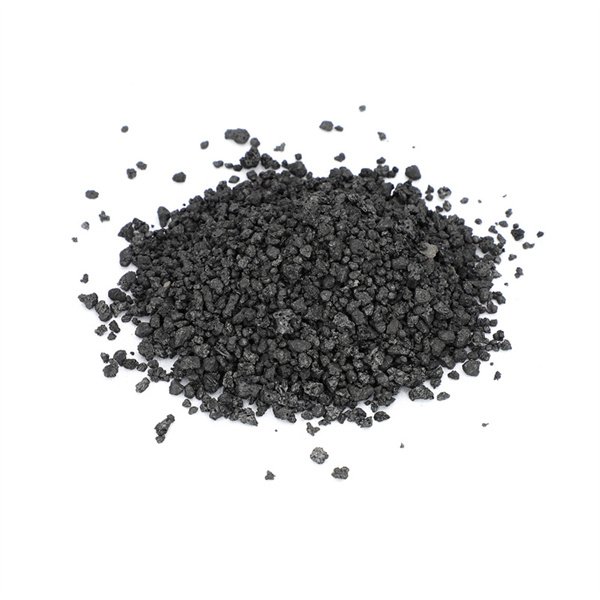
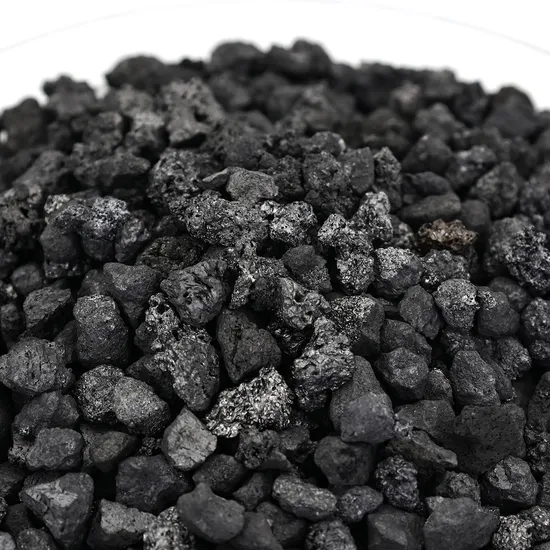
For procurement and operations managers in the ferroalloy, steel, and foundry industries, the word “consistency” is thrown around constantly. But when it comes to carbon raiser deliveries, its meaning goes far beyond a truck arriving on schedule. True consistency is the invisible backbone of predictable metallurgy, stable costs, and seamless production. At Beifang Alloy, we believe understanding this multi-layered concept is key to choosing the right partner.
Let’s break down what “consistency” really means across four critical dimensions.
Your immediate need is clear: a material that efficiently introduces carbon into molten metal. But your real need is predictable outcomes. Inconsistent carbon raiser disrupts this at every level:
Chemical Consistency: It’s not just about a fixed carbon percentage (e.g., 98.5% C). It’s about the tight range of variance in Fixed Carbon, Sulfur, Ash, and Volatile Matter. Batch-to-batch fluctuations directly impact final steel chemistry, potentially leading to off-spec product, increased reagent use, and costly corrections.
Physical Consistency: Uniform granule size and density are critical for dissolution rate and yield. Fines and oversized chunks behave differently, causing uneven carbon distribution, higher dust loss, and inaccurate feeding system calculations.
Performance Consistency: The ultimate test. Every delivery should melt and assimilate into your bath with the same efficiency and predictable recovery rate. This minimizes operator intervention and stabilizes your cost-per-ton calculation.
Market research and countless case studies reveal a clear pattern: the lowest price per ton often carries a hidden “inconsistency tax.” This manifests as:
Increased Re-melt and Rejection Rates: Unpredictable carbon/sulfur levels can push final product outside stringent customer specifications.
Higher Consumption & Yield Loss: To compensate for variable quality, operators may over-add material, driving up net consumption and negating any initial price advantage.
Process Disruption: Inconsistent feeding and dissolution can disrupt furnace thermodynamics and slag practice, leading to longer cycle times and energy waste.
Supplier Risk: The industry is seeing consolidation. Partners who invest in consistent, high-quality production offer greater long-term supply chain security than volatile traders with mixed-source materials.
Moving beyond price and basic certs requires a proactive approach. Your procurement checklist should include:
Demand Transparency in Sourcing: Ask: “What is the raw material source (petroleum coke, calcined anthracite coal, natural graphite) and is it single-origin or blended?” Single, controlled sources inherently offer better consistency.
Audit the Production Process: Does the supplier control calcining, crushing, screening, and blending? Consistency is engineered through advanced milling and strict sizing screens, not happenstance.
Analyze Historical Data: Request Certificates of Analysis (CoAs) for the last 6-12 months of shipments. Look for the standard deviation in key metrics, not just the average.
Define “Lot” Clearly: Ensure a single “delivery lot” comes from one production batch, not a blend of multiple batches, which masks variability.
Test in Your Process: Start with a trial order and measure the real-world impact on your recovery rate, operator feedback, and chemistry stability.
Comparing suppliers on consistency highlights where true value is created. Here’s how a dedicated manufacturer like Beifang Alloy stacks up:
| Aspect | The “Common” Supplier | Beifang Alloy – The Consistent Partner |
|---|---|---|
| Source Control | Multiple, variable raw material sources based on price. | Strategic, long-term contracts with premium raw material producers, ensuring feedstock uniformity. |
| Production Process | Often a trader or simple processor; minimal control over calcining and grading. | Vertical integration & controlled manufacturing. From raw material to finished bag, every step is monitored and standardized in our own facility. |
| Quality Assurance | Reliance on sporadic third-party testing; CoAs may vary widely. | In-house laboratory with SPC (Statistical Process Control). Every batch is tested, and data is tracked to ensure parameters stay within our strict, self-imposed limits. |
| Delivery Promise | Consistency often means “just getting the shipment to you.” | Consistency means every bag performs identically in your furnace. We provide detailed, batch-traceable CoAs so you know exactly what you’re charging. |
| Value Proposition | Low initial price. | Low total cost of use. Predictable yield, stable process chemistry, and zero surprises reduce your operational risk and cost over time. |
For Beifang Alloy, delivering consistent carbon raiser isn’t a slogan; it’s the foundation of our process design and our promise to you. It’s about providing a product so reliable it becomes a non-variable in your complex production equation.
When you evaluate your next carbon raiser delivery, look beyond the invoice. Look for the partner whose definition of consistency matches your need for metallurgical stability, cost predictability, and peace of mind.
Ready to experience the Beifang Alloy standard of consistency? Contact our technical sales team today to discuss your specifications, request batch data reports, or arrange a trial shipment.
Contact Beifang Alloy:
Website: www.beifangalloy.com
Email: info@hnxyie.com
Let’s build the foundation for your consistent results.