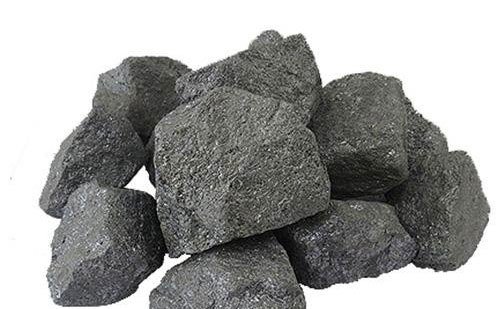
For foundry managers, metallurgists, and procurement specialists, the efficiency of carbon raiser isn’t just a technical metric—it’s a direct lever on profitability. When a supplier promises a 95% carbon recovery rate, what does that mean for your actual melt? At Beifang Alloy, as a leading ferroalloy producer, we understand that the gap between promised and delivered performance can silently erode your margins, consistency, and product quality.
This article cuts through the marketing claims. We’ll break down what you should really look for—from defining your needs and understanding industry standards to comparing suppliers—so you can ensure every ton of carbon raiser delivers its full value.
Before comparing specs, clarify what your process truly requires. Carbon recovery isn’t a standalone number—it’s influenced by your operational reality.
Melt Process & Equipment: Electric Arc Furnace (EAF) operators need fast-dissolving, low-ash carbon raiser to optimize short cycle times. Induction furnace users might prioritize ultra-low sulfur content to prevent contamination in ductile iron. Does your supplier ask about your furnace type?
End-Product Specifications: Are you producing standard gray iron or high-grade steel with strict nitrogen controls? The required purity (fixed carbon >98.5%, low S, N, ash) dictates the grade of carbon raiser needed. Recovery is meaningless if impurities compromise your final alloy.
Key Performance Indicators (KPIs): Beyond price-per-ton, define your KPIs: Carbon Yield (actual carbon increase in melt / carbon added), Cost per Effective Ton of Carbon, and Consistency of Results batch-to-batch. These are your true measures of value.
Industry “standard” recovery rates (often cited as 90-96%) can be misleading without context.
The Promise vs. The Practice: Many suppliers advertise “up to 95% recovery” under ideal lab conditions. In-plant results, however, are affected by charging practice, melt temperature, slag composition, and bath stirring. A realistic, sustainable recovery for a high-quality product in optimal conditions is 92-95%. Consistently achieving above 95% often requires exceptional raw materials and processing.
The Hidden Culprits of Low Recovery:
High Volatile Matter: Leads to excessive smoke and carbon loss before dissolution.
Inappropriate Particle Size: Too coarse slows dissolution; too fine increases oxidation and dust loss.
High Ash Content: Ash forms slag, encapsulating carbon particles and preventing absorption.
The Trend: Leading foundries now track “Effective Carbon Addition Efficiency,” integrating recovery rate with its impact on tap-to-tap time and total energy consumption.
When evaluating carbon raiser, move beyond the standard Certificate of Analysis (CoA). Here’s your actionable checklist:
Demand Transparency on Raw Materials: Is it made from calcined petroleum coke, anthracite coal, or graphite? Each has different inherent properties. Premium calcined petroleum coke typically offers the best balance of high fixed carbon and low impurity.
Ask for Process-Specific Data: Request not just a generic CoA, but case data or technical notes for an application similar to yours (e.g., “Recovery data for ductile iron in a 10-ton induction furnace”).
Conduct a Controlled Trial: The only definitive test is in your furnace. Propose a side-by-side comparison:
Use your current carbon raiser for X melts.
Use the trial product (like Beifang Alloy’s BF-CR series) for the next X melts under identical conditions.
Measure: Carbon pick-up efficiency, temperature loss upon addition, slag volume, and final product microstructure consistency.
Analyze Total Cost of Use: Calculate: (Price per ton of Carbon Raiser) / (Fixed Carbon % x Actual Recovery %) = Cost per Unit of Effective Carbon. This often reveals a premium product is more economical.
The right supplier acts as a metallurgical partner. Here’s how to differentiate:
| Comparison Factor | Traditional / Low-Cost Supplier | Technical Partner (e.g., Beifang Alloy) |
|---|---|---|
| Focus | Price per ton, transaction. | Cost-in-use and process optimization. |
| Technical Support | Limited; provides basic CoA. | Offers pre-sales technical consultation, helps design trials, and provides post-sales melt trouble-shooting. |
| Product Consistency | May vary batch-to-batch based on raw material sourcing. | Rigorous quality control from raw material to processing ensures lot-to-lot uniformity. Stable recovery is guaranteed. |
| Value-Added Services | None. | Can provide customized sizing, blend optimization, and technical workshops on carburization best practices. |
| Transparency | Reluctant to share detailed process or raw material data. | Open about source of raw materials, manufacturing process, and full spectrum impurity analysis. |
The Beifang Alloy Commitment: We don’t just sell carbon raiser; we deliver predictable carbon performance. Our BF-CR series is produced from select raw materials under stringent process controls to ensure high fixed carbon (>98.5%), low sulfur and nitrogen, and optimized dissolution characteristics for reliable recovery.
Ready to measure the real recovery in your furnace?
Stop guessing if your carbon raiser is performing. Let’s run a data-driven trial. Our technical team will work with you to quantify the actual yield, efficiency gains, and cost savings our product can bring.
Contact Beifang Alloy today for a technical consultation and a trial proposal:
Email: info@hnxyie.com