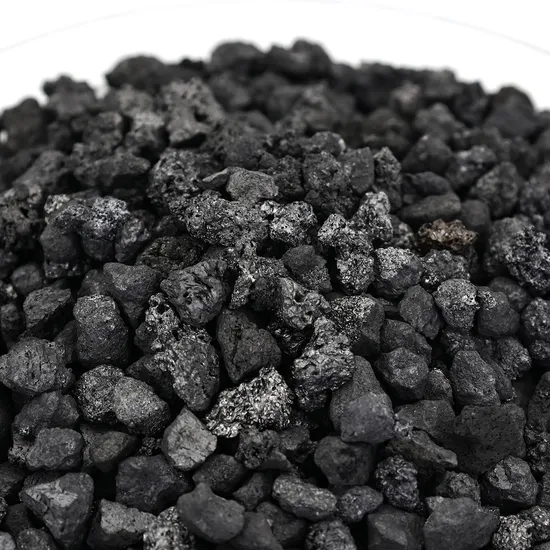
When procuring carbon additives—whether it’s petroleum coke, calcined anthracite coal, graphite, or other carburizers—many ferroalloy producers make a critical error: focusing solely on the price per ton. While upfront cost is important, it’s merely the tip of the iceberg. The true cost of your carbon additive is a complex equation that directly impacts your bottom line, product quality, and operational efficiency.
At Beifang Alloy, with decades of experience in the ferroalloy industry, we understand that intelligent procurement is about Total Cost of Ownership (TCO). Let’s explore the four key pillars to uncover your real cost.
1. Procurement Needs: Beyond the Spec Sheet
Before you even look at suppliers, define what you truly need. A cheaper additive with inconsistent properties can be devastatingly expensive.
-
Technical Specifications: Fixed carbon content, ash, volatile matter, sulfur, and moisture are just the start. How do these align with your specific smelting process and final product requirements?
-
Consistency & Reliability: Batch-to-batch variability disrupts your furnace equilibrium, leading to longer tap-to-tap times, increased energy consumption, and inconsistent alloy quality. The cost of a “recovery melt” far outweighs a slightly higher product price.
-
Logistical Requirements: Have you accounted for storage, handling losses (dust), and pre-processing needs? A material that requires crushing or drying on-site adds hidden labor and equipment costs.
-
Environmental & Operational Impact: High sulfur or ash content can increase slag volume, lining wear, and emissions treatment costs. The right additive improves yield and reduces waste disposal expenses.
2. Industry Research: Understanding the Value Drivers
The carbon additive market is influenced by raw material sources (coal, petroleum), calcination levels, and processing technology. Key industry insights include:
-
The “Performance Multiplier”: Premium, highly-calcined additives with optimal electrical resistivity and carbon reactivity can significantly improve furnace efficiency. A 2-5% reduction in overall energy consumption is often achievable, which translates to massive savings.
-
Yield is King: The ultimate metric is the amount of usable alloy produced per ton of input. A superior carbon additive improves carbon recovery and metallurgical yield. Even a 1% improvement in yield can generate savings that completely eclipse the initial price difference between a premium and a standard product.
-
Sustainability as an Emerging Cost Factor: Increasingly, regulations and customer demands are pushing for lower embodied carbon in supply chains. Procuring from suppliers with efficient, controlled production processes can future-proof your operations and avoid potential compliance costs.
3. Procurement Guide: The True Cost Calculation Framework
Here is a practical framework to calculate the True Cost:
True Cost = (Invoice Price per Ton + Freight & Logistics) + (Hidden Operational Costs) – (Value-Added Benefits)
A. Visible Costs:
B. Hidden Operational Costs (The Critical Zone):
-
Yield Loss Cost: (Standard Yield % - Actual Yield %) x Value of Alloy Produced
-
Energy Penalty Cost: (Higher kWh/ton than benchmark) x Local Energy Price
-
Quality Failure Cost: Rework, downgrades, customer claims.
-
Handling & Processing Cost: Crushing, drying, dust extraction, and storage losses.
-
Slag & Waste Cost: Increased slag volume from high ash, leading to higher disposal/treatment costs.
C. Value-Added Benefits (Often Provided by Superior Suppliers):
-
Technical Support: Expert consultation to optimize usage.
-
Supply Security: Guaranteed inventory and reliable delivery, preventing costly furnace downtime.
-
Consistent Quality: Reduces variability and operational headaches.
4. Supplier Comparison: Asking the Right Questions
Do not just compare price lists. Compare value propositions.
Invest in Value, Not Just a Product
The most economical carbon additive is the one that delivers the lowest cost per ton of high-quality alloy produced, not the one with the lowest purchase price. By shifting your procurement philosophy to evaluate total cost—encompassing yield, energy, stability, and partnership—you make an investment in your factory’s profitability and competitiveness.
Partner with a supplier who understands your process. At Beifang Alloy, we don’t just sell carbon additives; we provide reliable, high-performance metallurgical solutions backed by deep industry expertise. Let’s have a conversation about your true cost.
Ready to calculate your TRUE cost?
Contact Beifang Alloy today for a confidential technical and procurement consultation.
Email: info@hnxyie.com
Visit: www.beifangalloy.com