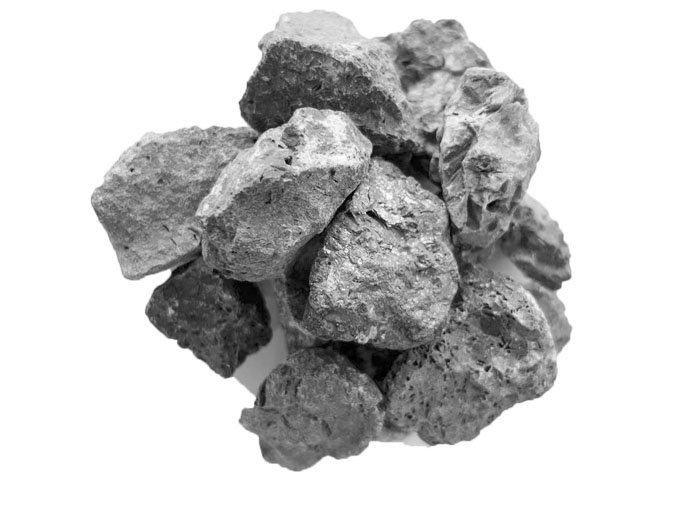
In the world of steelmaking, deoxidizers act as a “blood purifier” — they determine the cleanliness and final quality of a heat of molten steel. As an important member of the Anyang ferroalloy industrial cluster, Anyang Beifang Ferroalloy Factory (www.beifangalloy.com | info@hnxyie.com) understands that every ton of premium Si-Al-Ca deoxidizer is not a simple mixture of raw materials, but a precise journey spanning procurement, R&D, production, and customer service.
In this article, we will walk you through the entire birth journey of one ton of premium Si-Al-Ca deoxidizer from four perspectives: procurement needs, industry research, procurement guide, and supplier comparison.
As the steel industry transitions toward high-precision, clean steel production, traditional single-element deoxidizers (such as pure aluminum or ferrosilicon) can no longer meet modern smelting requirements. The conventional deoxidation product — high-melting-point Al₂O₃ inclusions — not only causes nozzle clogging during continuous casting but also reduces the toughness and workability of finished steel.
Today’s steel mills demand far more from their deoxidizers: strong deoxidizing power, deep molten steel purification, inclusion morphology modification, and improved fluidity of the steel. The Si-Al-Ca composite deoxidizer has emerged as the market leader in this context. Leveraging the synergistic effects of silicon, aluminum, and calcium, it forms low-melting-point calcium aluminates that easily float to the surface and are removed, significantly enhancing steel quality.
It is precisely in response to this industry demand that Beifang Alloy has defined our procurement and production mission: to deliver Si-Al-Ca deoxidizers with stable composition, high deoxidation efficiency, and exceptional cost-performance.
Producing one ton of premium product requires a deep understanding of the industry landscape.
1. Key Performance Parameters
For high-quality Si-Al-Ca deoxidizers, the core evaluation dimensions include:
Chemical Composition Ratio: The precise ratio of silicon, aluminum, and calcium is the key determinant of deoxidation performance. Insufficient calcium fails to effectively modify Al₂O₃ inclusions; excessive calcium, given its low boiling point (approx. 1450°C), tends to volatilize and burn off. Premium products maintain a high and stable calcium content within an optimal range.
Physical Form and Particle Size: Particle size directly affects the reaction rate and uniformity between the deoxidizer and molten steel. Oversized particles react slowly, while undersized particles are prone to oxidation or cause dusting. Quality manufacturers strictly control the particle size distribution to ensure no disintegration during charging and no clogging in bins.
Control of Harmful Elements: High-performance deoxidizers impose extremely stringent limits on phosphorus, sulfur, and other deleterious elements to prevent contaminants from being introduced into the steel.
2. Industry Pain Points
Currently, deoxidizers from some small, unregulated workshops suffer from composition segregation, imbalanced Si/Ca ratios, and high pulverization rates. These substandard products not only fail to purify molten steel effectively but can also cause quality issues such as uncontrolled silicon pickup or carbon deviation. Furthermore, the hygroscopic and pulverizing nature of calcium is a common industry challenge that directly affects product storage and application performance.
Based on the above industry insights, we have compiled a professional procurement guide to help customers identify truly capable partners:
Trace Raw Material Sources and Quality Control: Quality deoxidizers start with stable, pure raw materials. Suppliers should have reliable mining sources or supply chains, and conduct rigorous inspections on every incoming batch.
Evaluate Production Processes and Equipment: Advanced manufacturing techniques — such as high-pressure dry-powder briquetting and surface passivation coating — significantly improve product strength, moisture resistance, and compositional uniformity. Understanding whether the manufacturer possesses in-house R&D capabilities and mature quality control procedures is essential.
Demand Composition Stability Certification: Batch-to-batch compositional fluctuation is a leading cause of smelting instability. Request third-party test reports or in-house inspection data, with particular attention to the deviation ranges of key elements such as Al and Ca.
Assess Customization Capabilities: Different steel grades and furnace conditions require different deoxidizer specifications. A strong supplier should be able to adjust product formulas and sizes flexibly according to specific smelting processes.
Consider Overall Cost-Effectiveness and Logistics Responsiveness: Do not focus solely on unit price. Evaluate the comprehensive cost per ton of steel, taking into account deoxidation efficiency and recovery rate. Additionally, the supplier’s geographic location and logistics capacity directly impact delivery reliability.
At the heart of the Anyang ferrous alloy industrial cluster — a hub known as the “Ferroalloy Capital of North China” — we understand the value of continuous improvement alongside our peers. A clear comparison reveals our distinct advantages:
| Evaluation Criteria | Ordinary/Workshop-Style Suppliers | Beifang Alloy (Beifang Alloy) |
|---|---|---|
| Raw Materials & Formulation | Unstable sourcing channels, fluctuating compositions | Strategic partnerships with quality mining sources within Anyang cluster; strict incoming material inspection |
| Production Process | Simple equipment, mostly crushing and mixing with little moisture protection | Standardized crushing, screening, and blending production lines; attention to particle uniformity; optional passivation and special moisture-proof packaging |
| Composition Stability | High batch-to-batch variation; steel quality hard to control | In-house testing equipment with online monitoring of Si, Al, Ca and other key elements to ensure batch consistency |
| Physical Properties | High pulverization rate; poor particle distribution; prone to bin clogging | Briquettes with high compressive strength; controlled particle size distribution; no disintegration during charging; good flowability |
| Customization & Technical Support | Standard products only; no technical service | Custom formulation for different steel grades and furnace types (including Si-Al-Ca, Si-Al-Ba-Ca, etc.); technical team available for application guidance |
| Logistics & Industrial Cluster | High logistics coordination costs; slow response | Ideally located at the junction of Hebei, Shandong, Henan, and Shanxi, with access to Beijing-Guangzhou and Beijing-Zhuhai transportation corridors — fast and reliable delivery |
Beifang Alloy has been deeply rooted in the ferroalloy industry for many years, always prioritizing quality above all. We not only offer a standard series of Si-Al-Ca deoxidizers but also are committed to providing end-to-end solutions — from formula adjustments to particle size customization — tailored to our customers’ specific needs. From raw material receiving to finished product shipment, every step is subject to a rigorous quality management system, ensuring that every ton we deliver stands up to the toughest scrutiny.
The birth journey of one ton of premium Si-Al-Ca deoxidizer is a fusion of technology, craftsmanship, and responsibility. Anyang Beifang Ferroalloy Factory sincerely invites you to visit and consult with us. Let’s explore together how better metallurgical auxiliary solutions can help upgrade your product quality.