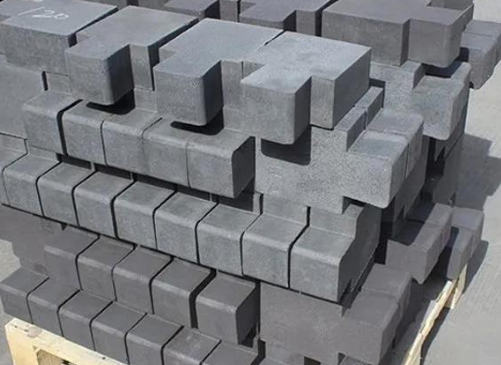
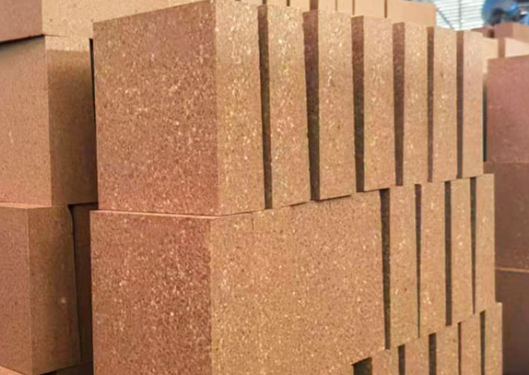
In refractory material procurement, there is one document that almost every supplier mentions during inquiry, yet few buyers actually read it item by item — the type test report . For procurement teams in steel, metallurgy, glass, cement, and other high-temperature industries, refractory brick quality directly affects furnace campaign life and shutdown losses. As a ferroalloy producer, Beifang Alloy understands the demanding conditions refractories face, and our customers face the same practical question when sourcing refractory bricks: which items in the supplier’s type test report really matter, and what do the numbers mean?
This article breaks the report down from four angles: procurement needs, industry research, procurement guide, and supplier comparison.
An ordinary factory inspection report covers only the current batch. A type test report is a comprehensive qualification of the product as a type — typically triggered by new product finalization, transfer of an existing product to a new plant, major changes in raw materials or process, resumption after long shutdown, and periodic supervisory inspection.
For buyers, the report’s core value lies in three things:
First, it verifies whether the supplier can stably produce that grade. The chemical and physical data reflect the supplier’s process maturity for that product. A manufacturer whose cold crushing strength fluctuates widely from batch to batch cannot inspire confidence in high-temperature performance reliability.
Second, it provides a baseline for the technical agreement. Acceptance criteria in a purchase contract should not be invented from scratch — they should reference the measured values in the type test report, adjusted up or down according to the application. If a high-alumina brick report shows a refractoriness under load of 1580°C and your furnace runs at 1550°C, requiring ≥1560°C in the contract is a reasonable, evidence-based demand.
Third, it separates “a brick that works” from “a brick that works for you.” Two products both called high-alumina brick — one with 55% Al₂O₃ and one with 75% — have completely different applications and price ranges. Reading the report correctly is how you avoid paying first-grade prices for third-grade material.
Refractory bricks vary widely — silica, high-alumina, magnesia, silicon carbide, insulating — and each has its own emphasis, but the items fall into three blocks: chemical composition, physical properties, and high-temperature service performance. Drawing on the implementation rules for supervisory抽查 of refractory products issued by market regulators (e.g., Shandong Provincial Administration for Market Regulation), typical items and test methods are as follows:
Chemical composition is the foundation. Magnesia brick requires MgO, Al₂O₃, SiO₂, and CaO content; high-alumina brick focuses on Al₂O₃ and Fe₂O₃, tested by X-ray fluorescence per GB/T 5069 or GB/T 21114. If chemistry is off, everything downstream suffers — insufficient Al₂O₃ inevitably drags down refractoriness and refractoriness under load.
Physical properties reflect the room-temperature structure. Core items include bulk density and apparent porosity (GB/T 2997) and cold crushing strength (GB/T 5072). Bulk density and porosity are inverse indicators: dense brick means high strength and good slag penetration resistance, but also higher thermal conductivity and heat storage; insulating brick means high porosity and good insulation, but limited load-bearing capacity. Buyers should choose based on the function of the masonry location, not blindly pursue “the denser the better.”
High-temperature performance is what really determines service life. Refractoriness under load (YB/T 370) indicates the onset of deformation under load at high temperature — far more important than cold strength for load-bearing locations such as furnace walls and regenerator checkerwork. Permanent linear change on heating (GB/T 5988) measures whether the brick undergoes irreversible expansion or shrinkage at high temperature; excessive change directly causes masonry cracking and joint opening. Thermal shock resistance (GB/T 30873), expressed as water-quench cycles, targets locations with frequent temperature swings — a brick with too few cycles may spall within a few campaigns in an intermittent furnace.
In addition, dimensional deviation and cross-section uniformity do not directly measure performance, but they are direct signals of process control. Bricks with visible voids or laminations in the cross-section carry internal defects that become stress concentrators at high temperature and accelerate failure.
Step 1: Check whether the standard numbers in the “test basis” column are current and valid.
Refractory national and industry standards are updated frequently. For example, the latest silica brick standard is GB/T 2608-2025, effective February 2026. If a supplier’s report cites a superseded standard, its technical reference value must be discounted. Likewise, the method standard for refractoriness under load has been updated to GB/T 5989-2023 — method changes can affect comparability of results.
Step 2: Compare “standard requirement” with “measured value” — look at margin, not just “pass.”
A valuable report shows measured values clearly better than the standard minimum, not just barely above the line. Take cold crushing strength: a standard requiring ≥40 MPa, with measured values of 42 MPa versus 65 MPa, reflects two different levels of process control. A marginal pass means normal production variation could produce out-of-spec batches; ask the supplier for the last two type test reports and compare trends on the same indicator to judge whether the process is under control.
Step 3: Judge whether the “high numbers” are aimed at your application.
This is where mistakes happen most often. High bulk density and high cold strength do not automatically suit your furnace. For an insulating layer, the core indicators are thermal conductivity and low bulk density — a supplier presenting a dense brick report to prove “quality” is answering the wrong question. For locations subject to frequent thermal cycling, thermal shock cycles matter more than cold strength; for load-bearing walls, refractoriness under load is the red line. We recommend specifying in the technical agreement which report items are rejection criteria and which are reference items, so disputes over “passed but unsuitable” do not arise at delivery.
When several suppliers quote similar prices, the comparison dimension should move from “do they have a report” to “is it detailed, stable, and relevant.”
Check the issuing body’s accreditation. Reports from third-party laboratories with CMA or CNAS accreditation carry legal weight and industry credibility. A supplier’s in-house “factory report” is useful as a reference, but acceptance under a technical agreement should rely on a third-party type test report. If a supplier can only provide in-house reports and stalls on third-party testing, that is a warning sign.
Check whether item coverage matches your purchase category. Submitting a silica brick report for a high-alumina brick tender, or a report with chemistry only and no high-temperature performance, both count as “a report exists but information is insufficient.” A disciplined supplier provides a complete type test report for the specific grade, with product name and grade exactly matching the quotation.
Check batch-to-batch consistency. This is the key differentiator between strong and ordinary suppliers. Request type test reports covering two consecutive years or two or more batches, and compare the fluctuation range of bulk density, cold crushing strength, and refractoriness under load for the same grade. Small fluctuations indicate stable raw material sources and controlled process parameters; large fluctuations mean high batch risk even if a single report looks impressive. In continuous operations such as ferroalloy production, one batch of underperforming brick can cause premature local failure of the masonry — the cost of an unplanned shutdown far exceeds the price difference between bricks.
Finally, write the report’s promises into the contract. A type test report proves the past; buyers need assurance for the future. Specify in the technical agreement that samples will be jointly taken at delivery and sent to a third party, with the key indicators from the type test report as the benchmark — failure means rejection and compensation. Only then does the type test report become a quality control tool rather than a marketing brochure.
About Beifang Alloy: We are a ferroalloy producer. We know firsthand how demanding high-temperature furnaces are on refractories, and we understand that in procurement, data is more reliable than promises. If you are selecting refractory bricks for submerged arc furnaces, refining furnaces, or other high-temperature equipment, reach us at www.beifangalloy.com or info@hnxyie.com. We do not make refractory bricks — but like you, we are a user of refractory materials, and a user’s perspective on quality judgment may be more useful than a supplier’s sales pitch.