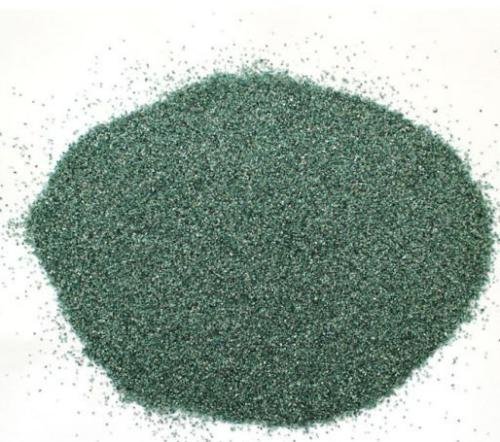
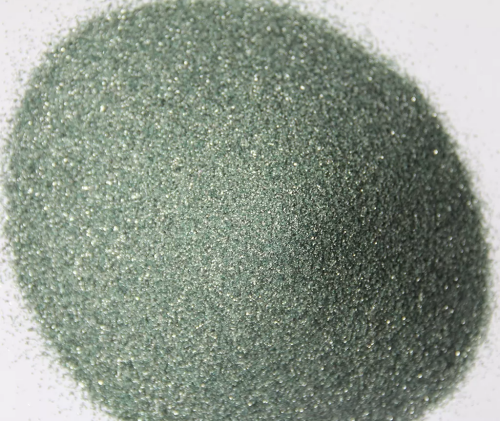
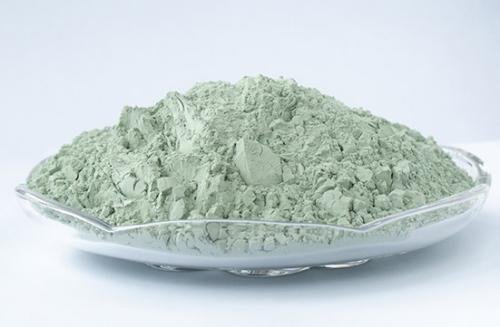
Green silicon carbide has traced a clear upward path through 2026. For buyers considering placing orders now, understanding the structural forces behind this rally matters more than watching the quotation number alone. At Beifang Alloy, a ferroalloy and high-temperature materials supplier based in Anyang, we’ve combined public market data with industry observation to lay out the key issues across four dimensions: procurement needs, industry research, procurement guide, and supplier comparison.
Public price data paints a simple picture of green silicon carbide in 2026: flat through the first half, then a jump in Q3.
Taking 98% min JIS2000 FOB China as a reference, prices sat around USD 3,899/t in March and moved within a narrow band of roughly USD 3,928–4,002/t from April through July. August brought the turning point. By September 21, the price had reached USD 4,621/t—an increase of about 18.5% from the March low. A separate EXW China series shows an even steeper climb, from around USD 3,400/t to USD 4,180/t over the same period.
This is not an isolated move. Domestic market commentary describes the same dynamic: supported by rising raw material costs, low operating rates in production regions, and recovering downstream demand, prices for green silicon carbide lump, powder, and fine powder all edged upward, with ordinary-grade products rising 1.5%–2.5% and suppliers showing a firm pricing stance.
The key read: the price support comes from a squeeze on both the cost side (raw materials and energy) and the supply side (reduced operating loads)—not from a demand explosion. That means downside room is limited, but the upside ceiling depends on how much downstream buyers will absorb.
Applications for green silicon carbide are diverging quickly, and different segments have very different sensitivity to price and supply stability. Before ordering, buyers need to identify which tier their demand falls into.
Tier 1: Metallurgical and refractory grade. This is the traditional base—used for steelmaking deoxidation and refractory aggregate. Purity requirements are relatively loose and price sensitivity is high. The low-end market is clearly oversupplied, with ordinary abrasive and metallurgical grades stuck in homogeneous competition and prices under continued pressure. If this is your tier, supplier selection should focus on stable supply and cost control rather than maximum purity.
Tier 2: Abrasive and polishing grade. Used in abrasives, polishing compounds, and sandblasting. This tier has clear particle size and purity requirements, with prices in the middle range. The ordinary fine powder market is currently in a tight balance between supply and demand.
Tier 3: Photovoltaic and semiconductor grade. Green silicon carbide fine powder is used in diamond wire coating for PV wafer cutting, while precision grinding, semiconductor wafer polishing, and sapphire substrate processing require high-purity fine powders (JIS#8000 and finer). The supply-demand dynamics here are completely different from the first two tiers: high-end semiconductor-grade product is tight, prices are firm, and there is a clear premium.
A policy variable to note: Under the 2026 export license management catalogue, silicon carbide is a commodity requiring an export license. Silicon carbide itself is not on the dual-use item export control list, but exporters must hold the appropriate qualifications and licenses to avoid problems at customs. For buyers, confirming that a supplier has compliant export capability is a necessary step before ordering.
Understanding the structural shifts behind the price trend helps you judge whether current quotations are reasonable and what supply risks lie ahead.
Supply side: restricted operations, low inventories. Under dual-carbon policy, expansion of high-energy-consumption smelting capacity is constrained, giving support to silicon carbide lump costs. At the same time, producers have voluntarily cut operating loads, keeping overall inventories at low levels. Suppliers are holding firm on quotes and prioritizing essential orders from core long-term customers. This means short-term supply elasticity is limited, and lead times for large new orders may stretch.
Demand side: steady traditional, hot high-end, crowded low-end. Traditional downstream demand from steel metallurgy and abrasives is relatively stable. High-end demand from PV wafer cutting, silicon carbide power devices for new energy vehicles, and semiconductor substrates is growing quickly. But the low-end market is clearly oversupplied, with homogeneous competition persisting. This “two markets in one”means: when buying ordinary grades, there is room to negotiate; when buying high-end grades, supply security matters more than price bargaining.
Price transmission mechanism. Upstream raw material lump prices remain high, providing strong support for powder costs. However, demand growth in the downstream PV wafer sector has slowed somewhat, which may cap the upward slope of high-end fine powder prices. Buyers weighing long-term price locks need to balance cost support against slowing demand growth.
Given the current market state, the following items should be confirmed before signing a contract.
① Align specifications and testing standards. Much of the quotation variance in green silicon carbide comes from specification differences. Clarify particle size distribution (F sand, JIS fine powder, segment sand, etc.), purity (SiC content), free carbon, and iron content, and require test reports. If the material is destined for PV or semiconductor-related applications, confirm that testing methods and sampling standards match your acceptance criteria.
② Write price terms clearly. In an upward price cycle, the choice between FOB and CIF, quotation validity, and price adjustment mechanisms (whether linked to raw materials or exchange rates) all need to be explicit in the contract. In the current environment, supplier quotation validity may be shorter, and long-term price locks require a clear risk-sharing agreement between both parties.
③ Allocate export compliance responsibilities. Silicon carbide exports require a license. If you are an overseas buyer, confirm that the supplier holds export qualifications, that the license covers your order volume, and that the HS code and goods description used in customs declaration match the contract. We recommend stipulating in the contract how non-delivery due to licensing issues will be handled.
④ Match lead times with inventory strategy. With low operating rates and low inventories in production regions, suppliers are prioritizing essential orders from long-term customers. Lead times for new customers or large orders may be longer than usual. If your production schedule is lead-time sensitive, consider building stock in advance or negotiating phased delivery with the supplier.
In green silicon carbide procurement, quotation differences for the same specification can come from several dimensions. Comparing price alone risks missing key issues.
| Comparison Dimension | What to Confirm | Why It Matters |
|---|---|---|
| Production continuity | Whether smelting capacity is in-house and operations are stable | With low operating rates, suppliers with their own capacity offer more controllable lead times |
| Specification coverage | Whether they cover the particle size and purity grades you need | Ordinary and high-end grades often come from different lines; one-stop supply reduces management overhead |
| Export compliance experience | Whether they have silicon carbide export records and licensing proficiency | The export license is a hard threshold; inexperience can cause customs delays |
| Testing capability | Whether they have in-house test reports and support third-party re-testing | The efficiency of resolving specification disputes depends on the supplier’s testing system |
| Customer structure | Which application sectors their main customers are in | Suppliers serving high-end customers usually have stricter quality control—but also higher prices |
A practical recommendation: In the current upward price phase, rather than chasing the lowest quote, prioritize confirming a supplier’s delivery certainty and compliance reliability. Part of the green silicon carbide rally comes from supply contraction—which means “being able to receive qualified goods on time” is itself gaining value.
The 2026 green silicon carbide price trend is essentially the result of three forces acting together: cost support, supply contraction, and demand divergence. For buyers, the core question when ordering now is not “am I paying too much,” but “is the specification right, is the supplier reliable, and is the compliance chain complete.” Get those three right, and price volatility can actually become a reasonable anchor in negotiations.
Beifang Alloy has long served customers in the ferroalloy and high-temperature materials space, with practical experience in silicon carbide applications for metallurgy and refractories. If you’re evaluating a green silicon carbide procurement plan, we’re happy to talk.
🌐 www.beifangalloy.com
✉️ info@hnxyie.com