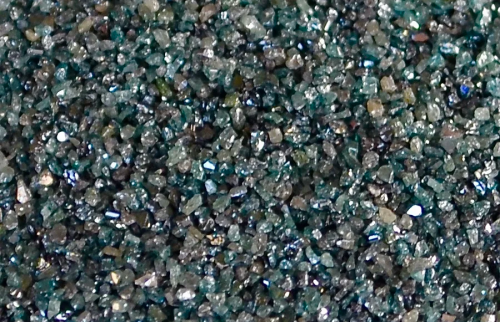
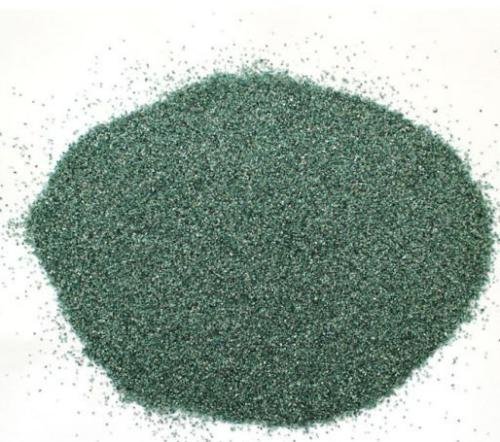
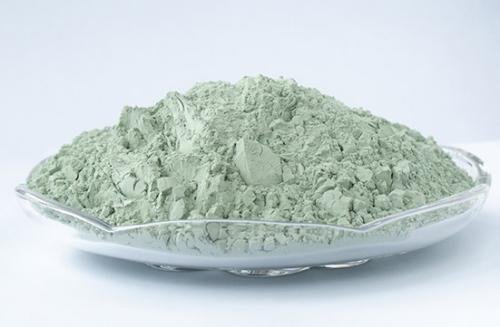
As we move deeper into Q4 2026, procurement managers across the steelmaking, refractory, and precision casting industries are asking the same question: Where are green silicon carbide prices heading, and is now the right window to build inventory or sign long-term agreements?
As a manufacturer rooted in the ferroalloy and abrasive/refractory sector, Henan Beifang Metal Co., Ltd. (BeiFang Alloy) combines the latest industry data with frontline production experience to break down the current green silicon carbide market logic across four dimensions: procurement needs, industry research, procurement guide, and supplier comparison.
Before discussing price, you must first clarify your specific application. The green silicon carbide market in 2026 shows a strong pattern of “structural divergence” — different grades face completely different supply-demand dynamics.
For Refractory & Metallurgical Deoxidation Buyers:
If you are purchasing green silicon carbide for steelmaking deoxidation, silicon addition, or as an additive in refractory castables, you are in the metallurgical/refractory-grade market. Supply in this segment is relatively ample. With the slowdown in real estate and infrastructure growth, traditional steelmaking demand is driven mainly by essential restocking. Prices lack the momentum for sharp rallies but are equally supported by costs and unlikely to fall sharply.
For Abrasive & Photovoltaic Cutting Buyers:
If you need precision grinding-grade or micro-powder-grade products (e.g., for photovoltaic wafer diamond-wire cutting or semiconductor substrate polishing), you face a different picture. High-end sectors (PV, semiconductors, new energy vehicles) are steadily releasing demand for high-purity, ultra-fine green silicon carbide with extremely strict impurity control. Supply in this segment is relatively tight, pricing power is stronger, and price trends remain firm.
Procurement Advice: BeiFang Alloy recommends first clarifying your SiC content requirements (e.g., 98.5%+ vs. ~90%) and particle size distribution. Don’t use a metallurgical-grade budget to inquire about semiconductor-grade material, and don’t pay excessive premiums for oversupplied low-end capacity.
Looking back at 2026, green silicon carbide prices (especially standard grades) have exhibited a classic “cost floor, demand ceiling” box-range pattern.
1. Cost Side: Strong Rigid Support
Green silicon carbide is a high-energy-consumption product. In 2026, under the continued influence of “dual carbon” policies, smelting utilization rates in major production regions (Ningxia, Gansu, Qinghai, Xinjiang) have been restricted. Meanwhile, raw material prices for petroleum coke and pitch coke have risen multiple times during the year, compounded by electricity price increases in some regions — directly pushing up smelting costs. This means that even with weak downstream demand, green silicon carbide raw block prices are unlikely to see the deep declines of previous years. As of mid-November 2026, the average market price of Chinese green silicon carbide (JIS1500 standard) is stable at around RMB 20,700/ton, with raw blocks (98.5% content) ex-works in Qinghai and Gansu holding in the RMB 11,450–11,650/ton range.
2. Supply Side: Low-End Oversupply vs. High-End Tightness
In Q1, driven by post-Spring Festival restocking and geopolitical factors pushing up raw material prices, silicon carbide saw “five consecutive price hikes.” But entering Q2, as the “Golden March & Silver April” peak ended, market trading cooled, inventory inflection points emerged, and standard-grade prices came under pressure. However, by Q4, as some green silicon carbide producers (in Sichuan and Xinjiang) suspended production due to cost or environmental factors, and inventories were digested over several months, the supply side returned to tight balance, allowing prices to stabilize.
3. Export Pull: An Increment Not to Be Ignored
In January–March 2026, China’s silicon carbide exports hit a five-year high for the same period, with significant year-on-year growth. The resilience of overseas demand has absorbed some of the domestic excess capacity, particularly providing a floor for standard-grade green silicon carbide raw block demand.
Conclusion: Now (November 2026) is a reasonable window to sign 2027 long-term agreements or conduct essential staged procurement — but it is NOT the best time for “bottom-fishing” stockpiling.
Rationale:
Prices at a Phase-Specific Equilibrium: The latest data shows green silicon carbide market operations remain stable in mid-November, with balanced supply and demand and neutral market sentiment. There is neither panic over sharp rises nor a trap of sharp falls — suitable for rational negotiation between buyers and sellers.
Winter & Pre-Spring Festival Stocking Expectations: As December approaches, northern production regions will face winter environmental production restrictions and possible weather-related logistics impacts. Meanwhile, downstream enterprises typically need to complete raw material stockpiling before the Spring Festival (January 2027). Inquiries are expected to increase in mid-to-late December, potentially pushing up quotations sentimentally. Therefore, late November to early December is a good time to lock in supply and avoid pre-holiday logistics and price fluctuations.
Beware of Low-End Price War Traps: Although standard-grade prices are stable, some small factories with tight cash flow may dump goods below market average. Always verify batch consistency when purchasing. For steelmaking-grade green silicon carbide, large particle size fluctuations or excessive free carbon can lead to unstable deoxidation results, actually increasing steelmaking costs.
Action Recommendations: For long-term partner steel mills and foundries, we recommend signing quarterly or annual framework agreements with a stable factory like BeiFang Alloy at current price levels — locking in supply volume with prices adjusted to market but with a certain discount margin. For micro-powder-grade users, prioritize evaluating suppliers’ acid washing processes and water-washing classification capabilities rather than simply comparing prices.
In green silicon carbide procurement, a supplier’s risk resilience and quality consistency matter far more than a RMB 50/ton price difference.
| Comparison Dimension | Traders / Small Processing Plants | BeiFang Alloy |
|---|---|---|
| Supply Stability | Constrained by upstream smelters; unstable sourcing | Direct factory supply, backed by Henan’s refractory and alloy industrial belt advantages, with a stable smelting and processing cooperation system |
| Quality Control | Mostly simple screening or resale; large batch color and particle size variations | Complete crushing, screening, and blending processes; can provide stable SiC content and particle size distribution test data |
| Product Line Breadth | Single category | Simultaneously supplies ferrosilicon, silicon metal, cored wire, recarburizer, and green silicon carbide — meeting multi-dimensional steelmaking/casting needs and reducing your procurement management costs |
| Response Speed | Requires layered feedback | Direct factory contact; fast technical parameter confirmation, timely sample dispatch, customized particle size support |
Henan Beifang Metal Co., Ltd. (HENAN BEIFANG METAL CO., LTD.) has long served steel mills and foundries worldwide. We not only supply green silicon carbide but are committed to providing one-stop ferroalloy and metallurgical auxiliary material solutions. Whether you need green silicon carbide deoxidizers in specific particle sizes or supporting ferrosilicon and cored wire, we can guarantee supply with factory sincerity and professional service.
Contact us for current specifications and firm prices:
🌐 Website: www.beifangalloy.com
✉️ Email: info@hnxyie.com
(Note: Price data in this article is cited from public industry platforms. Actual transaction prices are subject to BeiFang Alloy’s daily quotations.)