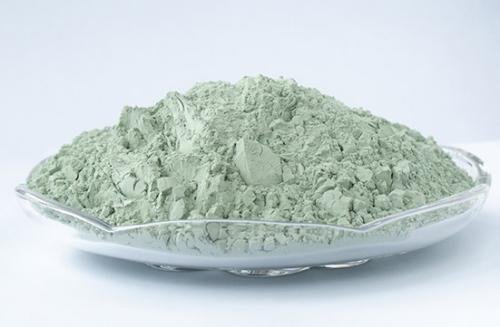
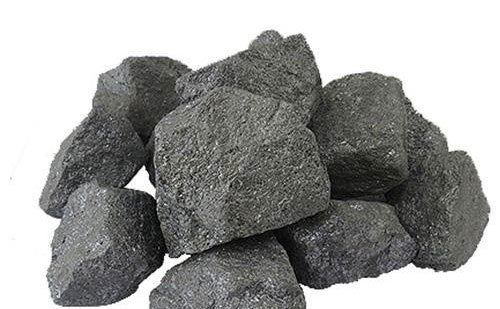
The core technical parameters of green silicon carbide are SiC content, free carbon (F.C), Fe₂O₃ content, and particle size distribution. By common industry standards, for grit grades (F12–F90), SiC content is typically required to be ≥99.00%, Fe₂O₃ ≤0.50%, and F.C ≤0.20%. For micro powder grades (F240–F1200), the SiC requirement drops to ≥95.50%–97.50%, with Fe₂O₃ relaxed to ≤1.20%. For buyers, understanding the “grading logic” behind these numbers matters more than memorizing them—different particle size ranges correspond to different impurity tolerances, and whether a supplier can consistently control impurities at a specific grit size is the real differentiator.
Let’s break it down across four dimensions: procurement needs, industry research, procurement guide, and supplier comparison.
1. Procurement Needs: Lock the Grit Size First, Then Talk Parameters
Green silicon carbide parameters are not a fixed set of numbers—they are ranges that vary with particle size. If you only ask “what’s the SiC content?” in an inquiry, the answer you get may not be directly usable in your process.
According to industry quality grading standards, chemical composition requirements for green silicon carbide are divided by grit range:
| Grit Range | SiC (Qualified) | Fe₂O₃ (Qualified) | F.C (Qualified) |
|---|---|---|---|
| F12–F90 | ≥99.00% | ≤0.50% | ≤0.20% |
| F100–F180 | ≥98.50% | ≤0.70% | ≤0.25% |
| F220 | ≥97.50% | ≤0.70% | ≤0.25% |
| F240–F600 | ≥96.00% | ≤1.20% | ≤0.30% |
| F800–F1200 | ≥95.50% | ≤1.20% | ≤0.30% |
Premium-grade specifications are noticeably tighter: for F12–F90, SiC ≥99.30% and Fe₂O₃ ≤0.15%; for F240–F600, SiC ≥97.50% and Fe₂O₃ ≤0.40%.
On the physical side, green silicon carbide has a Mohs hardness of 9.2–9.4, true density of about 3.21 g/cm³, decomposition temperature of about 2600–2800°C, and bulk density of 1.2–1.6 g/cm³. These parameters are relatively stable and not the main variable in procurement decisions, but they should be confirmed for refractory or vitrified-bond abrasive applications.
Procurement tip: In your inquiry, specify the grit number directly—
2. Industry Research: Why Green SiC Parameters Are Graded
Green silicon carbide is produced by smelting quartz sand, petroleum coke, and salt in an electric resistance furnace at high temperature. Its green color comes from the crystal structure formed under specific smelting conditions. Compared with black silicon carbide, green SiC has higher purity and greater hardness, making it preferred for applications demanding high cutting performance and low impurity contamination—such as precision abrasives, semiconductor wafer processing, and high-end refractories.
The grading of parameters reflects a basic industry reality: as particle size decreases, impurity control becomes harder and more costly. Fine powders have larger specific surface areas, making it easier for iron and free carbon to be introduced during crushing, grading, and packaging. That’s why SiC content requirements decrease and Fe₂O₃ limits loosen as grit number increases. Understanding this logic helps buyers avoid two common traps: demanding F1200 powder at F90-level SiC content (which is technically achievable but costly), or accepting loose Fe₂O₃ limits for coarse grit (which can affect downstream product quality).
3. Procurement Guide: Key Points for Bulk Purchasing
First, confirm the full parameter set, not just SiC. SiC content is only one dimension. Fe₂O₃ and F.C directly affect the performance of bonded abrasives and refractories. For magnetic materials or electronic applications, magnetic substance content also needs to be specified.
Second, check particle size distribution, not just grit number. Two suppliers can both claim “F240,” but the actual particle size distribution curve may differ. A narrow distribution means more consistent cutting performance; an overly broad distribution may indicate incomplete grading. Request a particle size distribution report (e.g., laser diffraction) if your process is sensitive to it.
Third, verify testing methods. SiC content is typically determined by HF-HClO₄ digestion or X-ray fluorescence; Fe₂O₃ by spectrophotometry or atomic absorption; F.C by combustion-infrared. Ask suppliers which methods they use and whether they provide third-party test reports. Different methods can yield slightly different results—consistency of method matters for batch-to-batch comparison.
Fourth, packaging and moisture control. Green SiC powder is prone to moisture absorption and agglomeration. Confirm packaging (moisture-barrier bags, ton bags with inner liners) and storage conditions. For micro powders, check for agglomeration before use.
Fifth, contract terms for batch consistency. Specify acceptable ranges for SiC, Fe₂O₃, and F.C, and define rejection and compensation terms for out-of-spec batches. For long-term supply, consider requiring a pre-shipment sample for approval.
4. Supplier Comparison: What to Look For
Green silicon carbide suppliers fall into three categories: large integrated smelters (full grit range, stable quality, but high MOQ), specialized processing plants (flexible on grit and volume, but dependent on raw material sources), and traders (wide product range, but longer quality traceability chains).
When comparing, focus on three things:
Grading capability. The ability to produce a narrow particle size distribution and consistent impurities across grits is the core technical differentiator. Suppliers with their own crushing, grading, and testing equipment typically perform better here.
Batch consistency. Ask for historical batch data on SiC, Fe₂O₃, and F.C variation. A supplier that can show tight standard deviations across multiple batches is more reliable than one quoting only the best-case numbers.
Application support. Different applications have different sensitivities—an abrasive user cares about toughness and particle shape, a refractory user cares about purity and thermal stability, and a semiconductor user cares about trace metals. A supplier that understands your application can recommend the right grade rather than just selling the highest-purity product.
About Beifang Alloy
As a ferroalloy factory, Beifang Alloy supplies silicon carbide and other metallurgical materials with in-house quality control and flexible grit customization. We understand that buyers need more than a parameter sheet—they need a supplier who can consistently meet those parameters batch after batch. Whether you need F12–F90 grit for abrasives, F240–F1200 micro powder for precision applications, or custom specifications, contact us to discuss your requirements.
📧 info@hnxyie.com
🌐 www.beifangalloy.com
#GreenSiliconCarbide #SiliconCarbide #SiC #Abrasives #Refractories #Ferroalloys #Procurement #SupplyChain #BeifangAlloy