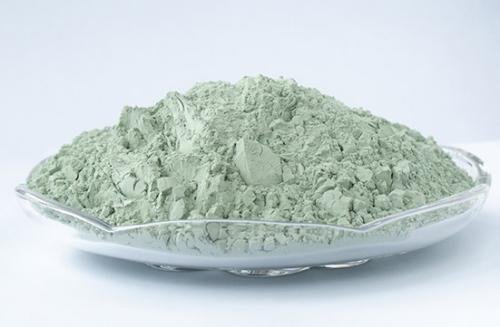
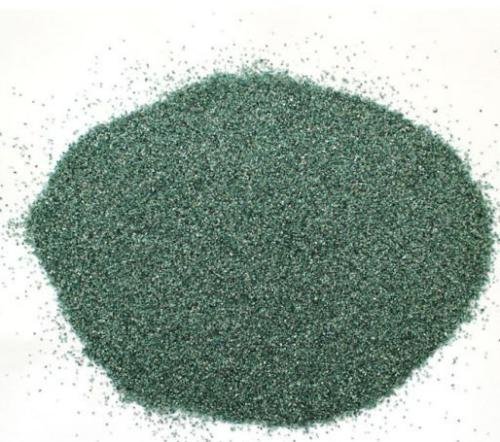
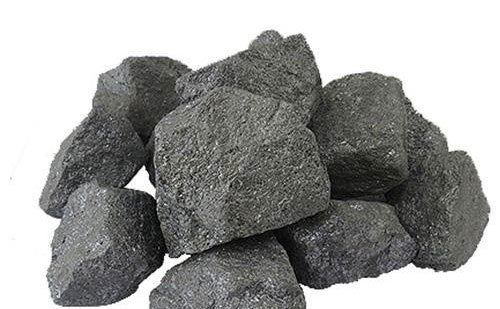
When a procurement manager sends an inquiry for green silicon carbide, the reply often comes back with a single line: “SiC ≥ 99%, F240, FOB price.” That looks like a complete specification. It is not.
The most critical specification to confirm when buying green silicon carbide is not the SiC percentage. It is the combination of grain size standard, particle size distribution, and impurity profile—matched to your specific end use. Get the SiC number right but the grain size standard wrong, and the material may not work in your customer’s process. Get the grain size right but ignore iron content, and a precision polishing application may fail at the wafer level.
This article explains why this combination matters, how the standards diverge, and what to ask before you place an order.
Buyers new to green silicon carbide often treat the SiC percentage as the defining parameter. It is the most visible number on any supplier’s data sheet. But the SiC percentage alone tells you almost nothing about whether the material will perform in your application.
Consider two suppliers quoting “green silicon carbide, SiC ≥ 99%, F240.” One material is produced to FEPA F-series standards, with a D50 of 44.5 ± 2 μm, free carbon below 0.10%, and Fe₂O₃ below 0.10% . The other is a generic micro powder labeled “F240” but with a broader distribution, free carbon at 0.20%, and no documented iron control. Both meet the written specification. Only one will work in a resin-bonded grinding wheel or a lapping slurry.
The procurement need is not a single number. It is a matched set of parameters: grain size designation and the standard it follows, the actual particle size distribution (not just D50), the impurity limits that matter for your application, and the physical form (grain, powder, or surface-treated).
For refractory applications, the priority is different again. A buyer sourcing green silicon carbide for a castable or a brick doesn’t need FEPA micro grit precision. They need consistent coarse grain, controlled iron to avoid high-temperature reactions, and a supplier who can deliver tonnage reliably. The critical specification shifts with the use case.
Grain size standards are not interchangeable. The two dominant systems for abrasive grain are FEPA (F-series for bonded abrasives, P-series for coated abrasives) and JIS (the # series for micro powders). A “F240” and a “240#” are not the same thing. FEPA F240 corresponds to a D50 of 44.5 ± 2 μm . JIS #240 is defined differently, and the distribution curve may not match. If your customer’s process was validated on JIS #240 and you ship F240, the surface finish may shift.
For buyers in China, the national standard GB/T 2481.1 exists, but export orders frequently cite FEPA or JIS. The supplier should state which standard the product actually conforms to, not simply that it “meets standard.”
Impurity control is application-specific. The three impurities that matter most are free carbon (F.C), iron oxide (Fe₂O₃), and free silicon .For abrasive applications, free carbon affects bond strength and can cause loading; iron can cause discoloration or contamination in precision work. Industry guidance distinguishes between grades: general industrial use tolerates Fe₂O₃ up to 0.2–0.3%, precision processing requires ≤ 0.1%, and semiconductor or photovoltaic applications may require iron below 50 ppm .
Published product data illustrates the range. One supplier’s FEPA micro grit data shows SiC ≥ 99.5% for #240 with Fe₂O₃ ≤ 0.3% . Another supplier’s RBSC-grade micro powder lists Fe₂O₃ at 0.06–0.10% with free carbon below 0.07–0.10%. The difference between these products is not the SiC percentage headline—it is the trace chemistry that determines whether the powder is suitable for a bonded wheel or a reaction-sintered ceramic.
Particle size distribution matters more than the headline grit number. Two powders can both be labeled “F240” and both have a D50 near 44.5 μm, but differ in the tails of the distribution. A narrow distribution produces consistent scratch patterns and surface finish. A broad distribution with coarse outliers can cause deep scratches in polishing or uneven wear in a refractory body. Buyers should request the D10, D50, and D90 values, not just the median. The presence of oversized particles is particularly damaging in precision applications—a single coarse grain in a fine powder batch can ruin a workpiece .
Physical form and surface treatment are specifications too. Green silicon carbide for abrasive wheels is used as loose grain. For resin-bonded wheels or coated abrasives, the grain may require surface treatment (silane coupling agents, for example) to improve adhesion to the bond. For refractory castables, the grain size may be specified in millimeters rather than FEPA numbers. A buyer sourcing “green silicon carbide” for a castable who receives FEPA micro grit has a specification mismatch that no amount of purity will fix.
Step 1: State the end use explicitly in the inquiry. Do not send a generic RFQ for “green silicon carbide.” Specify: application (abrasive wheel, refractory castable, lapping slurry, semiconductor wire saw), required grain size designation and standard (FEPA F240, JIS #240, or millimeter range), and any known impurity constraints. This single step eliminates most mismatches.
Step 2: Require the actual particle size distribution. Ask for D10, D50, and D90, plus a statement of maximum particle size. For micro grit, request a laser particle size report from the production batch, not a generic spec sheet.
Step 3: Confirm impurity limits for your application. For abrasive use, ask for free carbon and Fe₂O₃. For refractory use, ask for Fe₂O₃ and free silicon. For precision or electronic applications, ask for the full trace element profile including magnetic material content.
Step 4: Confirm the standard the supplier actually tests to. “FEPA” and “JIS” are not marketing labels. Ask for a certificate of analysis or inspection report that references the standard number (FEPA 42-1/2006 for F-series, for example) and the measured values against that standard.
Step 5: For export orders, confirm the HS code and documentation. Green silicon carbide falls under HS 2849200000. The export tax rebate rate is 0%, and the regulatory condition includes export license requirements . If your supplier cannot confirm the export license status, the shipment may face delays regardless of product quality.
A note on price benchmarking. Green silicon carbide prices vary significantly by grade and grain size. As of September 2026, 98.5%min lump (10–30cm) EXW China was approximately 1,955 USD/MT, while 98%min JIS2000 micro powder was approximately 4,181 USD/MT EXW China . The gap reflects processing and classification costs, not raw material purity alone. If a quote for FEPA micro grit is close to lump price, the product is likely not what the specification claims.
Question 1: “For F240, what is your D50 tolerance, and can you provide the D90 and maximum particle size for the production batch?” A supplier who answers with a specific D50 range and offers a batch-specific distribution report has a controlled classification process. A supplier who says “F240 is F240” does not.
Question 2: “What is the Fe₂O₃ limit for this grade, and what test method do you use?” The answer reveals whether the supplier controls iron at the level your application requires. A supplier who cannot state the Fe₂O₃ limit or the test method is not controlling it in a documented way.
Question 3: “For a refractory castable application, do you recommend FEPA micro grit or a millimeter-range grain, and why?” A supplier who understands the difference will ask about your binder system, casting method, and service temperature before recommending a grade. A supplier who answers “we can supply any size” is not providing technical support—they are quoting a commodity.
About Beifang Alloy. As a ferroalloy factory, our core strength is in deoxidizers and alloy additives for steelmaking. Green silicon carbide is a complementary supply category for us. We are transparent about this boundary: for abrasive-grade micro grit, specialized abrasive producers have deeper classification and quality control capability. For refractory-grade grain and for customers who also purchase ferroalloys, our value is in combined logistics and an understanding of high-temperature applications. If you have questions about matching green silicon carbide specifications to your process, reach us at info@hnxyie.com.
The most critical specification when buying green silicon carbide is not a single number. It is the alignment of grain size standard, particle size distribution, and impurity profile with the application. A supplier who can discuss all three in specific terms is a supplier worth engaging. A supplier who replies with “SiC ≥ 99%, price per ton” is selling a commodity, and the buyer carries the risk of mismatch.
Beifang Alloy | Ferroalloy products and high-temperature materials sourcing
info@hnxyie.com | www.beifangalloy.com