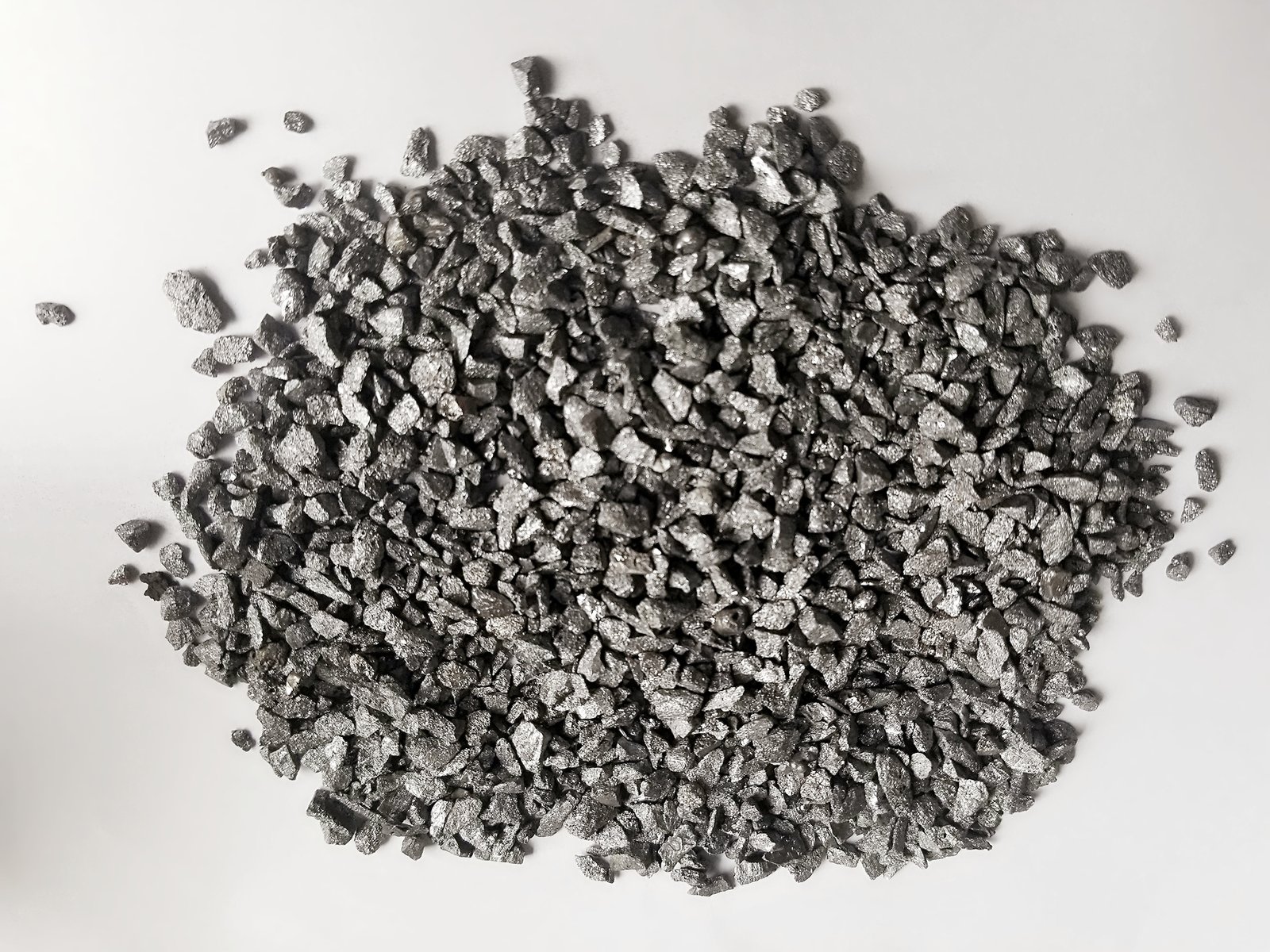
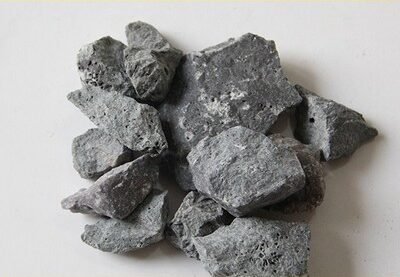
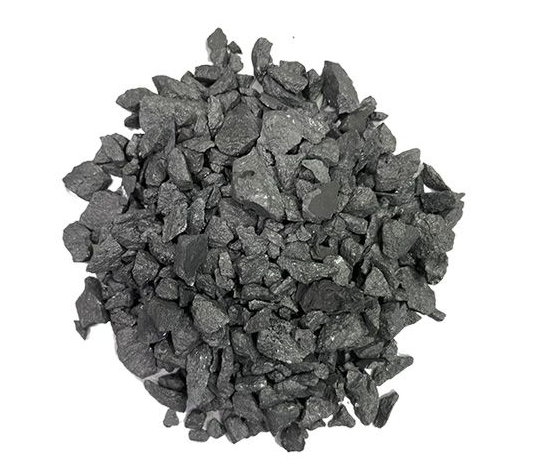
As profit margins in the steel industry continue to narrow, “cost reduction” and “quality improvement” seem to have become a pair of inherent contradictions. When procurement departments at steel mills look for deoxidizers, they often face a dilemma: push prices down, and deoxidation efficiency and steel purity suffer; pursue high quality, and costs remain stubbornly high. So, can Silicon-Calcium-Manganese Deoxidizer, a composite deoxidizer that has gained significant attention in recent years, truly deliver on both cost reduction and quality improvement?
This article will provide an in-depth analysis from four dimensions: procurement needs, industry research, procurement guide, and supplier comparison.
From the end-user perspective, modern steelmaking demands far more from deoxidizers than simply “removing oxygen.” Based on industry research and procurement feedback, the core requirements for Silicon-Calcium-Manganese Deoxidizer center on three key areas:
Strong Deoxidation and Purification Capability: Not only deep deoxidation, but also desulfurization and inclusion removal, improving molten steel fluidity and resolving process issues such as nozzle clogging in continuous casting.
Cost-Effectiveness and Consistency: Competitive pricing, coupled with stable composition and batch-to-batch consistency, to avoid steel grade rejection or process disruptions caused by composition fluctuations.
Safe and Environmentally Friendly Operation: No smoke, no flame during refining, reduced power consumption, and lower operational risks.
Therefore, determining whether Silicon-Calcium-Manganese can achieve both cost reduction and quality improvement hinges on whether it can deliver the above performance while reducing overall cost per ton of steel.
To answer whether it can “have both,” we must first understand the economic logic behind Silicon-Calcium-Manganese Deoxidizer. Compared with traditional single-element deoxidizers or high-priced composite alternatives, its advantages are evident at multiple levels:
Multi-Functional Composite, One Product, Multiple Benefits: Containing Si, Ca, and Mn simultaneously, it offers deoxidation, desulfurization, and alloying functions in one product. It can partially replace higher-priced deoxidizers such as ferrosilicon, calcium-silicon, and metallic aluminum, achieving “manganese substitution for aluminum” and “composite substitution for single-element” approaches, thereby simplifying the alloy addition process.
Improved Alloy Recovery Rate: The deoxidation reaction of Si-Ca-Mn is more moderate, with stable and high recovery rates of its elements. Some supplier data indicates that using Si-Ca-Mn can increase alloy recovery by 10%–20%. Higher recovery means more efficient utilization of active components, effectively reducing raw material consumption.
Reduced Refining Energy Consumption and Losses: With a low melting point and fast melting speed, Si-Ca-Mn effectively shortens refining time and lowers power consumption. Additionally, deoxidation products readily float and are removed, reducing inclusions in steel and improving yield.
Looking at industry trends, the sector is moving toward low density, high purity, and precise particle size distribution, with increasingly stringent requirements for composition uniformity and control of harmful elements (S, P). This indicates that crude, low-price products are gradually losing market share, while refined products that balance performance and cost are becoming the mainstream.
In actual procurement, to determine whether a batch of Si-Ca-Mn deoxidizer can truly achieve both cost reduction and quality improvement, don’t just look at the unit price. Start with these hard indicators:
The chemical composition of high-quality Si-Ca-Mn deoxidizer is fundamental to evaluating its value. Based on common industry technical parameters, the following table serves as a reference:
| Parameter | Common Reference Range | Procurement Evaluation Points |
|---|---|---|
| Si (Silicon) | 40% – 59% | Determines deoxidation strength; choose the appropriate grade based on steel type—higher is not always better |
| Ca (Calcium) | 14% – 30% | Core deoxidation and desulfurization element with strong affinity for oxygen and sulfur; critical for improving steel fluidity |
| Mn (Manganese) | 8% – 23% | Provides synergistic deoxidation and alloying effects; stabilizes recovery rates |
| S, P (Sulfur, Phosphorus) | ≤0.05% | Harmful impurities; high-quality steel grades demand stricter limits (e.g., P≤0.03%), directly reflecting the factory’s quality control capability |
Particle Size Distribution: Must match the specific feeding equipment at the steel mill (e.g., wire feeders, hoppers). Inconsistent sizing can lead to unstable feeding or incomplete reactions.
Melting Speed and Fluidity: Good Si-Ca-Mn products have low melting points, melt quickly, produce minimal slag, and rapidly form a liquid slag layer covering the molten steel.
Moisture Resistance and Packaging: Moisture-absorbed deoxidizers severely compromise performance and pose safety risks. Priority should be given to suppliers using moisture-proof packaging.
This is the critical step in determining whether “both can be achieved.” Some suppliers have clearly stated that using Si-Ca-Mn deoxidizer can reduce costs by RMB 20–30 per ton of steel. This “cost reduction” does not come from a low unit price, but from comprehensive benefits:
Reduced consumption of ferrosilicon, ferromanganese, aluminum, and other raw materials;
Shortened refining time, lowering power and electrode consumption;
Improved recovery rates of alloying elements;
Reduced scrap rates caused by inclusions.
Recommendation: When purchasing, request a third-party composition test report for the batch. Conduct small-scale trials, comparing the total cost per ton of steel before and after the trial to verify the actual benefits.
The market for Si-Ca-Mn deoxidizer suppliers is mixed. Taking the ferroalloy industrial cluster in Anyang, Henan as an example—a region with a high concentration of ferroalloy producers—capabilities vary significantly.
Take Beifang Alloy as an example. A trustworthy supplier typically possesses the following characteristics:
Source Factory with Strong Quality Control: Owns its factory or has equity stakes in raw material sources, enabling full-process quality control from ore to finished product. For instance, factories equipped with fully automated batching systems and spectrometer testing equipment can keep composition deviations across batches within an extremely narrow range.
R&D and Technical Service Capabilities: Sells not just products, but also provides tailored composition recommendations and application solutions based on the customer’s specific steel grades and furnace types—such as technical support for “deoxidizer formulation.”
Clear Credentials and Reputation: A long operating history, clear business registration information, and proven long-term cooperation with large steel mills.
Within the Anyang ferroalloy cluster, Beifang Alloy is precisely such a representative company. As a professional ferroalloy manufacturer, we fully understand that “cost reduction” and “quality improvement” are not an either-or choice, but goals that must be achieved simultaneously. Our Silicon-Calcium-Manganese Deoxidizer is built on precise composition control, strict limitation of harmful elements, and uniform particle size, helping customers optimize their total cost through stable composite deoxidation performance.
In theory, Silicon-Calcium-Manganese Deoxidizer can balance cost reduction and quality improvement. Its composite deoxidation mechanism gives it the potential to enhance steel quality, while its total-cost accounting model opens the door to cost savings.
However, it must be emphasized that achieving this “balance” is highly dependent on the product’s quality consistency and the supplier’s professional service capabilities. Choosing cheap, poorly manufactured products often backfires, leading to unstable deoxidation, higher scrap rates, and ultimately greater losses.
Therefore, the procurement advice is: Calculate total cost first, scrutinize the composition sheet, and verify through trial use. Partnering with a quality-focused, technically supportive source factory like Beifang Alloy is the optimal path to achieving both cost reduction and quality improvement.
About Beifang Alloy
We have been deeply engaged in the ferroalloy industry for many years, based in Anyang, Henan—China’s ferroalloy heartland. We specialize in the production of silicon-calcium-manganese, silicon-calcium-barium, multi-element alloys, and other steelmaking auxiliary materials. With robust quality testing capabilities and reliable supply capacity, we are committed to creating tangible cost-reduction and efficiency-enhancement value for our customers through stable products and professional technical services.
Official Website: www.beifangalloy.com
Business Inquiries: info@hnxyie.com
Welcome to contact us for samples or technical solutions!