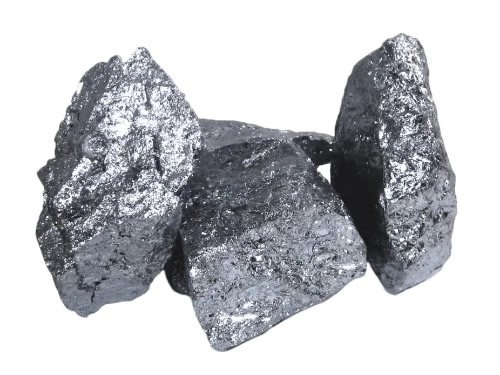
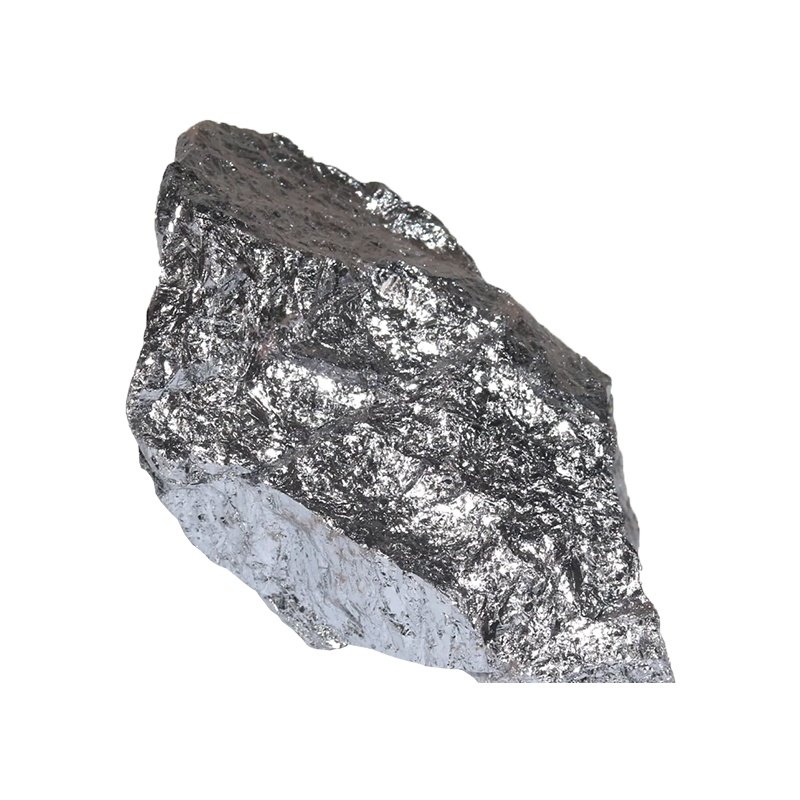
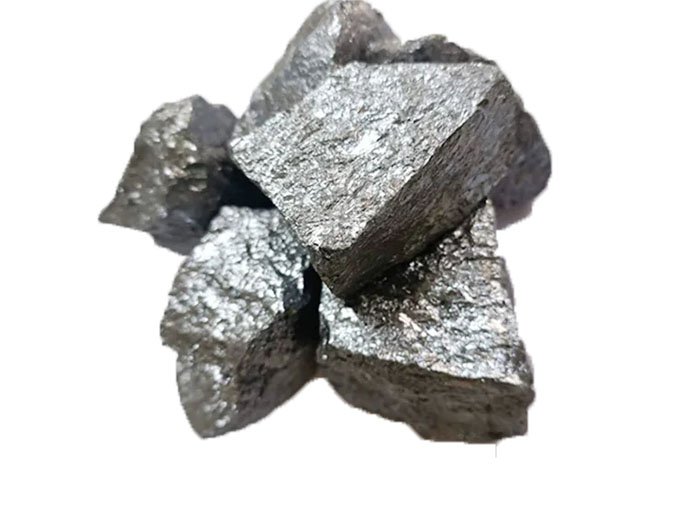
In ferroalloy and metallurgical raw material procurement, the grade designation on a silicon metal (industrial silicon) quote is often the most prominent piece of information—and the most frequently misunderstood. Two suppliers quoting the same “553″ grade may differ by hundreds of yuan per ton, and a buyer who fixates only on the “silicon content” figure may discover upon incoming inspection that the iron, aluminum, and calcium balance doesn’t match expectations, affecting deoxidation performance or alloying quality.
The silicon metal grade system is not complicated, but its naming logic directly determines how you write your procurement specification, how you set acceptance criteria, and how you compare suppliers. This article approaches the topic from a procurement practitioner’s perspective, decoding the chemistry behind the grade numbers and providing an actionable framework for selection and supplier evaluation.
Silicon metal grades are not named by silicon content—they are coded by the upper limits of three key impurities: iron (Fe), aluminum (Al), and calcium (Ca).
Under the current Chinese national standard GB/T 2881-2014 “Industrial Silicon,” grades use a four-digit format (some legacy grades used three digits). The coding rule is: the first two digits represent the single-digit per-mille upper limits for iron and aluminum respectively, while the last two digits represent the per-mille and per-ten-thousand upper limit for calcium.
For common grades:
| Grade (GB format) | Industry Shorthand | Fe ≤ | Al ≤ | Ca ≤ | Nominal Si ≥ |
|---|---|---|---|---|---|
| Si553 | 553 | 0.50% | 0.50% | 0.30% | 98.70% |
| Si441 | 441 | 0.40% | 0.40% | 0.10% | 99.10% |
| Si3303 | 3303 | 0.30% | 0.30% | 0.03% | 99.37% |
Source: GB/T 2881-2014
How to read this table: Take 553. The first “5” means Fe ≤ 0.5%, the second “5” means Al ≤ 0.5%, and the last two digits “30” mean Ca ≤ 0.30%. In industry shorthand, the trailing zero is dropped, hence “553.” Similarly, 441 means Fe ≤ 0.4%, Al ≤ 0.4%, Ca ≤ 0.1%; 3303 means Fe ≤ 0.3%, Al ≤ 0.3%, Ca ≤ 0.03%.
The key procurement implication: From 553 to 441 to 3303, the iron and aluminum ceilings each tighten by 0.1 percentage points, while the calcium ceiling drops sharply from 0.3% to 0.03%. The calcium difference is particularly significant—3303’s calcium limit is one-tenth that of 553. If your application is calcium-sensitive (for example, certain aluminum alloy melting or precision metallurgy processes), the price gap between 553 and 3303 reflects not just “purity” but the cost of tightly controlling a specific impurity element.
Action item: When requesting quotes, don’t simply write “need 553 silicon metal.” Specify: “Compliant with GB/T 2881-2014, Si5530, Fe ≤ 0.50%, Al ≤ 0.50%, Ca ≤ 0.30%.” This prevents suppliers from substituting legacy or enterprise standards and gives you enforceable acceptance criteria.
The coexistence of legacy and current grade designations is the most common pitfall in procurement. The widely traded “553,” “441,” and “3303” are products of industry shorthand and legacy standards (such as GB/T 2881-1991), while the current national standard uses four-digit formats (Si553, Si441, Si3303). The two largely correspond in impurity limits, but some legacy calcium specifications exist in differing versions, and the legacy standard has been superseded. If a purchase contract says only “553” without specifying the governing standard, a supplier may invoke a favorable legacy specification in a quality dispute.
Another confusion point is how “silicon content” is stated. Under the national standard, nominal silicon content is a calculated value—”100% minus the sum of Fe, Al, and Ca”—not a directly measured elemental silicon figure. This means that for lower grades like 553, the nominal silicon content is lower, but what actually affects your process is the impurity balance, not the “98.7%” number itself. Some suppliers highlight “Si ≥ 99%” on quotes to attract attention, but without specifying the corresponding Fe/Al/Ca ceilings, that “99%” may be achieved through a different impurity combination that doesn’t meet your grade requirement.
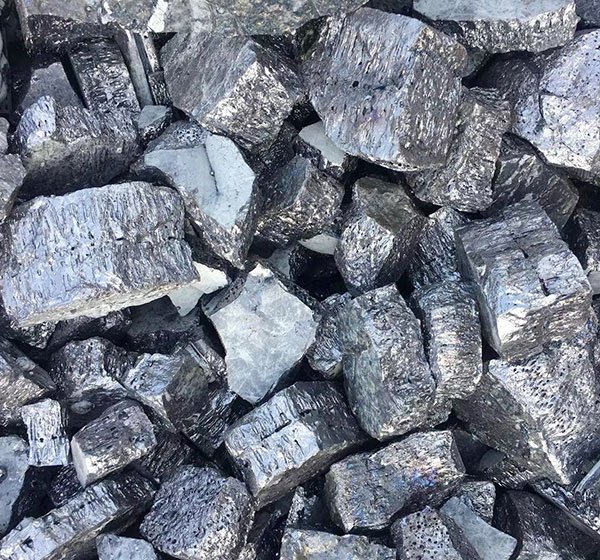
What supply geography tells us: Fujian province is known for producing low-phosphorus, low-boron high-grade specifications (such as 3303 and 2202), while conventional grades like 553 and 441 are distributed across multiple production regions nationwide. This means that when sourcing 3303, a supplier’s region and process route deserve attention; when sourcing 553, supply options are broader and price competition more intense. Understanding this distribution helps judge whether a quote is reasonable—a trader far from major production regions quoting a 3303 price below that of a producing-region factory warrants a follow-up question about the source.
 |
 |
Step 1: Write specifications using “impurity ceilings,” not “grade names.” As noted above, the grade is shorthand; the impurity limits are the legally binding quality agreement. The specification should include: governing standard number, full grade designation (e.g., Si3303), specific Fe/Al/Ca upper limits, particle size requirements (e.g., 10–100mm), and whether a third-party test report is required.
Step 2: Focus incoming inspection on the “weakest link.” For 553, verify that both Fe and Al are controlled within 0.5%—some products meet the Fe limit but exceed on Al, and still fail to qualify as 553. For 3303, calcium is the critical sensitive parameter; the 0.03% ceiling requires more precise analytical methods (such as ICP or atomic absorption), and ordinary chemical titration may lack sufficient accuracy. For first-time cooperation or batch changes, commission a third-party laboratory for full-element verification.
Step 3: Guard against “downgrade blending” risk. There is a market practice of mixing high-grade and low-grade material to “average out” to a compliant figure, particularly when the price gap between 553 and 441 is significant. Countermeasures include: requiring batch numbers with corresponding test reports, retaining samples from each delivery for at least six months, and including return or price-reduction clauses in the contract for out-of-spec impurities.
Silicon metal suppliers fall into three categories: producers with their own submerged arc furnaces, processors/traders who purchase from multiple mills and reclassify, and pure traders. The three differ significantly in grade consistency reliability.
| Evaluation Dimension | Producer (Own Furnaces) | Processor/Trader | Pure Trader |
|---|---|---|---|
| Grade consistency | Batch-to-batch variation controllable; traceable to furnace run | Depends on raw material sources; higher blending risk | Difficult to trace; quality depends on upstream |
| Testing capability | Usually has in-house lab; can provide furnace-run reports | Some have basic testing; most rely on upstream reports | Generally no testing capability |
| High-grade supply (3303) | Stable capability if in major production regions like Fujian | Requires source screening; calcium figures prone to fluctuation | Quotes may be low but quality uncertain |
| Conventional grades (553/441) | Ample supply; price follows market | Flexible but requires verification against substitution | Limited price advantage; higher risk |
| Response speed | Large mills slower; small mills flexible | Relatively fast | Fastest, but weak technical support |
Practical advice for ferroalloy plants: For bulk conventional grades like 553, prioritize direct supply from producers with submerged arc furnaces and lock in long-term agreements to stabilize cost and batch consistency. For calcium-sensitive grades like 3303, confirm the supplier’s calcium control process—whether it is achieved naturally through selected raw materials or through post-processing, as batch stability differs greatly between the two. If a supplier cannot explain how 3303’s calcium is controlled below 0.03%, that itself is a signal worth heeding.
Silicon metal grades are a “code” written in impurity content. The difference between 553, 441, and 3303 is essentially the stepwise tightening of iron, aluminum, and calcium ceilings—with calcium showing the largest jump. The core procurement task is to translate this code into enforceable contract terms and to identify, during supplier selection, who genuinely has the capability to consistently deliver those numbers.
Beifang Alloy serves the ferroalloy and metallurgical industry and understands what precision in raw material specifications means for production stability. For discussions on silicon metal or other ferroalloy raw material procurement, contact us.
🌐 www.beifangalloy.com
✉️ info@hnxyie.com