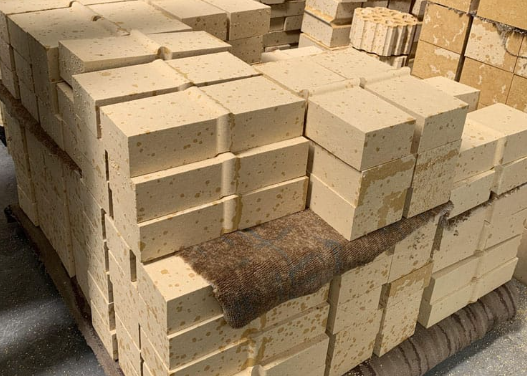
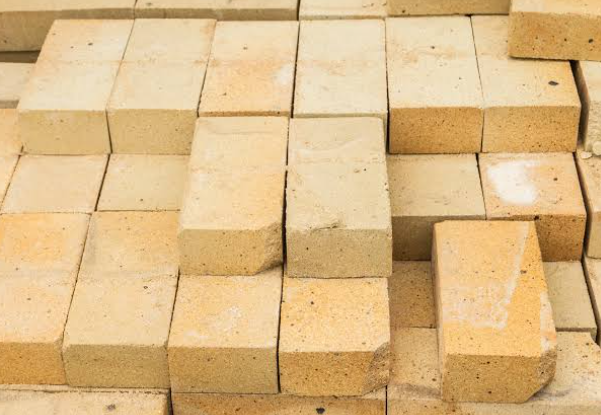
The choice between magnesia-carbon (MgO-C) bricks and magnesia-chrome (MgO-Cr₂O₃) bricks for converter linings is a long-standing debate. For procurement teams, this is not merely a technical question — it directly affects campaign life costs, production rhythm, and supply chain stability. As a company deeply rooted in ferroalloys and metallurgical materials, Beifang Alloy frequently receives inquiries on this selection issue. This article examines it from four dimensions: procurement needs, industry research, procurement guide, and supplier comparison.
To decide between MgO-C and MgO-Cr₂O₃ bricks, you must return to the essence of procurement: what are the actual smelting conditions of your converter?
MgO-C bricks are the mainstream choice for modern steelmaking converter working linings, and the core reason lies in the thermal shock resistance and slag penetration resistance provided by their graphite content. Converter steelmaking is fast-paced with severe temperature fluctuations. The graphite in MgO-C bricks effectively prevents slag from penetrating into the brick body, avoiding structural spalling. Its low expansion coefficient and good thermal conductivity also enable it to withstand frequent thermal shocks. Today, converter working linings almost universally use MgO-C bricks. Combined with slag splashing practices, campaign life can reach thousands of heats or more.
But MgO-C bricks are not without shortcomings. Carbon oxidizes at high temperatures, and oxidation loss accelerates significantly in areas directly exposed to oxygen or lacking slag layer protection — such as the tapping hole and trunnion areas. In addition, when smelting ultra-low-carbon steels, the carbon in MgO-C bricks may cause carbon pickup in the molten steel — a risk that must be avoided in high-end steel grades.
MgO-Cr₂O₃ bricks follow a different technical route. Using magnesia and chrome ore as primary raw materials, their advantages lie in good high-temperature volume stability and strong resistance to basic slag erosion. However, one key fact deserves attention: in the field of steelmaking converters, MgO-Cr₂O₃ bricks are not the mainstream choice for working linings. Current reports on MgO-Cr₂O₃ brick applications in converters mostly focus on horizontal converters (P-S converters) in copper-nickel smelting, rather than basic oxygen converters in steelmaking. In steelmaking converters, MgO-Cr₂O₃ bricks appear more often in a few locations such as the tapping hole, where oxidation resistance is required more than thermal shock resistance, or in secondary refining units (such as RH vacuum chambers).
The first step in procurement judgment: If your converter is a steelmaking oxygen converter producing conventional carbon steels and low-alloy steels, MgO-C bricks are the default and mature choice. Only when your operating conditions involve extremely oxidizing atmospheres, ultra-low-carbon steel grades, or when you actually operate a non-ferrous smelting converter do MgO-Cr₂O₃ bricks enter the core consideration set.
From the perspective of industry technical evolution, the rise of MgO-C bricks was itself a response to the limitations of traditional magnesia-based and magnesia-chrome materials.
Early converter linings used fired magnesia bricks or tar-pitch bonded magnesia-dolomite bricks, with campaign life of only 200–300 heats. After MgO-C bricks were introduced, their combined advantages in slag erosion resistance and thermal shock resistance quickly displaced traditional materials as the preferred choice for converter working linings. This substitution occurred because the core contradiction in steelmaking converter conditions is thermal shock damage and slag penetration, not purely chemical erosion. The graphite in MgO-C bricks precisely addresses this pain point.
The technical advantages of MgO-Cr₂O₃ bricks are concentrated in resistance to basic slag chemical erosion and high-temperature volume stability. The presence of chromium gives them excellent performance in environments with relatively stable temperatures and predominantly chemical erosion, such as the burning zone of cement rotary kilns and the regenerators of glass furnaces. But in converters — where temperature changes are frequent and mechanical scouring is severe — the thermal shock resistance of MgO-Cr₂O₃ bricks is not superior to that of MgO-C bricks. Their higher cost and the environmental sensitivity of chromium resources further limit their large-scale application in converter working linings.
One noteworthy trend: the widespread adoption of slag splashing technology has further consolidated the dominant position of MgO-C bricks in converters. Slag splashing relies on the decarburized layer on the surface of MgO-C bricks to adhere slag. MgO-C bricks with moderate carbon content can form a good sintered layer and slag layer, greatly extending campaign life. This process is deeply bound with MgO-C bricks, and MgO-Cr₂O₃ bricks do not offer such a synergistic effect.
If MgO-C bricks are confirmed as the primary choice, the procurement decision is not over — different converter zones have significantly different performance requirements for MgO-C bricks. Below is a zone-by-zone selection reference based on industry practice:
| Zone | Main Erosion Type | Recommended MgO-C Brick Features | Procurement Focus |
|---|---|---|---|
| Cone | Oxidation, mechanical damage | High oxidation resistance, high strength, carbon content ≥14% | Carbon content should not be too high to avoid sacrificing strength |
| Trunnion area | Slag erosion + oxidation + mechanical stress | Premium MgO-C bricks with 16%–18% carbon content | This area is often the lining life bottleneck |
| Slag line | Slag chemical erosion | High erosion resistance, MgO content ≥72% | Each 1% increase in FeO in slag may reduce life by 18–20 heats |
| Charging side | Impact + thermal shock + slag erosion | Thermal shock resistance, high erosion resistance | Thermal shock cracking is the main failure mode |
| Tapping hole | Oxidation + slag erosion + rapid temperature changes | High strength, high oxidation resistance, carbon content ~10% | MgO-Cr₂O₃ bricks may be considered as an alternative |
The above data references industry analysis of erosion mechanisms at various converter zones. For the tapping hole — a special zone directly subjected to the highly oxidizing atmosphere of oxygen blowing — the carbon oxidation problem of MgO-C bricks is more prominent. Some steel mills choose pure oxide materials or MgO-Cr₂O₃ bricks to address this. But this is local optimization, not a logic for replacing the overall lining.
Key verification points in procurement negotiation:
Require suppliers to provide actual test values for core indicators such as MgO content, carbon content, apparent porosity, and cold crushing strength — not just grade designations.
Confirm the type of antioxidant additives (e.g., metallic aluminum powder, SiC), which directly affects the life of the trunnion and tapping hole zones.
For MgO-Cr₂O₃ bricks claimed to be “suitable for converters,” always ask about the specific application zone and performance references — the operating conditions of steelmaking converters and non-ferrous converters differ enormously and must not be conflated.
Procurement of refractory materials differs from standard parts — a supplier’s technical service capability is as important as the product itself. When comparing MgO-C or MgO-Cr₂O₃ brick suppliers, consider the following dimensions:
Product focus and production line matching. Converter MgO-C bricks have high raw material purity requirements — typically requiring MgO ≥95% in magnesia and C ≥94% in graphite, with phenolic resin or pitch as binders. Whether a supplier has stable raw material channels and strict particle size ratio control is the foundation of product quality consistency. If a supplier offers both ferroalloys and multiple refractory materials, confirm whether its refractory production line is independently controlled and whether it has dedicated formulations for converter conditions.
Depth of technical service. A good supplier should be able to provide zone-specific brick type and carbon content recommendations based on your converter capacity, steel grades, and slag splashing parameters — not just quote a generic “converter MgO-C brick” price. The carbon content requirements for the cone, trunnion, and slag line differ, and a one-size-fits-all supply plan often leads to premature local wear.
Compliance awareness in MgO-Cr₂O₃ brick supply. If there is a genuine need for MgO-Cr₂O₃ bricks (such as for tapping holes or non-ferrous smelting scenarios), pay attention to the supplier’s awareness of and response to environmental regulations related to chromium resources. The environmental risk of hexavalent chromium is an unavoidable issue for MgO-Cr₂O₃ bricks. A responsible supplier should be able to provide material safety data and disposal recommendations for spent bricks.
From Beifang Alloy’s perspective, we understand well how refractory selection errors affect our customers’ production rhythm. As an enterprise rooted in ferroalloys and metallurgical materials, we recommend that procurement teams base their MgO-C versus MgO-Cr₂O₃ decision on the actual erosion mechanisms at each converter zone, rather than on whether a material name sounds “advanced.” For steelmaking converter working linings, the answer in the vast majority of cases is MgO-C bricks — but the precise selection of carbon content, the matching of antioxidant additives, and differentiated solutions for special zones such as the tapping hole are where true procurement professionalism is demonstrated.
If you are looking for reference points for converter lining selection or for evaluating the cost-effectiveness of your current supplier, feel free to exchange views with Beifang Alloy’s technical team. We may not be a direct manufacturer of refractory bricks, but our understanding of ferroalloys and steelmaking processes can help you examine this procurement decision from a more complete perspective.
Beifang Alloy
www.beifangalloy.com
info@hnxyie.com