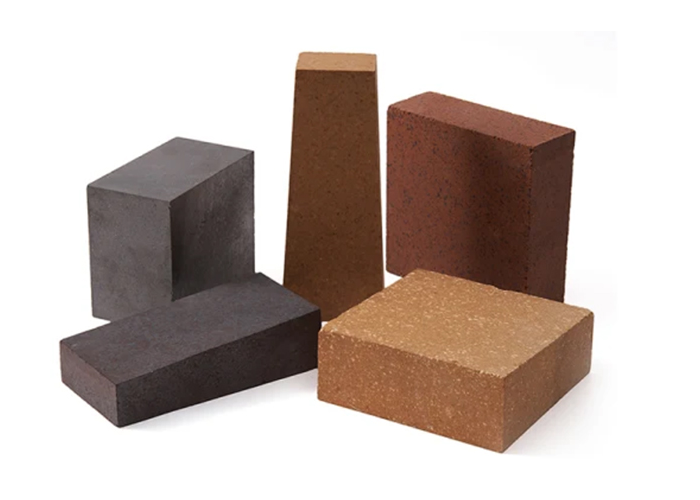
Carbon brick is a neutral refractory material made from carbonaceous materials with an appropriate amount of binder. Its main raw materials include anthracite, coke, and graphite, and the binder is usually coal tar pitch, tar, or resin.
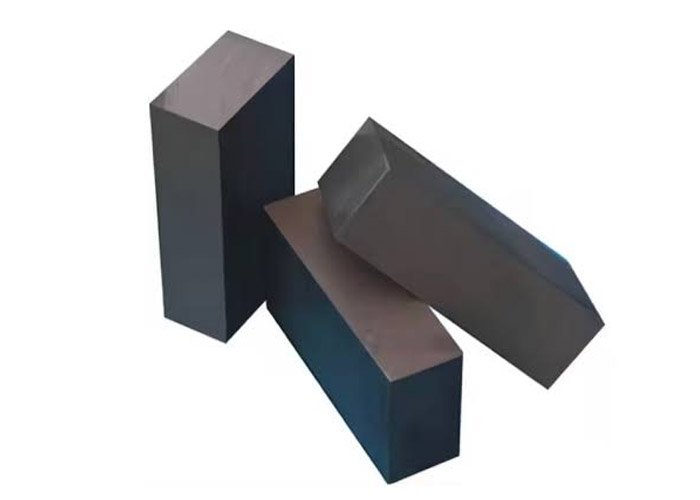
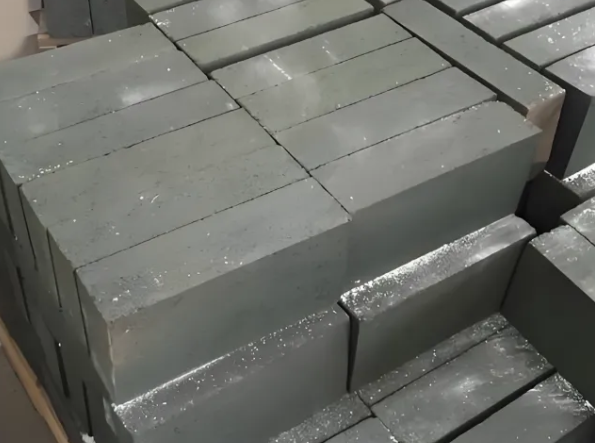
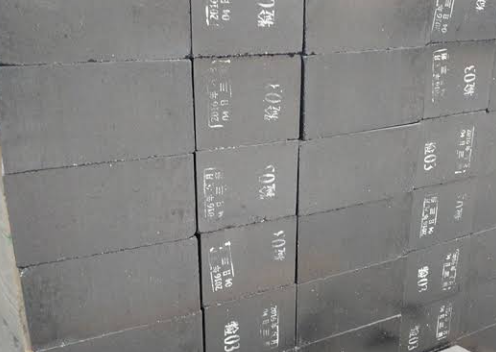
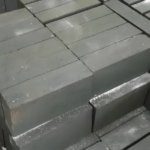
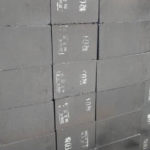
Carbon brick is a neutral refractory material made from carbonaceous materials with an appropriate amount of binder. Its main raw materials include anthracite, coke, and graphite, and the binder is usually coal tar pitch, tar, or resin. The carbon mass fraction is generally 88%~90%, and the fixed carbon content of high-quality carbon brick can reach above 95%.
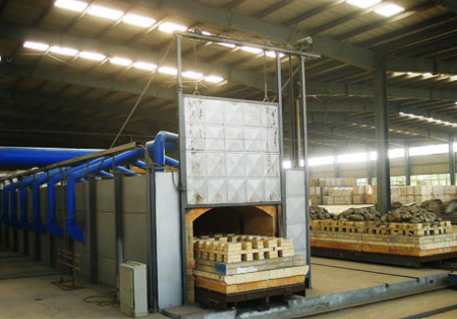
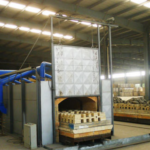
The production process of carbon brick is typically: raw materials are screened, batched, kneaded, formed (molded or extruded), baked (1100~1450℃), precision-milled, and machined. The mineral composition of carbon brick is mainly carbonaceous material. It has the characteristics of not melting and not softening, and only volatilizes at high temperatures (above 3000℃), a temperature that cannot be reached in a blast furnace.
Carbon brick is extremely prone to oxidation under high-temperature conditions, so it is mainly used for lining parts of furnaces that are not exposed to air or oxidizing atmospheres. According to different raw materials and processes, carbon bricks are mainly divided into ordinary carbon brick, semi-graphitic carbon brick, microporous carbon brick, ultra-microporous carbon brick, and self-baking carbon brick, among other varieties.
By application scenario, carbon bricks are mainly divided into blast furnace carbon brick, electric furnace carbon brick (submerged arc furnace carbon brick), and aluminum electrolytic cell carbon brick.
Molded carbon brick for blast furnace (designation SM-3MR) is the lining material for key parts of the blast furnace hearth and bottom. It uses electrically calcined anthracite and resin composite binder as main raw materials and has ultra-microporous characteristics. Main physical and chemical indicators are as follows:
| Item | Unit | Indicator Value |
| Bulk density | g/cm³ | 1.75 |
| Apparent porosity | % | 12 |
| Compressive strength | MPa | 50 |
| Flexural strength | MPa | 11 |
| Permeability | mDa | 0.5 |
| Average pore diameter | μm | 0.05 |
| Pore volume ratio less than 1μm | % | 83 |
| Thermal conductivity (600℃) | W/(mK) | 25 |
Molded carbon brick dimensions for blast furnace:
| Dimension/mm | Width/mm | Height/mm | Length/mm |
| 500×400 | 500 | 400 | <3000 |
| 500×500 | 500 | 500 | <3000 |
| 500×600 | 500 | 600 | <3000 |
| 500×700 | 500 | 700 | <3000 |
Semi-graphitic carbon brick uses high-temperature electrically calcined anthracite (calcination temperature 1500~2000℃) as the main raw material and medium-temperature pitch as the binder. It is formed and then precision-machined after high-temperature baking. Main performance indicators:
| Item | Unit | Typical Value |
| Ash content | % | 6 |
| Bulk density | g/cm³ | 1.55 |
| Compressive strength | MPa | 38 |
| Flexural strength | MPa | 9.8 |
| Apparent porosity | % | 18 |
| Thermal conductivity | W/(m·K) | 13.96 |
Semi-graphitic carbon brick size range: 400×400×(400-1800mm), 400×500×(400-2500mm), 600×650×(600-2000mm), 800×800×(800-1900mm). Various special-shaped carbon blocks can also be processed according to customer requirements.
Low-ash carbon brick (FDG-PD) uses electrically calcined low-ash anthracite as the main raw material. Its main properties are low ash content and a certain thermal conductivity, meeting the needs of blast furnaces, submerged arc furnaces, and electric furnaces:
| Item | Unit | Guaranteed Value | Typical Value |
| Ash content | % | ≤3.5 | 3 |
| Bulk density | g/cm³ | ≥1.57 | 1.60 |
| Compressive strength | MPa | ≥35 | 38 |
| Apparent porosity | % | ≤15 | 13 |
| Thermal conductivity (600℃) | W/(m·K) | ≥10 | 12 |
Anti-corrosion carbon brick is divided by process into sintered carbon brick (SJ-1, SJ-2) and pressed carbon brick (YZ-1, YZ-2), suitable for corrosive environments such as chemical acid/alkali storage tanks, reactors, pipeline linings, and electrolytic cells. Main physical and chemical indicators are as follows:
| Type | Bulk density (kg/m³) | Compressive strength (MPa) | Ash content (%) | Apparent porosity (%) |
| Sintered SJ-1 | ≥1650 | ≥65 | ≤3 | <20 |
| Sintered SJ-2 | ≥1500 | ≥45 | ≤5 | <22 |
| Pressed YZ-1 | ≥1650 | ≥70 | ≤2 | <10 |
| Pressed YZ-2 | ≥1600 | ≥50 | ≤5 | <15 |
Carbon brick is widely used in metallurgy, chemicals, environmental protection, and other industrial fields:
Metallurgy Industry
Chemical Industry
Environmental Engineering
Flue gas desulfurization (FGD) systems: Resists acidic slurry corrosion
Waste incineration furnaces: Resists corrosion by acidic gases such as HCl and SO₂
Electroplating and Electronics Industry
Electroplating tanks: Resists strong acid plating solutions (such as chromic acid and hydrofluoric acid)
Semiconductor equipment: High-purity carbon brick is used in corrosive gas environments
Others
Industrial pickling tanks, electroplating tanks, dissolving tanks in the paper industry, petrochemical autoclaves, etc.
Carbon brick is extremely prone to oxidation in oxidizing atmospheres, so it is mainly used for lining parts of furnaces that are not exposed to air or oxidizing atmospheres. In ferroalloy production, carbon brick is mainly used for the furnace wall and bottom of submerged arc furnaces that are not exposed to air. When carbon brick is used in blast furnaces, cooling water jackets are usually still required, because the hearth is easily damaged when carbon brick quality is poor, and without cooling water jackets, iron and slag breakout accidents may occur.