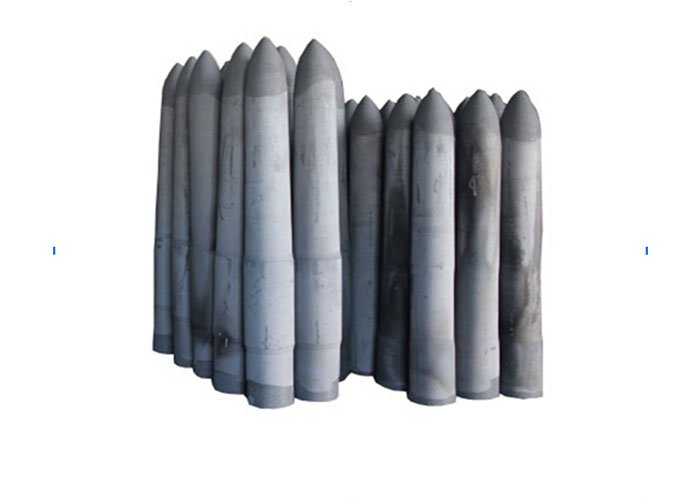
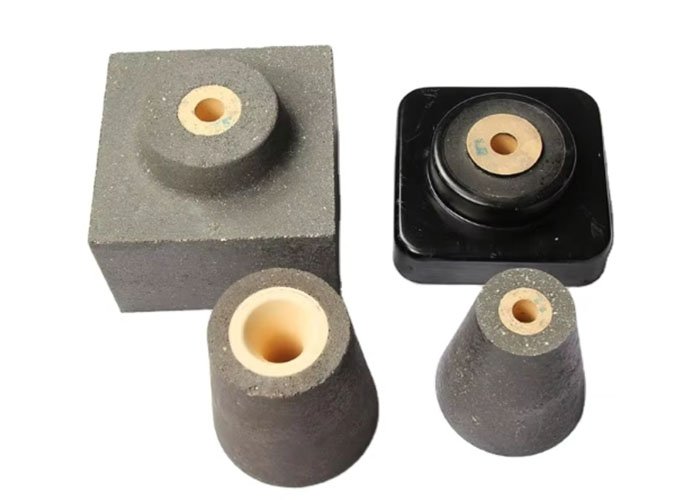
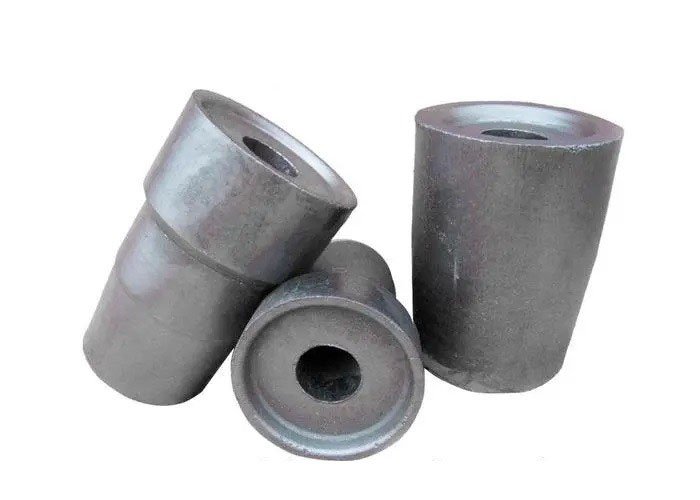
The submerged entry nozzle (SEN) is a key functional refractory component connecting the tundish and the mold in the continuous casting process. Its upper end connects to the bottom of the tundish, and its lower end is submerged below the molten steel surface in the mold. Its core functions are to prevent secondary oxidation of molten steel and splashing of the steel stream, avoid mold flux entrapment into the molten steel, improve the flow state and heat flux distribution of the casting stream in the mold, promote uniform growth of the shell in the mold, and facilitate the removal of gases and inclusions in the steel.
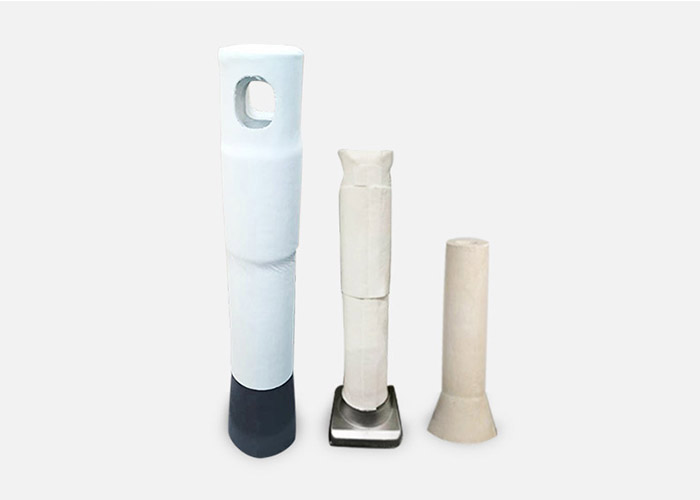
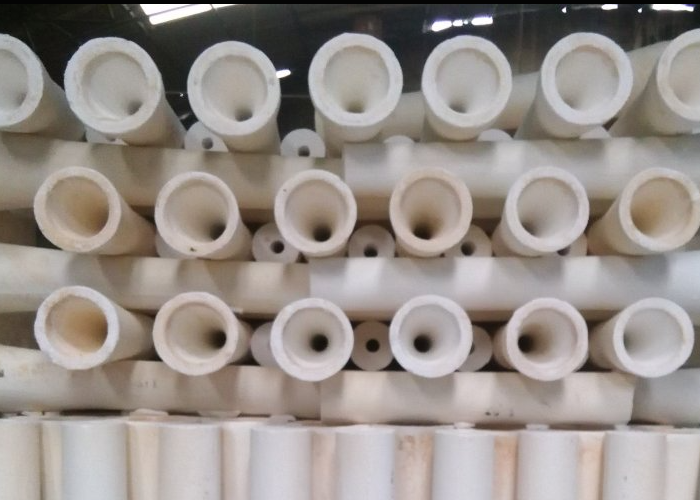
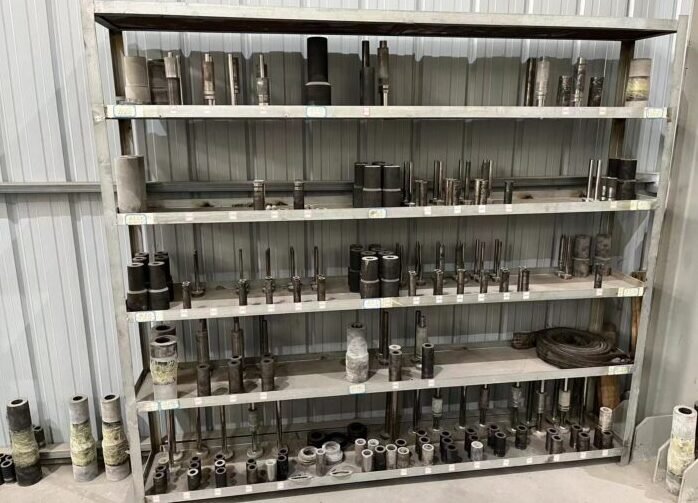
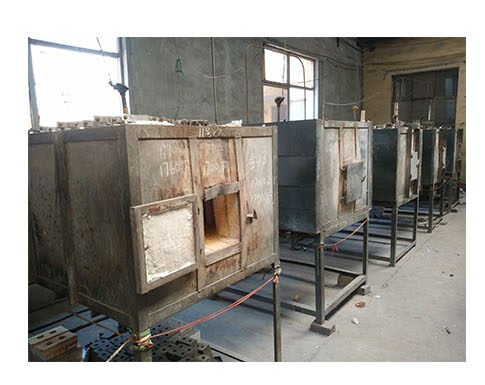
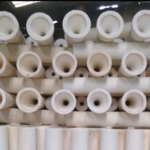
The submerged entry nozzle (SEN) is a key functional refractory component connecting the tundish and the mold in the continuous casting process. Its upper end connects to the bottom of the tundish, and its lower end is submerged below the molten steel surface in the mold. Its core functions are to prevent secondary oxidation of molten steel and splashing of the steel stream, avoid mold flux entrapment into the molten steel, improve the flow state and heat flux distribution of the casting stream in the mold, promote uniform growth of the shell in the mold, and facilitate the removal of gases and inclusions in the steel.
Since the submerged entry nozzle was first applied in 1965, extensive research has been carried out on materials and structures. By material development history, it has gone through stages including fused silica (first generation), alumina-carbon (second generation), and alumina-carbon/zirconia-carbon composite (third generation). Modern submerged entry nozzles usually adopt a composite structure design: the body is alumina-carbon, and the slag line area is composited with zirconia-carbon (ZrO₂-C) material to enhance resistance to mold flux erosion. Some products also composite a carbon-free material on the bore or provide an argon-blowing structure to prevent clogging.
According to the China Refractory Association classification standard, the submerged entry nozzle belongs to “high-end” steel flow control products, with specification requirements: the outer diameter at the end near the bottom of the tundish ≥150mm, and the ZrO₂ and Al₂O₃ content at the slag line ≥80%.
By shape and internal structure, submerged entry nozzles can be divided into the following types:
| Type | Structural Features | Typical Application |
| Bilateral port type | Two lateral outlet ports at the bottom | Slab continuous casting |
| Single-port straight type | Single outlet port at the bottom | Small billet |
| Multi-port type | Multiple outlet ports at the bottom (four-port, six-port, etc.) | Large billet, rectangular billet |
| Thin-wall special-shaped type | Special-shaped thin-wall structure | Thin slab continuous casting |
| Quick-change type | Flat end face design | Quick-change systems |
| Zirconia insert type | Zirconia inner core embedded inside | Small billet |
Typical product physical and chemical indicators:
| Item | Body (Alumina-Carbon) | Slag Line (Zirconia-Carbon) |
| Al₂O₃ (%) | ≥45~50 | — |
| F.C (%) | ≥20~27 | 12~15 |
| ZrO₂ (%) | — | 76~95 |
| Apparent porosity (%) | ≤14~19 | ≤13~18 |
| Bulk density (g/cm³) | ≥2.28~2.40 | ≥3.50~3.90 |
| Cold compressive strength (MPa) | ≥19~32 | ≥34 |
| Cold flexural strength (MPa) | ≥5.5~8.5 | ≥9.9 |
| Thermal shock resistance (1100℃ water cooling, cycles) | ≥5 | ≥5 |
Structural parameter references: Nozzle bore is typically Φ60~80mm, matching a steel throughput of 1.5~5.5t/min; outlet inclination angle upward 10~15° or downward 15~30°; ratio of side port area to central bore area approximately 1.0~3.0; nozzle wall thickness approximately 27~30mm; slag line wall thickness ≥26mm, height 280~320mm.
The submerged entry nozzle is dedicated to protective casting of the steel stream from tundish to mold in continuous casting processes in the iron and steel smelting industry. It is one of the “three major components” of continuous casting (ladle shroud, submerged entry nozzle, and monolithic stopper rod).
Specific application scenarios:
Installation and usage method: The upper end of the submerged entry nozzle connects to the tundish upper nozzle or slide gate, and the lower end is submerged to a certain depth below the molten steel surface in the mold. During casting, the immersion depth of the nozzle can be adjusted through the tundish car height. The nozzle needs to be preheated before use (except for fused silica), and the surface is usually coated with an anti-oxidation coating to prevent decarburization and oxidation during casting.