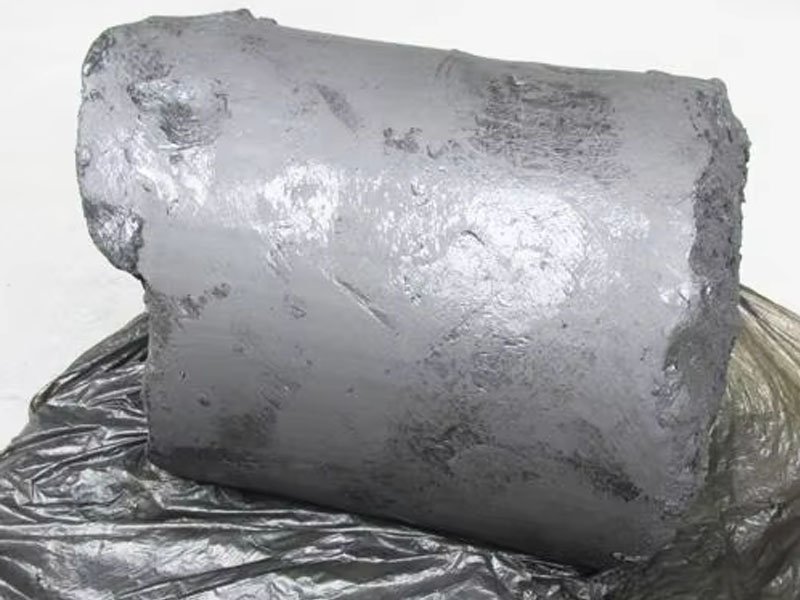
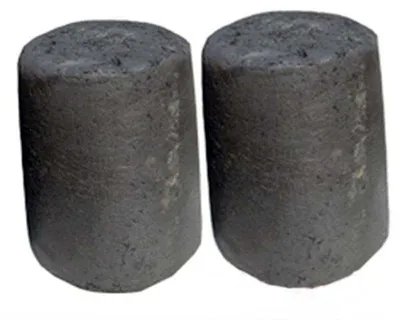
In the high-temperature battlefield of ferroalloy smelting, taphole clay serves as the first line of defense for the taphole. Yet when taphole clay suddenly “cracks” under extreme heat—ranging from minor slag/iron runouts to full-blown safety incidents—the consequences can cascade into hours or even days of unplanned production stoppage.
Is this cracking an inescapable fate of the material, or a procurement hazard that can be anticipated and eliminated?
Beifang Alloy, drawing on our frontline experience in furnace operations and industry-wide observations, dissects this persistent pain point from four critical dimensions: Procurement Needs, Industry Research, Procurement Guide, and Supplier Comparison.
Too many plants approach taphole clay procurement by comparing prices and tonnage first. This is precisely where the trouble begins. When a batch of clay spontaneously fractures under 1500°C iron flow, what you lose isn’t just a ton of refractory material—it’s the stability of your entire taphole operation and precious production time.
Your true procurement need is not “buying a piece of refractory mud”—it’s purchasing “a predictable, stable taphole service life.”
Specifically, you need to prioritize these core performance indicators over merely looking at alumina content:
Thermal Shock Resistance: Can the clay withstand repeated extreme thermal cycling—from 1500°C iron flow during tapping down to 200°C ambient conditions after plugging—without developing cracks? This is your first defense against “sudden cracking.”
Volume Stability: Is the dimensional change during high-temperature sintering controlled? Excessive shrinkage creates gaps that allow iron penetration; excessive expansion may cause difficulties in retracting the mud gun, potentially damaging equipment. Industry research has identified binder volatilization as a primary cause of poor volume stability in taphole clays.
Pumpability & Setting Time: The clay must not harden prematurely inside the gun (“plugging”), nor remain too soft to maintain adequate taphole depth. This directly impacts operational continuity.
Critical Mindset Shift: If you’re solely price-driven, suppliers will likely offer you generic “commodity-grade” formulations. But if you anchor your procurement around “furnace safety” and “tapping efficiency,” suppliers will customize formulations for your specific conditions. You’re not buying clay—you’re buying a “lifeline” for your furnace forehearth.
The high-temperature cracking of taphole clay is never accidental—it’s the combined result of thermo-mechanical stress and thermo-chemical attack. Understanding these mechanisms will sharpen your procurement criteria.
During tapping, the taphole center approaches 1500°C; immediately after plugging, the interface between old and new clay plummets to ~200°C.
This severe temperature gradient generates enormous thermal stress within the clay body. When the material’s strength cannot resist this stress, microcracks initiate. With repeated tapping cycles, these cracks propagate, eventually causing spalling—the “cracking” phenomenon.
Additionally, Apparent Porosity is a critical parameter:
Excessively high porosity allows iron penetration.
Excessively low porosity traps internal gases, leading to sudden explosive spalling from gas pressure buildup.
Superior taphole clay must therefore strike a delicate balance between density and gas permeability.
Iron and slag contain aggressive oxides—FeO, CaO, MnO—that react with SiO₂ and Al₂O₃ in the clay to form low-melting-point phases such as fayalite.
These low-melting compounds dissolve and wash away under high temperatures, leaving behind a weakened, porous structure with drastically reduced strength. Once the structural integrity is compromised, cracking becomes inevitable.
Industry Consensus: Taphole clay cracking is the product of material formulation (matrix, binder system, additives) interacting with operational conditions (thermal gradients, chemical corrosion). Since process conditions are fixed, the solution must come from material innovation.
Since cracking is preventable, what mandatory technical clauses should procurement managers incorporate into supply contracts?
Drawing on Beifang Alloy’s extensive collaboration with refractory suppliers, we recommend mandating three core performance parameters in your quality agreements:
Specification: ≥ 5.0 MPa at 1400°C × 0.5h under reducing atmosphere.
Rationale: This indicator directly determines the clay’s ability to resist iron flow erosion and thermal stress at operating temperatures. Insufficient strength means cracking is only a matter of time.
Specification: After firing at 1350°C × 3h, linear change should fall within 0 to +1.0% (slight expansion).
Rationale: Controlled expansion ensures the clay tightens the taphole at high temperature, preventing shrinkage-induced gaps. Negative values (shrinkage) almost certainly lead to taphole fractures.
Requirement: Supplier must provide the weight-loss curve of the binder (resin or pitch) across the 200°C–600°C heating range.
Rationale: Volatiles must be released gradually and uniformly. Rapid outgassing creates internal pressure spikes, triggering explosive spalling.
Procurement Script: “We do not accept off-the-shelf taphole clay. Given our ferroalloy furnace’s high smelting intensity, please provide measured data for the above three parameters—customized for our 1500°C tapping temperature and furnace conditions—and include them in the quality guarantee agreement.”
Within the ferroalloy refractory industry, suppliers generally fall into three categories. Below is Beifang Alloy’s internal supplier evaluation matrix:
| Evaluation Dimension | Type A: Low-End Workshop/Trader | Type B: Regional Refractory Manufacturer | Type C: Technology-Focused Specialized Supplier (e.g., Beifang Alloy Partners) |
|---|---|---|---|
| Raw Material Control | Uses secondary or recycled materials; inconsistent particle sizing | Has crushing lines; stable primary materials but inconsistent additives | Procures high-grade bauxite/SiC directly; exceptional batch-to-batch consistency |
| Formulation Philosophy | “Rough approximation”—copies generic formulations | Has technicians but struggles to tailor for ferroalloy electric furnaces | Custom formulations: Specifically optimized for high-temperature, intermittent tapping of ferroalloy furnaces (FeSi, FeMn), prioritizing thermal shock resistance and binder system refinement |
| Response to “Cracking” | “Your furnace operations are the problem” | “We’ll try, but results are unpredictable” | “We provide HMOR data as a guarantee. If material-related taphole cracking/runout occurs, we assume joint liability” |
| Delivery & Support | No technical backing; delivery schedules unreliable | Occasional site visits but cannot resolve root causes | Engineer on-site: Measures mud gun temperatures, adjusts pump pressures, provides integrated “anti-plugging/anti-cracking” solutions |
Many plants blindly favor large established brands. However, large manufacturers often treat taphole clay as a peripheral product, supplying generic formulations—or worse, recycling waste materials.
The suppliers who can truly prevent cracking are those who treat your taphole with the same care as their own furnace. They won’t cut corners on pitch/resin content (where ~4% addition is the performance threshold), and they will customize SiC additions to specifically resist slag attack for your high-silicon-manganese or high-carbon-ferrochrome operations.
Sudden taphole clay cracking under high temperatures is not an act of nature—it is a preventable consequence of ambiguous procurement specifications and unchecked supplier accountability.
While you may take pride in saving a few dozen dollars per ton of clay, a single unplanned furnace shutdown resulting from taphole cracking can erase an entire year’s worth of procurement savings. At Beifang Alloy, we understand that taphole safety is the lifeline of any ferroalloy plant. We don’t just supply high-performance taphole clay tailored to ferroalloy smelting characteristics—we champion the philosophy of “procurement through engineering thinking.”
Choosing a supplier is choosing the probability of taphole safety. Are you willing to gamble, or do you want to put the odds in your favor?
Beifang Alloy is dedicated to taphole solutions for the ferroalloy industry. For customized taphole clay technical specifications or to discuss furnace forehearth maintenance strategies, reach out to us via our official website www.beifangalloy.com or email info@hnxyie.com.