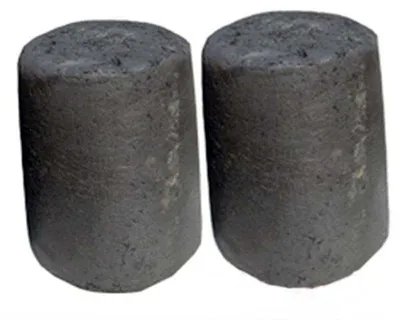
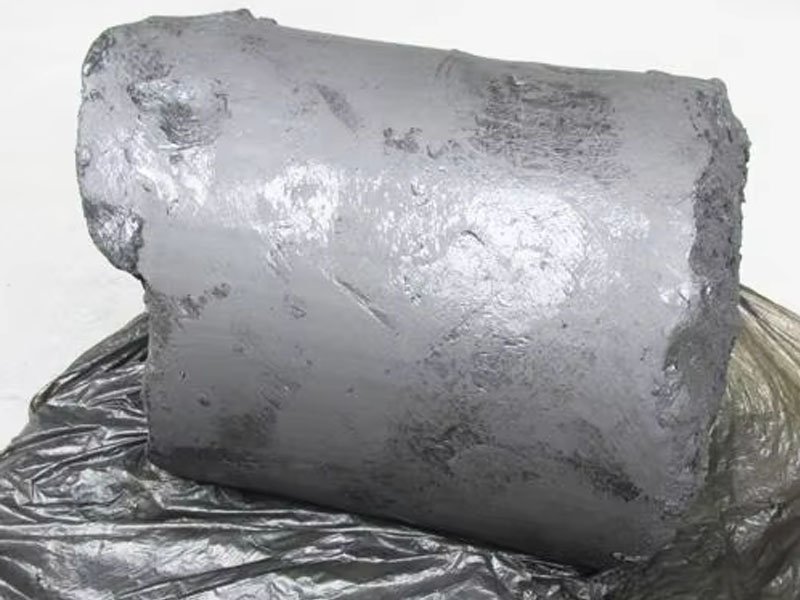
In ferroalloy smelting, taphole clay is the critical refractory material that ensures stable operation of the blast furnace taphole. If you’re a procurement or production manager at a ferroalloy plant, you’ve likely encountered this frustrating issue: the same taphole clay feels soft and workable in summer, yet turns hard and difficult to extrude in winter — sometimes even jamming the clay gun. Some suppliers dismiss this as a “seasonal effect” or normal behavior. But here at Beifang Alloy, we tell you with confidence: this is not superstition — it’s a formulation problem.
For any ferroalloy plant, the stability of taphole clay directly impacts tapping efficiency. If clay performance fluctuates significantly with temperature, it creates a cascade of operational problems:
1. Reduced Workability
In winter, hardened clay increases extrusion resistance in the clay gun, leading to difficult mud injection — and in severe cases, “freeze-up” where the clay hardens inside the gun, forcing a production halt.
2. Unstable Taphole Depth
Inconsistent plasticity means inconsistent mud volume injected into the taphole. The result? Taphole depth varies wildly, disrupting tapping rhythm and even risking iron breakthroughs.
3. Hidden Costs
Hardened clay consumes more drill bits and oxygen, and demands extra labor. The cheap clay that “saves money” upfront often ends up costing far more in operation.
Beifang Alloy’s procurement philosophy: You’re not buying taphole clay — you’re buying stable taphole performance.
The plasticity of taphole clay is largely determined by its binder system. Common binders include tar, pitch, and resins — all organic materials whose rheological behavior is highly temperature-dependent.
Research shows that binder viscosity changes dramatically with temperature. During mixing (around 45°C), the binder should flow freely to coat the aggregate evenly. However:
Winter low temperatures: Binder viscosity spikes — especially with coal tar or conventional pitch — approaching a semi-solid state, making the clay stiff and poorly plastic. Chinese industry literature clearly states: “In cold winter weather, the high softening point of anthracene oil causes condensation and hardening, degrading clay quality and plasticity.”
Summer high temperatures: Binder thins out, making the clay too soft. While extrusion is easy, high-temperature strength may suffer, reducing resistance to iron scouring.
Low-end clay manufacturers tend to use cheap, single-component coal tar or ordinary pitch. These binders have high softening points and strong temperature sensitivity — they thicken in the cold, thin out in the heat, and fluctuate wildly with ambient temperature.
Quality clay manufacturers, by contrast, use compounded systems: modified resins, specialty pitches, or composite binders that minimize temperature sensitivity. Studies have demonstrated significant differences in thermal stability, carbonization yield, and viscosity behavior among various binder systems.
Comparison of binder thermal performance:
| Binder Type | Volatilization Range (°C) | Avg. Weight Loss (g/°C) | Carbonization Yield (%) |
|---|---|---|---|
| Coal tar pitch (reference) | 70.8–380.4 | 0.28 | 10.6 |
| Low-softening-point pitch blend | 116.4–306.1 | 0.40 | 22.1 |
| Eco-friendly composite binder | 93.4–491.6 | 0.21 | 30.2 |
| Petroleum-based wax oil | 329.3–421.6 | 0.96 | 4.9 |
Key takeaway: Binders with higher carbonization yield leave more residual carbon at high temperatures, enhancing hot strength. Binders with a wider volatilization temperature range are less affected by ambient temperature — this is the foundation of a “summer-winter consistent” formulation.
Industry best practice dictates seasonal formulation adjustment. As noted in technical literature: “When seasons change, the ratio of pitch to tar in waterless taphole clay should be adjusted promptly to ensure smooth mud injection.”
In practice:
Summer formulation: Increase the softening point of the binder to prevent excessive softness.
Winter formulation: Use binder systems with better low-temperature fluidity, or add plasticizers to maintain workability.
If a supplier uses the same formulation year-round — their clay will inevitably be “soft in summer, hard in winter.”
As a ferroalloy plant procurement professional, we recommend evaluating suppliers along these dimensions:
Ask suppliers to provide Marsh value or penetration data at multiple temperatures (0°C, 20°C, 40°C) to assess plasticity variation with temperature. The narrower the fluctuation, the better.
Low-end: Single coal tar or ordinary pitch — high temperature sensitivity (not recommended)
Mid-tier: Modified pitch + tar blend — moderate improvement
Premium: Composite resin system or eco-friendly binder — excellent temperature stability
Include a clear clause in your procurement contract: The supplier shall proactively adjust the binder formulation according to seasonal temperature changes to maintain consistent clay workability. Reject the “one formulation for all seasons” approach.
Store clay samples in temperature-controlled chambers at 0°C, 25°C, and 40°C for 2 hours, then test extrusion resistance. For premium clay, extrusion pressure fluctuation should be within ±15%.
Based on Beifang Alloy’s long-term supplier evaluation, we classify taphole clay suppliers into three tiers:
| Evaluation Criteria | Low-End Workshop | Regional General Supplier | Technology-Integrated Supplier |
|---|---|---|---|
| Binder System | Single coal tar, highly temperature-sensitive | Tar + pitch blend, moderate improvement | Composite resin / eco-friendly, temperature-stable |
| Seasonal Formulation | ❌ None | ⚠️ Occasionally adjusted | ✅ Proactive seasonal adjustment |
| Winter Plasticity | Hard, difficult extrusion | Moderately reduced | Stable |
| Summer Hot Strength | Soft, poor erosion resistance | Fair | Consistent |
| Technical Support | None | Limited | Free formulation optimization + on-site service |
| Recommendation | Not recommended | Short-term emergency only | Recommended |
Beifang Alloy’s choice: We prioritize technology-integrated suppliers with formulation R&D capability, seasonal adjustment protocols, and responsive on-site technical service. Their unit price may be 10–20% higher, but total operating cost (labor + drill bits + oxygen + lost production) is actually lower.
“Soft in summer, hard in winter” — this is fundamentally a binder system design flaw leading to quality inconsistency, not an act of nature. Low-end suppliers will tell you “it’s normal,” but the reality is that industry technology has long been capable of achieving summer-winter consistency.
As a ferroalloy plant, you have every right to demand stable taphole clay workability in every season. If a supplier won’t commit to seasonal formulation adjustments or won’t share temperature–plasticity data, they’re likely not your best partner.
Beifang Alloy’s commitment: We don’t just supply quality ferroalloys — we’re dedicated to helping the industry establish scientific procurement standards for consumables. Visit our website www.beifangalloy.com or email us at info@hnxyie.com for more technical procurement guides on taphole clay.