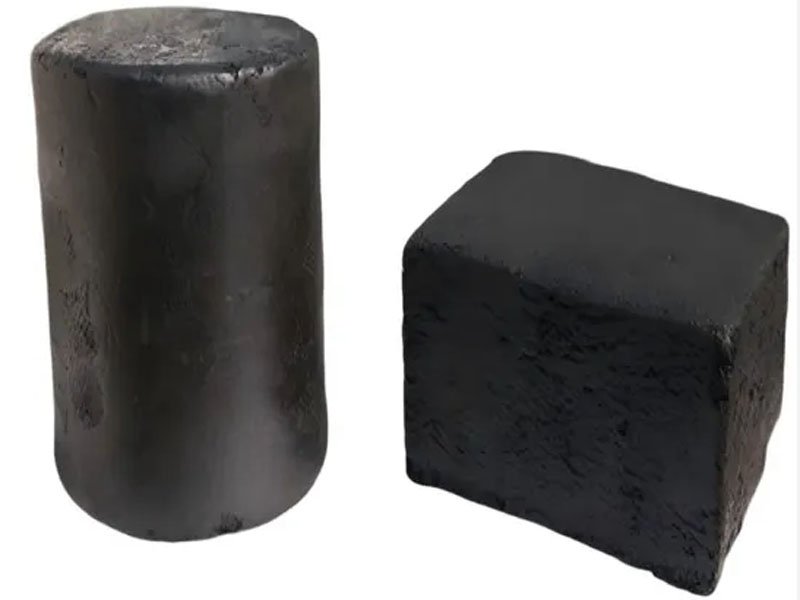
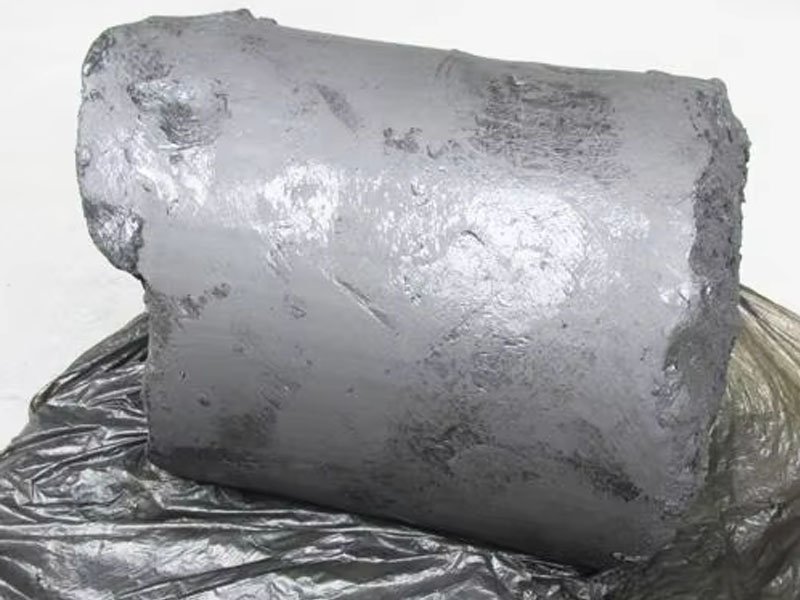
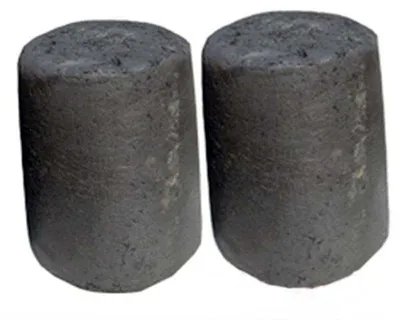
The scene is all too familiar in ferroalloy plants and blast furnace operations: taphole clay suddenly cracks or bursts just before the tap hole, sending molten iron splashing, forcing emergency shutdowns, damaging equipment, and—in the worst cases—endangering personnel safety.
As a procurement manager or technical lead at a ferroalloy plant, you’ve likely asked yourself repeatedly: Is this “cracking” simply an unavoidable weakness of taphole clay materials, or is it a hazard that can be systematically prevented through smarter selection and sourcing?
This article examines the issue from four perspectives—procurement needs, industry research, procurement guidelines, and supplier comparison—drawing on Beifang Alloy’s practical experience in the taphole clay sector to provide actionable insights.
The technical term for sudden cracking of taphole clay under extreme heat is thermo-mechanical spalling or thermal shock fracture. The root cause lies in the accumulation of thermal stress within the clay—stress that exceeds the material’s intrinsic strength when subjected to extreme temperature differentials.
Consider the reality: old clay at the tap hole faces molten iron temperatures exceeding 1500°C. When new clay is injected, the interface between new and old clay can plunge from 1500°C to roughly 200°C in seconds. This dramatic temperature gradient induces micro-cracks within the clay. If the material has insufficient thermal shock resistance or volume stability, these micro-cracks propagate rapidly during subsequent tapping, ultimately resulting in cracking or even complete tap hole failure.
To mitigate this risk, start by recognizing that you’re not purchasing “X tons of taphole clay“—you’re purchasing “tapping safety and operational efficiency per ton of hot metal produced.”
When defining your procurement requirements, prioritize the following critical performance parameters:
| Key Parameter | Impact on Cracking Risk |
|---|---|
| Thermal Shock Resistance | Poor thermal shock resistance leads to cracking under rapid temperature changes. This is your first line of defense. |
| High-Temperature Modulus of Rupture (HMOR) | Sufficient strength above 800°C is needed to resist molten iron erosion, but excessive strength can increase brittleness and cracking susceptibility. |
| Volume Stability / Linear Change Rate | Excessive shrinkage during high-temperature sintering creates gaps at the new-old clay interface, providing pathways for iron penetration and triggering cracking. |
| Sintering Rate | Too fast → brittle material; too slow → insufficient strength. Both scenarios elevate cracking risk. |
Procurement Self-Assessment Checklist:
Do you explicitly require your supplier to provide thermal shock resistance test data (e.g., number of rapid heating/cooling cycles the material can withstand)?
Does your procurement contract include performance-based metrics (e.g., cost per ton of hot metal, or CPTHM) rather than focusing solely on price per ton of clay?
Industry experience and research confirm that taphole clay cracking is not inevitable—it is closely tied to material formulation and on-site operational practices.
The binder used in taphole clay (e.g., coal tar pitch, petroleum pitch, phenolic resin) significantly influences high-temperature behavior:
Traditional Pitch Binders: During heating, pitch volatilizes, creating micro-pores that can enhance high-temperature strength. However, excessive volatilization may also cause volume shrinkage and increased porosity, undermining volume stability. High pitch content means more volatiles, which can lead to internal structural weakening or cracking.
Trend Toward Eco-Friendly Binders: Studies indicate that replacing traditional coal tar pitch with low-PAH binders (e.g., glycerol or petroleum wax oils) can maintain adequate plasticity while achieving comparable high-temperature strength and corrosion resistance, thereby improving overall clay stability.
Beyond material composition, furnace operating practices directly influence cracking risk:
Excessive Tapping Frequency: Short intervals between taps prevent the clay from fully sintering inside the tap hole, leaving it structurally weak and less resistant to erosion and thermal shock.
Improper Tap Hole Opening: Using oxygen lances can oxidize and degrade the carbon components in the clay, significantly impairing performance.
Inconsistent Mud Gun Pressure: Insufficient clay injection fails to maintain proper tap hole depth, while excessive injection can create abnormal internal stresses.
Conclusion: Taphole clay cracking is the combined result of inadequate thermal shock resistance, suboptimal binder system design, and improper on-site operations. It is not an incurable flaw—it is a systematically preventable safety hazard.
Based on the analysis above, here are actionable steps to integrate into your taphole clay procurement strategy:
Beyond routine parameters (chemical composition, bulk density, cold crushing strength), require suppliers to provide clear data on:
Refractoriness Under Load (RUL) : Ensures the clay does not soften prematurely at high temperatures. For ferroalloy applications, RUL > 1580°C is recommended.
Thermal Shock Resistance: Specify a required number of test cycles with documented strength retention rates.
High-Temperature Modulus of Rupture (HMOR) : Provide values at both 800°C and 1400°C.
Linear Change Rate: Measured after firing at different temperatures—this must remain within a narrow, stable range.
Clay performance depends heavily on equipment settings, injection pressure, and opening techniques at your specific furnace. A qualified supplier should offer:
On-site technical guidance to adjust injection pressure and volume based on real-time tap hole conditions.
Formulation fine-tuning recommendations in response to changes in furnace operation (e.g., molten iron temperature fluctuations).
Move away from simple “per-ton” payment models. Adopt performance-linked agreements, such as:
Bonus clauses: If the actual CPTHM (cost per ton of hot metal) falls below an agreed benchmark, the supplier earns a performance bonus.
Penalty clauses: If quality-related issues (e.g., repeated cracking or inadequate tap hole depth) occur, the supplier shares financial responsibility.
Suppliers vary dramatically in their ability to mitigate cracking risk. Beifang Alloy, with deep expertise in ferroalloy production, recommends evaluating potential partners across the following dimensions:
| Evaluation Dimension | Type A: Local Trader / Small Mixing Plant | Type B: Regional Refractory Manufacturer | Type C: R&D-Integrated Ferroalloy Specialist (e.g., Beifang Alloy) |
|---|---|---|---|
| Raw Material Control | Sources secondary materials with inconsistent particle size and quality | Has in-house crushing and processing; quality is generally stable | Directly sources high-grade bauxite, SiC, etc.; exceptional batch-to-batch consistency |
| R&D & Testing Capability | Lacks R&D; cannot simulate cracking conditions | Offers basic QC but lacks systematic problem-solving | Conducts industry-specific research; can customize formulations for your iron temperature and slag system; provides core test reports (thermal shock, RUL, etc.) |
| Track Record on Cracking | High risk—simple formulations prone to sudden failure under temperature fluctuations | Moderate risk—some batch variability possible | Low risk—formulations designed specifically for ferroalloy furnace conditions; excellent thermal shock and volume stability |
| On-Site Technical Support | Typically none | Limited | Standard. Includes injection parameter guidance, training, and rapid issue response |
| Cost Model | Low unit price but high consumption rate; CPTHM is high | Moderate | Unit price may be 10-20% higher, but CPTHM can be 15-25% lower |
| Recommendation for Beifang Alloy | ❌ Not recommended—too risky for variable ferroalloy conditions | ⚠️ Acceptable as short-term backup only | ✅ Strongly recommended |
Bottom Line: For ferroalloy producers, partnering with a Type C supplier (like Beifang Alloy) is the most effective way to fundamentally reduce taphole clay cracking risk. The unit price may not be the lowest, but the resulting tap hole stability, operational safety, and overall cost efficiency (CPTHM) far outweigh any initial price difference.
Taphole clay cracking under high temperature is NOT an inherent material flaw—it is a preventable safety hazard that can be effectively managed through scientific procurement and operational discipline.
To put this into practice:
Mindset: Recognize cracking as thermo-mechanical damage—a function of both material properties and operating conditions.
Procurement: Quantify “cracking resistance” in your technical specs; prioritize CPTHM over unit price.
Partnership: Choose suppliers with strong R&D and on-site service capabilities; build long-term, performance-based relationships.
By collaborating with a partner like Beifang Alloy—a company that understands both ferroalloy production and the core technology of taphole clay—your plant can transform cracking from a constant threat into a footnote in your operational history, achieving safe, efficient, and cost-effective tapping operations.