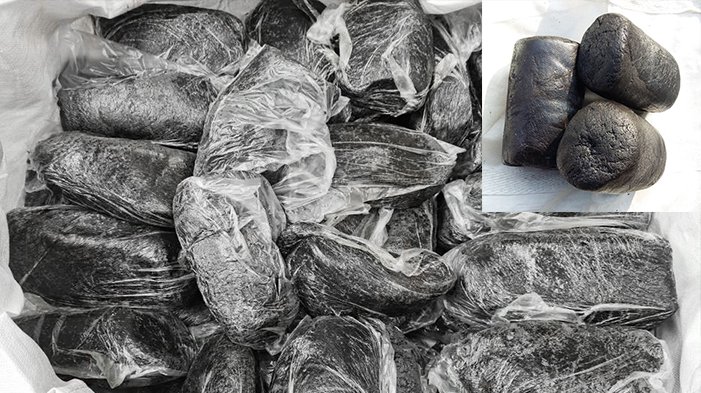
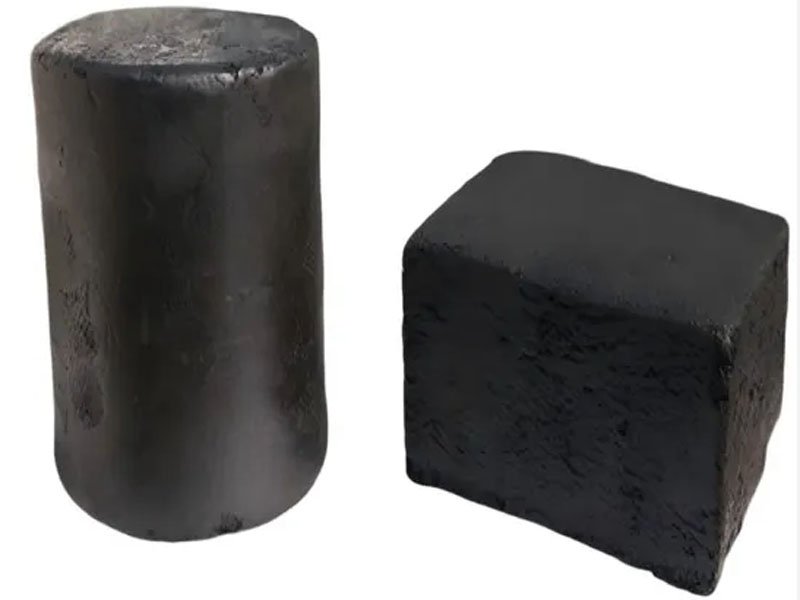
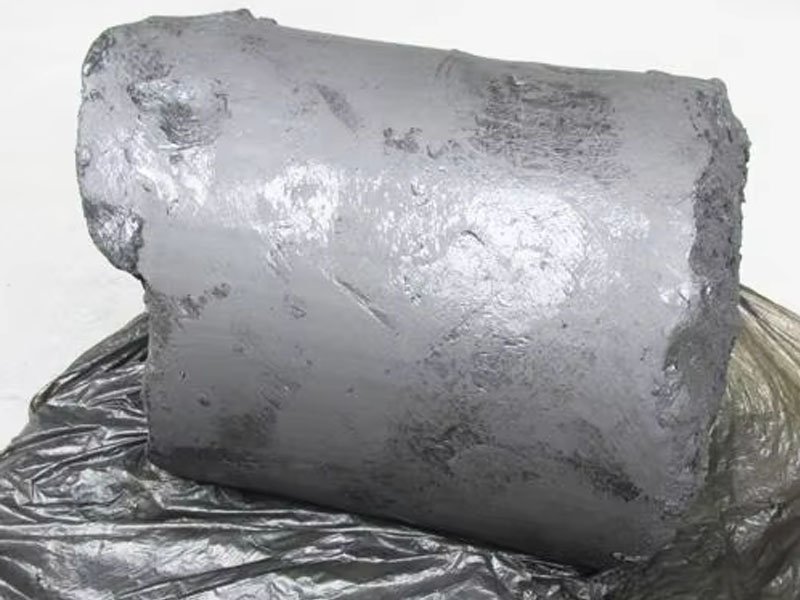
In blast furnace ironmaking, taphole plugging is the lifeline of furnace stability. As a critical consumable, the taphole clay’s injection pressure directly impacts taphole depth, tapping efficiency, and even hearth longevity. A frequent dilemma for procurement teams and technicians is: How much real difference does 20MPa versus 25MPa make? And is there a universal “best pressure” setting?
Based on industry research and technical standards, this guide—presented by Beifang Alloy—breaks down pressure parameter selection from four angles: procurement needs, industry research, procurement guidelines, and supplier benchmarking.
Plugging a taphole is far more than just “stuffing” a hole. Under high pressure, the clay is forced deep into the taphole channel. It must sinter quickly against furnace back-pressure and form a “mushroom-shaped” clay plug on the inner hearth wall, which repairs and protects the lining.
Insufficient pressure (e.g., below 20MPa) fails to overcome channel friction and coke-bed resistance. This leads to:
Shallow tapholes: Clay cannot penetrate deep enough, risking “large-flow” tapping and safety incidents.
Weak clay plugs: Poor densification causes rapid taphole enlargement and shortened tapping durations.
Plugging failures: In high-pressure furnaces, if pressure falls below furnace back-pressure, the clay may not feed, or even backfire.
Excessively high pressure (blindly pursuing 25MPa or more) creates new problems:
Brittleness: Excessive extrusion stress can alter the internal structure, causing the clay to lose plasticity before reaching the taphole.
Equipment wear: Sustained high-pressure operation accelerates wear on the mud gun, cylinder, and nozzle, increasing maintenance costs.
According to research published in the Journal of University of Science and Technology Beijing on hydraulic mud gun force analysis in large blast furnaces, modern large furnaces require a nozzle-exit clay pressure of 3–4 MPa (30–40×10⁵ Pa).
However, this is the exit pressure. The clay experiences significant pressure loss (Δp) along the cylinder, transition pipe, and nozzle. For large furnaces using water-free taphole clay, the equipment must provide at least 9–10MPa of working pressure at the exit. In practice, modern hydraulic mud guns are rated with oil pressures up to 34.3MPa, delivering piston thrust exceeding 5,950 kN.
The “20MPa” and “25MPa” in procurement discussions typically refer to the hydraulic system’s supplied pressure, not the direct clay exit pressure. Through piston-area conversion, the actual compaction force is governed by the fluid dynamics equation:
px=p10e−2μkRx
where μ (coefficient of friction) and k (lateral pressure coefficient) vary with applied pressure.
Qualitative Comparison:
| Parameter | 20MPa Condition | 25MPa Condition |
|---|---|---|
| Nature | Economical injection pressure – suitable for medium/small furnaces with stable conditions. | Reinforced injection pressure – an increase of ~25%, significantly improving penetration. |
| Effectiveness | Ensures basic depth if clay plasticity is good (low Marshall value). If clay is stiff, “hard-packing” occurs. | Compacts a denser plug, directly extending tap duration. In Hengsteel’s 1080m³ BF technical agreement, a minimum of ≥160MPa (cylinder-specific) or similar high-side settings are specified for large furnaces. |
| Drawback | Cannot overcome high coke-bed resistance effectively. | Requires higher hot modulus of rupture (HMOR) and CCS from the clay. If binder quality degrades, the clay may cure prematurely inside the gun, causing blockages. |
Conclusion: 25MPa delivers tangibly better plugging success and taphole depth retention than 20MPa. However, this comes at the cost of higher demands on clay raw materials (SiC, Si₃N₄ content) and increased equipment stress.
There is no universal “best pressure.” There is only the “most compatible pressure” for your furnace. Beifang Alloy recommends basing your selection on three core dimensions:
≤1000m³ class: Recommended pressure 18–22MPa. Use standard clay complying with YB/T 4196-2009 (CCS ≥15MPa).
≥2000m³ class: Recommended pressure 23–28MPa. Must use high-performance water-free clay (CCS ≥18–22MPa, post-firing at 1450°C under embedded carbon).
The Marshall Extrusion Value must be specified in contracts. Studies show that binder reactions (resin + pitch) can raise extrusion pressure over time. A high-quality clay with a low Marshall Value at 20MPa may outperform a lower-grade clay struggling at 25MPa.
Pro Tip: Request Marshall Value data at 50°C from suppliers. Ensure it remains within your equipment’s rated feed capacity.
According to Refractories journal research, homogenized bauxite-based clays perform better than standard high-alumina bauxite, requiring less binder and offering higher HMOR.
Matching Strategy: For cost-effective bauxite-based clay, cap pressure at 20–22MPa to avoid fracture. For premium brown-fused-alumina or SiC-based clay, confidently use 25MPa to maximize tapping duration.
As a specialized ferroalloy raw material supplier, Beifang Alloy advises evaluating taphole clay vendors against the following critical metrics:
| Evaluation Dimension | Supplier A (Economy) | Supplier B (Performance) | Beifang Alloy Recommendation |
|---|---|---|---|
| Recommended Pressure | 18–20 MPa | 23–25 MPa | Fully customizable per BF condition |
| Cold Crushing Strength (CCS) | ≥15 MPa | ≥22 MPa | ≥20 MPa |
| Hot Modulus of Rupture (HMOR) | Low (coke-reliant) | ≥7.5 MPa (Si₃N₄-enhanced) | High anti-erosion |
| Bulk Density | ≥1.7 g/cm³ | ≥1.8 g/cm³ | High-density compactness |
| Best Use Case | Small-to-medium BFs, standard pig iron | Large BFs, high-pressure operation, hearth protection | Matched to your specific cylinder thrust |
If your priority is maximum operational stability and tap duration: Choose the 25MPa pressure class, and procure high-density, silicon-carbide/silicon-nitride-reinforced water-free clay.
If you are balancing cost and equipment longevity: 20MPa is a reliable “safe baseline.” Use this as your reference, and improve actual sealing performance by optimizing the clay’s Marshall Value (plasticity) and sintering strength—enabling the principle of “low-pressure injection, high-pressure sealing.”
Beifang Alloy (www.beifangalloy.com) leverages its integrated ferroalloy supply chain to offer not just taphole clay, but customized pressure-parameter solutions based on your furnace diagnostics.
For in-depth discussion on specific pressure settings for your furnace volume, please contact our technical team at: info@hnxyie.com.