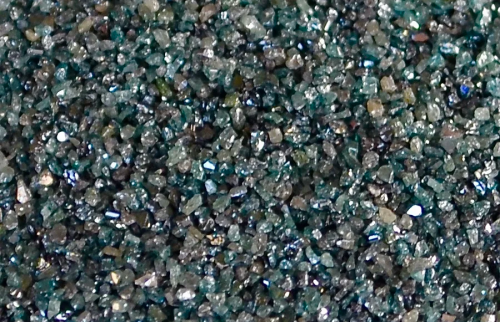
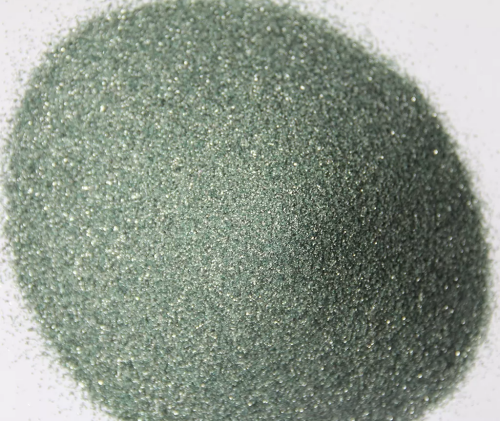
In the ferroalloy and refractory supply chain, green silicon carbide (Green SiC) is valued for its high hardness, thermal stability, and chemical inertness. Whether used in abrasive applications, advanced ceramics, or as a deoxidizer and high-temperature structural material, the performance of Green SiC hinges on one critical parameter: purity.
Suppliers across China and global markets routinely claim SiC content of “98%,” “99%,” or even “99.5%+.” For procurement teams at ferroalloy plants, foundries, and refractory manufacturers, these numbers are not interchangeable. A difference of 1% in SiC content can mean the difference between a high-performance refractory brick and a premature failure in a blast furnace lining.
This article provides a structured approach to verifying purity claims, from understanding your actual procurement needs to conducting supplier comparisons that go beyond the certificate of analysis (COA).
Before evaluating any supplier’s claim, procurement teams must first establish what level of purity their specific application actually requires. Green SiC is not a commodity where “higher is always better” without cost implications.
For abrasive and general refractory applications, industry standards typically require SiC content of ≥98.5% for precision-grade micro-powder, while high-end optical and electronic semiconductor applications demand ≥99.5% . Chinese national standards for green SiC define grades ranging from ≥99.00% SiC for coarse grit (F12-F90) down to ≥95.50% for fine grit (F800-F1200) in acceptable-grade products .
For ferroalloy and metallurgical use, the emphasis may shift. Green SiC used as a deoxidizer or alloy additive may tolerate slightly lower SiC content but must have strictly controlled free carbon and iron levels to avoid introducing unwanted elements into the melt. A supplier claiming “99% purity” without specifying free carbon (F.C), free silicon (F.Si), and iron oxide (Fe₂O₃) content is providing an incomplete picture .
A single SiC percentage is insufficient. Procurement specifications should explicitly define:
| Parameter | Why It Matters | Typical Acceptable Range (Precision Grade) |
|---|---|---|
| SiC content | Primary performance indicator | ≥98.5% (industrial), ≥99.5% (high-end) |
| Free Carbon (F.C) | Reduces hardness and cutting efficiency | ≤0.20%–0.30% |
| Fe₂O₃ | Contaminates workpieces, affects electrical properties | ≤0.15%–0.50% depending on grit |
| Free Silicon (F.Si) | Indicates incomplete reaction during smelting | ≤0.15% |
| Moisture | Causes caking and handling issues | Controlled via drying |
Data synthesized from industry standards and supplier technical specifications .
Action item: Before requesting quotes, document your minimum acceptable SiC content and maximum impurity thresholds. Share these specifications with suppliers rather than asking for their “best purity.” This shifts the conversation from marketing claims to verifiable criteria.
 |
 |
Understanding how Green SiC purity is measured—and how suppliers can manipulate or misinterpret results—is essential for meaningful due diligence.
Legitimate purity claims should be backed by recognized analytical methods. The most common techniques for Green SiC characterization include:
Chemical titration for SiC content determination
High-frequency combustion infrared absorption for total and free carbon
Atomic absorption spectrometry (AAS) or ICP-OES for metallic impurities (Fe, Al, Ca, Mg)
Laser particle size analysis for distribution (critical because purity claims are meaningless if the powder is agglomerated or improperly classified)
A credible COA should list the testing method used. A supplier who cannot state whether SiC content was determined by chemical titration or by difference (subtracting impurities from 100%) may be presenting an inflated figure.
1. “Typical” vs. “Guaranteed” values. Many COAs report a “typical” SiC content of 99% while the guaranteed minimum may be 97%. For production planning, always request the guaranteed minimum, not the typical value.
2. Batch-to-batch variation. A single COA from a favorable production run does not represent ongoing supply. Procurement should request COAs from at least three consecutive batches to assess consistency .
3. Self-reported data without third-party verification. While many reputable Chinese manufacturers operate in-house laboratories, the gold standard for high-value or safety-critical applications is a third-party testing report from an accredited laboratory . The cost of independent verification (typically a few hundred RMB per sample) is negligible compared to the risk of a failed refractory lining or contaminated alloy batch.
4. Misleading grit-specific specifications. A supplier may claim “99% purity” based on their coarse grit product while shipping fine powder with significantly lower SiC content. Purity varies by grit size in Green SiC production; specifications must be grit-specific .
For Beifang Alloy’s procurement network and fellow ferroalloy professionals, the following protocol balances rigor with practical turnaround time.
Before investing in laboratory testing, conduct simple incoming inspection:
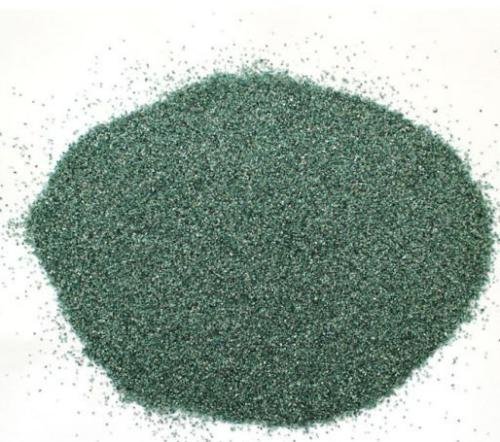
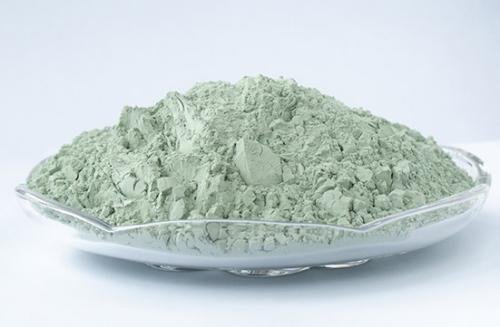
Color: High-purity Green SiC should exhibit a uniform, bright emerald green. Dark or grayish powder suggests contamination with black SiC or excessive free carbon .
Texture: The powder should feel smooth and dry. Gritty or lumpy texture indicates improper classification or moisture absorption .
Water settling test: Mix a small sample in clear water. High-purity, well-classified powder settles uniformly with clear supernatant. Persistent cloudiness or layered sedimentation indicates excessive fines or impurities .
Request COAs for the specific batch being shipped. Verify:
The COA includes SiC, F.C, Fe₂O₃, F.Si, and moisture at minimum.
The reported values meet your specification (not just “typical”).
The testing date corresponds to the production batch.
The testing method is stated (chemical titration, combustion IR, etc.).
For any new supplier or for high-value orders, arrange third-party testing. Key tests to commission:
SiC content by chemical method
Free carbon and free silicon
Metallic impurities (Fe, Al, Ca)
Particle size distribution (D50 and span) if your application is particle-size sensitive
A qualified testing laboratory can complete these analyses within a standard turnaround, and the cost is justified for any order where purity deviation would cause process disruption .
Purity verification is not a one-time event. For approved suppliers, implement:
Periodic third-party spot checks (quarterly or per significant order)
Retained sample library from each shipment for traceability
Incoming inspection records documenting visual and physical test results
When comparing Green SiC suppliers, purity claims are only one dimension. The following comparison framework helps identify suppliers whose quality systems support their marketing assertions.
| Comparison Dimension | What to Ask | Red Flags |
|---|---|---|
| Certification | ISO 9001? Third-party audited? | “We are a manufacturer” without documentation |
| Testing capability | In-house lab? Which instruments? | Only “we test every batch” with no method stated |
| Batch consistency | COAs from 3+ consecutive batches | Only one “typical” COA |
| Grit-specific specifications | Purity by grit size for your grade | Single purity claim across all products |
| Traceability | Can they trace finished powder to smelting batch? | No lot number system |
| Customization | Can they adjust chemistry for your alloy application? | Only standard grades available |
| References | Other ferroalloy or refractory customers? | No industry-specific references |
Framework based on supplier evaluation criteria for silicon carbide procurement .
China remains a dominant producer of Green SiC, with major manufacturing clusters in Ningxia, Gansu, and Henan provinces. Suppliers in these regions benefit from proximity to raw materials and smelting capacity. However, regional concentration also means that quality varies significantly between large integrated manufacturers and smaller processing operations. Procurement teams should prioritize suppliers who can demonstrate control over the entire process—from smelting to final classification—rather than traders who source from multiple mills without batch traceability.
For international buyers, verify that the supplier can provide English-language COAs, pre-shipment sample testing, and consistent packaging (moisture-barrier bags or drums) to preserve powder quality during transit.
Green SiC purity claims are meaningful only when they are:
Specific to your grit size and application
Supported by recognized testing methods
Consistent across batches
Verifiable through third-party analysis
For ferroalloy and refractory procurement professionals, the cost of implementing a verification protocol is modest. The cost of accepting an unverified purity claim—in failed refractories, contaminated alloys, or production downtime—is far greater.
At Beifang Alloy, we understand that material specifications are the foundation of process reliability. Whether you are sourcing Green SiC for deoxidation, refractory production, or advanced ceramic applications, we welcome the opportunity to discuss how our supply chain can meet your documented requirements.
Contact us:
🌐 www.beifangalloy.com
✉️ info@hnxyie.com