Modern blast furnace operations are pushing boundaries – higher productivity, higher injection rates, and increasingly, higher hot metal temperatures. When your taphole regularly sees liquid iron at 1520°C or above, standard taphole clay can fail catastrophically:
Premature erosion → taphole becomes too shallow
Sudden “breaks” → uncontrolled iron flow, safety hazards
Excessive sintering → difficult to drill, damaged equipment
So the question is not “Can you produce 1520°C iron?” but rather – “Is your taphole clay designed for that reality?”
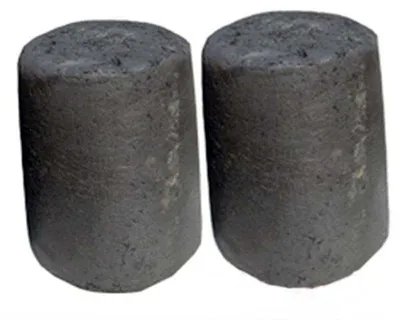
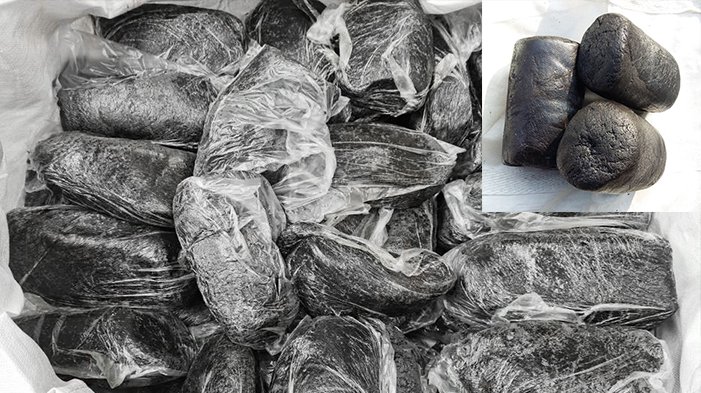
At Beifang Alloy, we have developed high-performance taphole clay specifically for high-temperature, high-productivity blast furnaces. This article guides you through evaluating suppliers when your hot metal temperature consistently exceeds 1520°C.
When hot metal temperature rises above 1520°C, your procurement requirements must change. Standard clay designed for 1450–1480°C will simply not perform.
| Parameter | Conventional Clay (≤1480°C) | High-Temperature Clay (≥1520°C) |
|---|---|---|
| Refractoriness under load (RUL) | >1500°C | >1580°C |
| SiC content | 5–8% | 10–15% |
| Alumina (Al₂O₃) content | 30–35% | 38–45% |
| Marsh value (plasticity) | 40–50% | 45–55% (to maintain workability at higher temps) |
| Sintering speed | Moderate | Controlled – neither too fast nor too slow |
What is your average taphole temperature measured at the iron notch? (Not theoretical, but actual measured)
How often do you experience unplanned taphole breaks during high-temperature campaigns?
What is your current taphole clay consumption per ton of hot metal (kg/tHM) during high-temperature periods?
Beifang Alloy Suggestion: If your average measured taphole temperature exceeds 1500°C, you should immediately request high-temperature grade taphole clay with verified RUL >1580°C.
To evaluate suppliers properly, you must first understand the failure mechanisms when temperature climbs above 1520°C.
1. Softening erosion
The clay’s binder phase (often pitch or resin) softens too early. Under iron flow pressure, the taphole expands rapidly. Result: fluted or oval-shaped taphole, difficult to maintain depth.
2. Thermal spalling
Rapid temperature change between tapping (1520°C+) and idle periods (ambient) causes cracking. Cracks propagate, leading to sudden “blow-outs.”
3. Over-sintering
Some clays become too hard when exposed to extreme temperatures. Your drill rig struggles to open the taphole, bits break, and tapping is delayed – losing production.
| Supplier Type | Performance at >1520°C | Risk Level |
|---|---|---|
| Local small mixers (no R&D) | Untested – often fail within 2–3 taps | 🔴 High |
| General refractory makers (standard products) | Moderate – some batches work, others don’t | 🟡 Medium |
| Ferroalloy-integrated suppliers (e.g., Beifang Alloy) | Designed for high temp – consistent | 🟢 Low |
Industry Fact: Many taphole clay suppliers do not even test refractoriness under load (RUL). If they cannot provide an RUL certificate for >1580°C, do not trust them with your 1520°C+ iron.
When your hot metal exceeds 1520°C, your supplier evaluation becomes more demanding. Here is the updated five-dimension model for high-temperature conditions.
What to check:
Are they using high-purity bauxite (low Fe₂O₃, low TiO₂)?
Silicon carbide (SiC) grade – black SiC or metallurgical grade? Black SiC performs better at >1520°C.
Graphite content – 2–4% improves thermal shock resistance.
Any use of recycled refractory waste? (Avoid at all costs for high-temp applications.)
Beifang Alloy advantage: As a ferroalloy producer, we source and test our own SiC, high-alumina aggregates, and graphite – no corners cut.
Required test reports (each batch):
Refractoriness under load (RUL) – minimum 1580°C, ideally 1600°C+
Apparent porosity – 22–28% (lower = better slag resistance)
Bulk density – >2.0 g/cm³
Thermal shock resistance – >20 cycles
Red flag: Supplier says “Our clay works at high temperature” but cannot provide RUL data.
What to demand:
Supplier technician on-site during first high-temperature campaign
Real-time adjustment of mud gun pressure (too high = over-compaction; too low = loose taphole)
Ability to adjust sintering agent dosage based on your specific temperature profile
High-temperature clays often contain more hygroscopic components. Demand:
Vacuum-sealed / moisture-proof bags (not just woven plastic)
Maximum 30 days of inventory at your site before use
Stop evaluating by price per ton. Use cost per tapping hour instead:
Cost per tapping hour = (Clay price per ton) ÷ (Average tapping hours before taphole repair)
A superior high-temperature clay may cost 20% more but lasts 50% longer – lower total cost.
Blast furnace: 1080m³
Hot metal temperature: Consistently 1520–1540°C
Tapping frequency: 12–14 taps per day
| Metric | Standard Supplier (General Grade) | High-Temp Supplier (Beifang Alloy Grade) |
|---|---|---|
| Clay price per ton | $480 | $580 |
| Average taphole life (taps before repair) | 30–35 taps | 60–70 taps |
| Taphole depth fluctuation | ±0.4m | ±0.15m |
| Unplanned breaks per month | 3–4 | 0–1 |
| Drill bits consumed per shift | 3–4 | 1–2 |
| Effective cost per tap | $14–16 | $8–10 |
Conclusion: The higher-priced high-temperature clay delivers nearly half the effective cost, plus dramatically improved safety and operational stability.
We understand extreme heat – as a ferroalloy factory, our own furnaces run >1600°C. We formulate taphole clay for conditions we live in daily.
Full raw material traceability – no third-party mystery aggregates. From SiC to graphite to bauxite – we know exactly what goes into every batch.
Documented RUL performance – every shipment includes certified refractoriness under load (>1580°C) test results.
Fast technical response – our engineers will be at your furnace room during the first high-temperature trial. We adjust in real time, not after the fact.
If your blast furnace routinely produces hot metal at 1520°C or higher, don’t gamble with underperforming clay.
📞 Contact Beifang Alloy today:
Website: www.beifangalloy.com
Email: info@hnxyie.com
Free offer: High-temperature clay sample + RUL test report + on-site trial support
Beifang Alloy – Engineered for the heat you actually run.