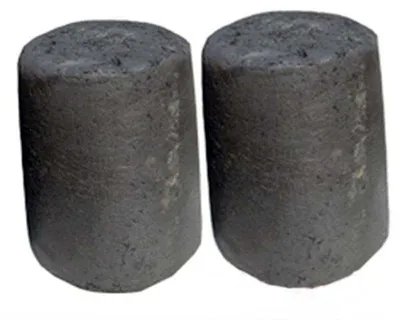
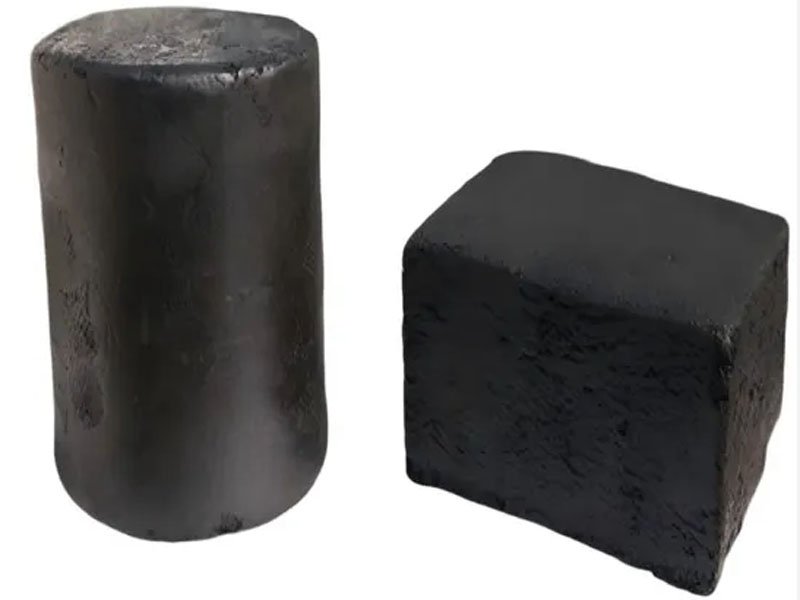
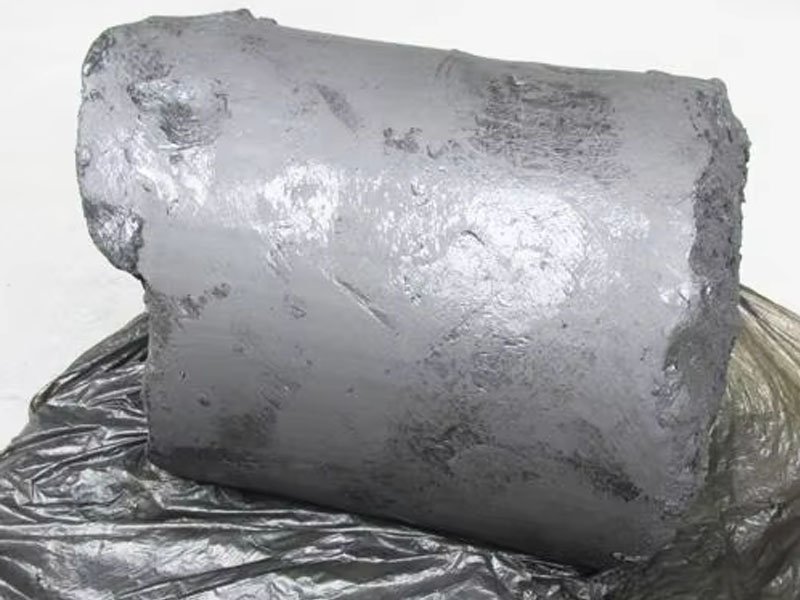
In blast furnace and ferroalloy production, taphole clay is a small consumable with a massive impact—it determines taphole stability, hot metal quality, and furnace front safety. For a ferroalloy factory like Beifang Alloy, looking only at the “unit price per kilogram” of taphole clay is a classic mistake. The true economic benchmark is the scientific “cost per ton of hot metal” (CPTHM) .
This article breaks down how to accurately calculate taphole clay CPTHM from four angles: procurement needs, industry research, procurement guide, and supplier comparison.
Before issuing an RFQ, your plant must quantify its real requirements. Different furnace volumes, taphole depths, and tapping frequencies demand completely different clay specifications.
Taphole Opening Method – Mechanical or oxygen lancing? (Oxygen-lanced tapholes require lower sintering strength)
Tapping Frequency – More than 12 taps per day? High frequency demands excellent erosion resistance
Target Taphole Depth – Example: 2.8m – 3.2m
Environmental Compliance – Smoke-free, dust-free operation required?
Key takeaway: You are not buying clay—you are buying a stable, predictable taphole lifespan. Cheap clay is expensive if it fails.
Many plants calculate only “clay consumed per plugging (kg)” – this is wrong. The scientific formula is:
Taphole Clay CPTHM (USD / ton hot metal) =
(Clay consumed per plugging (kg) × Clay unit price (USD/kg)) ÷ (Hot metal produced per tap (tons))
| Parameter | Low-Quality Clay | High-Quality Clay |
|---|---|---|
| Consumption per plugging | 4 – 6 kg | ~3 kg |
| Unit price | ~$0.35/kg | ~$0.63/kg |
| Hot metal per tap | ~200 tons | ~400 tons |
| CPTHM | 0.0088–0.0105 | $0.0047 |
Beifang Alloy’s finding: High-quality clay can cut your CPTHM by nearly 50% . And that’s before counting savings on drill bits, rods, oxygen, and labor.
To ensure your calculated CPTHM matches actual CPTHM, include these five clauses in your next contract.
Workability (Marsh value / Penetration) : Target 40–50% – too hard means excessive ramming pressure, too soft means poor plugging.
High-temperature MOR (Modulus of Rupture) : ≥ 5.0 MPa @ 800°C in nitrogen atmosphere – this is the core of erosion resistance.
Sintering behavior : Fast drying without cracking – no blowouts within 15 minutes after plugging.
Move from “payment per ton delivered” to:
Per-tap + depth-linked payment – Pay a bonus if CPTHM stays below an agreed threshold (e.g., $0.006/ton)
Penalty clause – If taphole depth remains below 2.5m for three consecutive shifts
Require the supplier to station a technician at your plant. Without proper ramming pressure and volume adjustment on-site, taphole clay is only half a product.
Suppliers fall into three categories. Here is our side-by-side comparison.
| Evaluation Metric | Type A: Local Reseller | Type B: Regional Producer | Type C: R&D-Integrated Major |
|---|---|---|---|
| Raw material control | Buys secondary materials; inconsistent particle size | Owns crushing/milling line; mostly stable | Direct sourcing of high-grade bauxite/SiC; batch-to-batch stable |
| CPTHM (Actual) | Superficially low (~$0.009+) but actually high | Medium (~$0.006 – 0.007) | Optimal (~$0.0047 – 0.0053) |
| Safety | High risk – breakout potential | Moderate | High – >98% taphole pass rate |
| Environmental | Strong tar smell; yellow smoke | Partially modified pitch | Resin-bonded – smokeless or minimal smoke |
| Fit for Beifang Alloy | ❌ Not recommended (ferroalloy furnace fluctuations are too risky) | ⚠️ Short-term only | ✅ Highly recommended |
Final recommendation for Beifang Alloy:
Given our variable furnace load and complex hot metal chemistry, Type C suppliers are the clear choice. Their per-ton price may be 10–20% higher, but the scientifically calculated CPTHM will reduce total taphole consumables cost by 15–25% annually.
Scientifically calculating taphole clay CPTHM is not a math exercise—it is a management philosophy. It transforms a ferroalloy plant from price-sensitive to value-intelligent.
Beifang Alloy is committed to transparent, scientific consumable solutions. If you are looking for high-performance taphole clay, or want us to audit your current CPTHM for free:
📧 Email: info@hnxyie.com
🌐 Website: www.beifangalloy.com
📞 Hotline: Contact us for one-on-one furnace front consulting