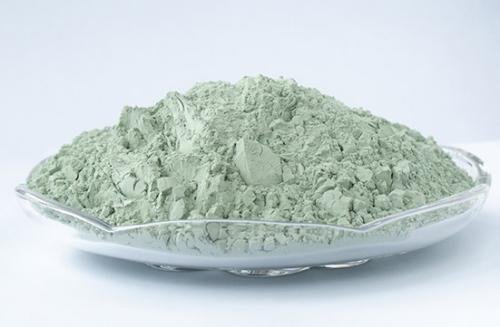
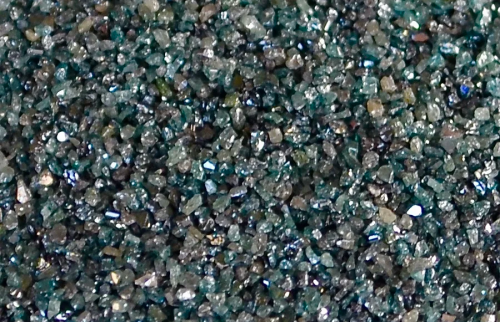
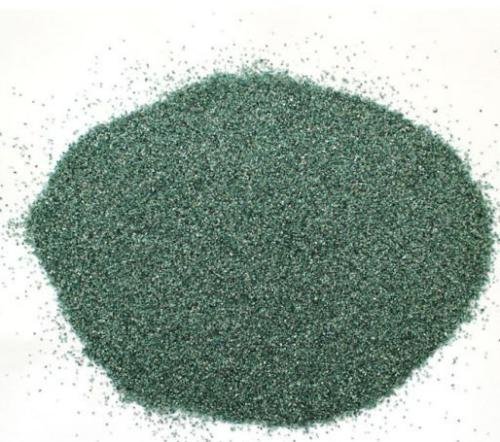
As a ferro alloy manufacturer, we understand that sourcing raw materials—whether ferroalloys or green silicon carbide—requires the same discipline: verify the process, not just the price. This guide applies our procurement philosophy to green SiC supplier evaluation.
Green silicon carbide (SiC) is not a commodity where the cheapest quote wins. A supplier that cannot control particle size distribution, impurity levels, or batch consistency will quietly erode your downstream yield, regardless of how attractive the per-ton price appears. For buyers in abrasives, refractories, ceramics, or semiconductor-adjacent applications, the difference between a professional supplier and a trading intermediary becomes visible only after the first production run—or the first rejected batch.
This article breaks down supplier evaluation across four dimensions: procurement needs definition, industry research, procurement guide, and supplier comparison. The goal is a repeatable framework, not a one-time checklist.
Most sourcing failures begin with an incomplete specification. Green SiC is available across a wide spectrum of purity, grit size, and surface treatment, and each variable carries a cost premium that may be unnecessary for your application.
Green SiC purity is typically expressed as SiC content, but the critical differentiators are the impurity profiles: free carbon, free silicon, iron oxide (Fe₂O₃), and magnetic substances. For general abrasive blasting or refractory use, SiC ≥ 98.5% is often sufficient. For precision lapping, optical polishing, or semiconductor-adjacent applications, SiC ≥ 99.5% and Fe₂O₃ below 0.1%—sometimes in the ppm range—become mandatory . A supplier quoting “high purity” without a COA listing individual impurities is not providing actionable data.
Two suppliers can both claim “F240” and deliver materially different products. The relevant metrics are D50 (median particle size) and span (distribution width). A narrow distribution with controlled maximum particle size is essential for precision polishing; a single oversized particle can scratch a wafer or optical surface and scrap the workpiece . For procurement, specify the standard (FEPA, JIS, or ANSI), the acceptable D50 tolerance, and whether the supplier performs post-classification “shaping” or “grading” to tighten the distribution.
| Application | Critical Parameters | Supplier Capability Required |
|---|---|---|
| Abrasive blasting / general grinding | SiC ≥ 98.5%, sharp angular morphology | Basic crushing and screening |
| Precision lapping / optical polishing | SiC ≥ 99%, narrow PSD, low Fe | Fine classification, acid washing, possible surface treatment |
| Refractory / metallurgical | SiC ≥ 98%, controlled free carbon | Consistent fusion and grading |
| Semiconductor / electronics-adjacent | SiC ≥ 99.5%, ppm-level Fe, magnetic content control | Full traceability, advanced classification, clean packaging |
Action item: Write a one-page internal specification before requesting quotes. Include rejection criteria for SiC content, Fe₂O₃, D50 tolerance, maximum particle size, and moisture. Suppliers who cannot respond to specific numbers are not professional suppliers.
The green SiC supply chain includes integrated producers (raw material to finished powder), semi-integrated processors (purchasing crude SiC and performing classification), and pure trading companies. Each has a legitimate role, but the quality risk profile differs sharply.
An integrated producer controls the electric resistance furnace process, where silica sand and petroleum coke are fused at approximately 2200°C . This control matters because green SiC color and purity originate in the furnace, not in post-processing. A trader sourcing from multiple furnaces and blending batches introduces variability that may not appear in a single COA.
That said, many professional suppliers are not fully integrated but specialize in classification and quality control—purchasing crude green SiC ingot and executing crushing, shaping, acid washing, and water classification to tight specifications . The key question is not “do you own a furnace?” but “do you control the process that determines my specification?” A supplier that outsources classification and simply repackages purchased powder should be evaluated as a trader.
Green SiC production is concentrated in regions with access to low-cost electricity and raw materials. For international buyers, logistics considerations include:
Port proximity for containerized export
Packaging integrity for fine powders (moisture-sensitive)
Consistency across shipments, which is easier to maintain from a single production site than from multiple blended sources
A supplier located near a major port but far from the production base may be a trader with limited technical control. Conversely, an inland producer with no export experience may offer competitive pricing but introduce documentation and shipping delays.
Green SiC sits at a higher price point than black SiC—typically 2–3x per ton—because of higher-purity raw materials and lower production volumes . It is specified where its greater friability (fresh cutting edges) and lower impurity content justify the premium. Suppliers that market green SiC as a drop-in replacement for black SiC without discussing application trade-offs are signaling limited technical understanding.
The following sequence moves from low-cost verification to high-cost validation. Each step filters suppliers before investing time in sampling and audits.
Request the following from every candidate supplier:
COA (Certificate of Analysis) for a recent production batch, showing SiC%, free carbon, Fe₂O₃, and particle size distribution (D10, D50, D90, and maximum particle size).
Quality management certification (ISO 9001 at minimum; ISO 14001 or IATF 16949 if applicable to your industry).
Production process description—specifically, which steps are performed in-house versus outsourced.
Reference customers in applications similar to yours (not just “we supply many companies”).
Suppliers who cannot provide a COA with actual measured values, or who provide only a generic specification sheet, should be deprioritized.
A professional supplier’s technical representative should be able to answer:
“What is the maximum particle size guarantee for this grade?”
“How do you control iron contamination during crushing and classification?”
“What is your batch-to-batch D50 variability?”
“Do you recommend any surface treatment for my application?”
Responses that consist of marketing language rather than process specifics indicate a supplier without production control. Ask for the name and role of the person providing technical answers; if it is a salesperson without production or lab background, request a technical contact.
Request samples from at least two production batches, not a single “golden sample.” Test or have tested:
Chemical composition via XRF or wet chemistry (verify COA accuracy)
Particle size distribution via laser diffraction or sedimentation
Visual and tactile inspection: uniform green color, no visible black or gray particles (indicating black SiC contamination), no grit feeling for fine grades
Water settling test: mix a small sample in water; clear supernatant indicates low fine/impurity content, while persistent turbidity suggests poor classification
For critical applications, send samples to a third-party lab. The cost of testing is trivial compared to a rejected production batch.
For long-term supply relationships, verify the supplier’s claims. If an on-site audit is impractical, request:
Photos or video of the production line (classification equipment, acid washing, drying)
Batch traceability records showing raw material source and production date
Third-party inspection report from a recognized firm, if available
A supplier that resists even remote verification of its production process is a trading intermediary, which may be acceptable for spot purchases but is a risk for critical supply.
Use the following framework to compare shortlisted suppliers objectively. Assign weights based on your application’s risk profile. The scoring example below is illustrative; adjust to your priorities.
| Criterion | Weight | What to Verify | Red Flag | Score (1–5) |
|---|---|---|---|---|
| Purity control | 25% | COA matches sample test; individual impurities reported; consistency across batches | Only SiC% reported; “typical” values without batch data | |
| Particle size control | 25% | D50 tolerance stated; maximum particle size guaranteed; narrow span; classification method described | “Meets FEPA” without PSD curve; no maximum size commitment | |
| Production control | 20% | In-house classification and washing; process description matches product requirements | Cannot explain how iron is controlled; outsources all processing | |
| Batch consistency | 15% | Data from multiple batches; low D50 variability; documented change control | Only one batch COA available; no batch numbering system | |
| Technical support | 10% | Responsive technical contact; application-specific recommendations; willingness to discuss trade-offs | Sales-only contact; generic answers; no application questions asked | |
| Commercial and logistics | 5% | Clear lead times; packaging suitable for export; incoterms and documentation experience | Vague lead times; no export references; packaging not specified |
Interpretation: A score below 3 in purity or particle size control is disqualifying for precision applications, regardless of price. For general abrasive use, a supplier strong in production control and batch consistency may be acceptable even with a narrower product range.
A professional green silicon carbide supplier does not distinguish itself through a catalog or a website. It distinguishes itself by being able to explain, with specifics, how it controls the variables that matter to your application—purity, particle size, and batch consistency. It provides COAs with real data, welcomes sample testing against its own specifications, and can describe its production process without deflecting to “our factory” or “our partner.”
For buyers at ferro alloy companies and industrial material purchasers, this framework should feel familiar. Whether evaluating a supplier of ferrosilicon, ferrochrome, or green silicon carbide, the discipline is the same: define the specification, verify the process, test the product, and compare against weighted criteria rather than unit price alone.
Beifang Alloy supplies ferroalloys and related industrial materials with full documentation and traceability. For inquiries: info@hnxyie.com | www.beifangalloy.com