In steelmaking, the choice of deoxidizer directly impacts molten steel quality and production costs. A common question among procurement professionals is: Si-Ca-Mn and Si-Ca deoxidizers offer similar desulfurization performance—so why does Si-Ca-Mn deliver better overall value?
This article breaks down the answer from four key perspectives: Procurement Needs, Industry Research, Procurement Guide, and Supplier Comparison.
When steel mills source deoxidizers, they look beyond just the “desulfurization rate.” The deeper, more practical requirements include:
Stable deoxidation performance — Can oxygen content in molten steel be consistently controlled within target ranges?
Impact on molten steel fluidity — Does it cause nozzle clogging during continuous casting?
Comprehensive cost per ton of steel — Not the unit price alone, but the actual cost consumed per ton of steel produced.
Ease of operation and safety — Does it generate excessive fumes, flare, or pose handling risks?
Potential to replace more expensive materials — Can it reduce the usage of silicomanganese, silicon-aluminum-barium-calcium, or other alloys?
Si-Ca deoxidizer (e.g., CaSi30) is a traditional strong deoxidizer. Its calcium-silicon synergy delivers excellent deoxidation, but it comes with a higher price tag. Calcium is also chemically active, prone to oxidation and moisture absorption, requiring stricter storage and transport conditions.
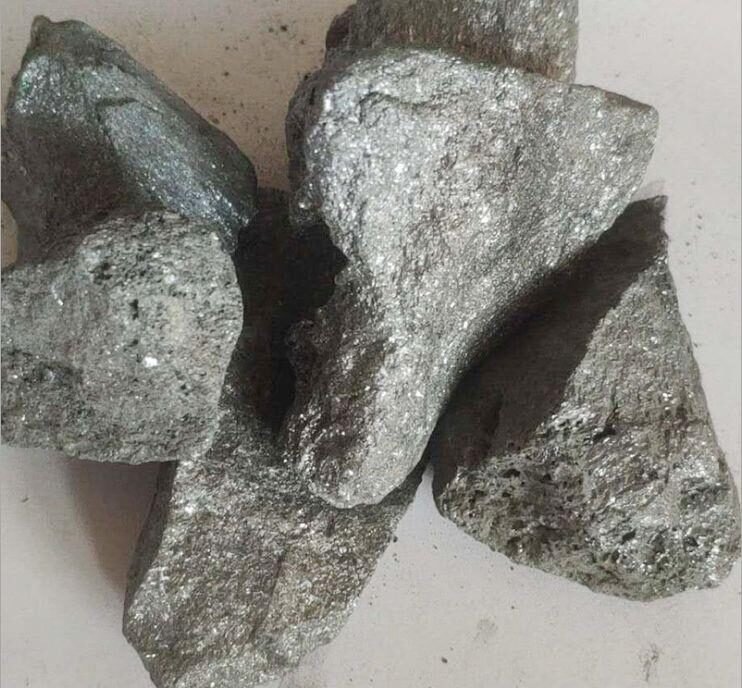
Si-Ca-Mn deoxidizer, on the other hand, retains strong deoxidation and desulfurization capabilities while introducing manganese—an added value that is often overlooked but makes a significant cost difference.
Industry practice shows that the core advantage of Si-Ca-Mn deoxidizer lies not only in deoxidation and desulfurization, but in its multi-functional synergy that drives comprehensive cost savings.
From a metallurgical standpoint, both Si-Ca and Si-Ca-Mn rely primarily on calcium for desulfurization—calcium has a strong affinity for sulfur, forming stable CaS that floats up and is removed. As long as the calcium content is comparable, the desulfurization efficiency of the two products is essentially similar.
The extra value of Si-Ca-Mn deoxidizer comes from the following aspects:
Manganese addition reduces silicomanganese alloy consumption — Manganese is an essential alloying element in steel. By using Si-Ca-Mn, you simultaneously increase the manganese content in the molten steel, reducing the need for separate silicomanganese additions. This translates into direct cost savings.
Lower and more concentrated melting point — Si-Ca-Mn has a melting range of approximately 1100–1160°C, more concentrated than Si-Ca (1000–1240°C). It melts quickly and disperses evenly in molten steel, shortening refining time and reducing power consumption.
Improved fluidity, fewer nozzle blockages — Unlike aluminum-based deoxidizers, Si-Ca-Mn does not produce high-melting-point Al₂O₃ inclusions, significantly reducing the risk of clogging in continuous casting nozzles.
Significant reduction in comprehensive cost per ton — Industry data shows that using Si-Ca-Mn can lower comprehensive costs by USD 3–5 per ton of steel, and in some cases up to USD 30–45 per ton, primarily from savings in silicomanganese, ferrosilicon, and other alloy substitutions.
The global deoxidizer market is valued at approximately USD 21.5 billion in 2025 and is projected to reach USD 31.2 billion by 2032. The demand for multi-functional composite deoxidizers is growing rapidly, as steelmakers increasingly favor “one-product, multiple-benefits” solutions.
Based on the analysis above, here are key considerations when selecting a deoxidizer:
For high-cleanliness steel grades, both products meet final deoxidation requirements.
If you aim to supplement manganese while deoxidizing and reduce silicomanganese usage, Si-Ca-Mn is the better choice.
For continuous casting processes, Si-Ca-Mn’s fluidity improvement gives it a clear edge.
Comparing unit prices alone is misleading. Always calculate comprehensive cost per ton of steel:
Si-Ca-Mn Cost Formula:
(Si-Ca-Mn unit price × consumption per ton) + (savings from reduced silicomanganese + ferrosilicon + other alloys + reduced power consumption)vs.
(Si-Ca unit price × consumption per ton)
Actual case studies show that Si-Ca-Mn consumption averages 1.2–2.5 kg per ton of steel, and when replacing silicon-aluminum-barium-calcium products, the overall economic benefit is substantial.
Request detailed Certificates of Analysis (COA) from suppliers to verify stable calcium, silicon, and manganese content.
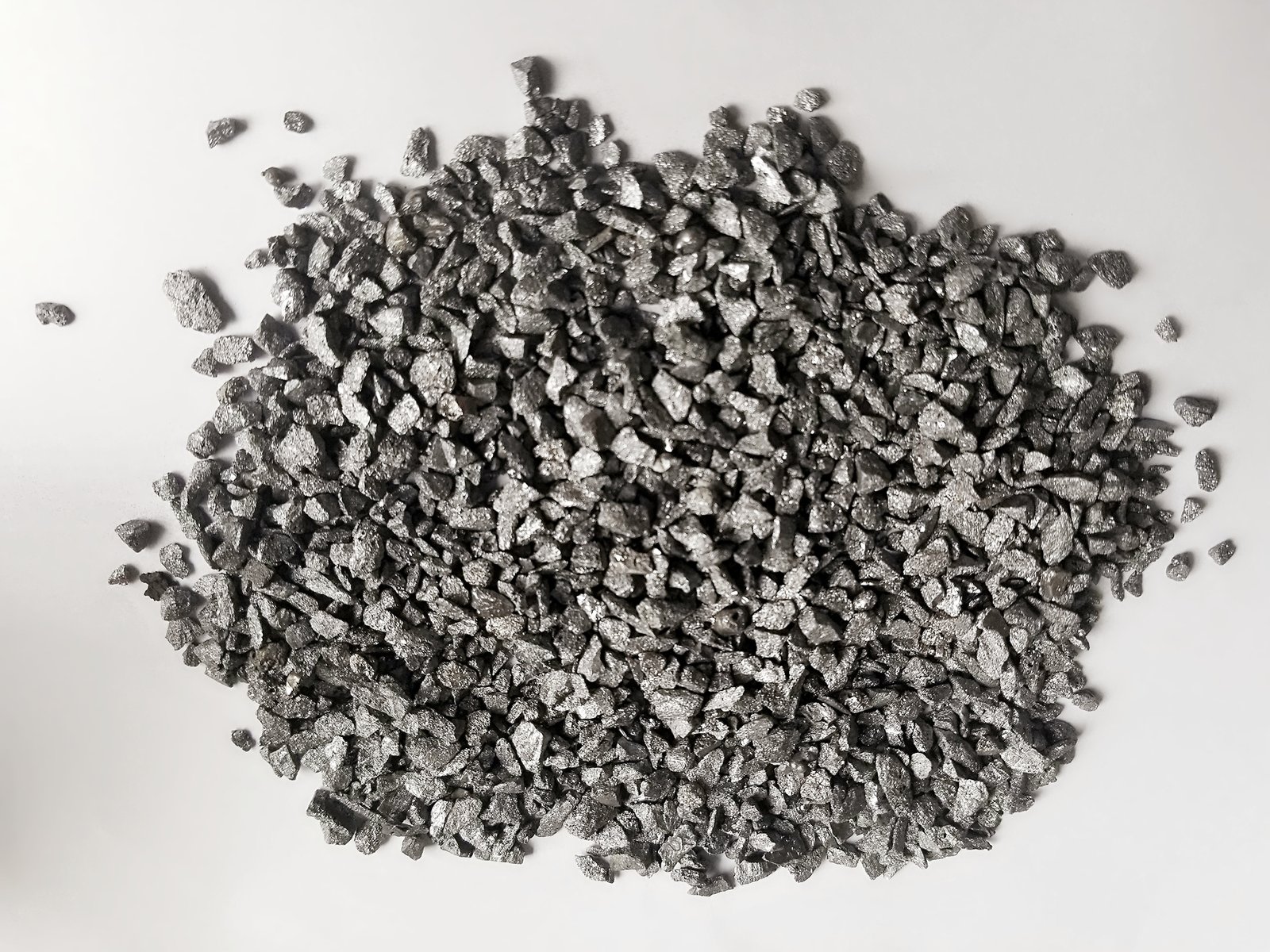
Check particle size (industry standard: 5–80mm or 10–50mm) to match your process requirements.
Verify the supplier’s production qualifications and track record—large steel mills typically require a minimum registered capital of USD 2.8 million or equivalent.
As a specialized ferroalloy manufacturer, Beifang Alloy (www.beifangalloy.com) brings extensive customization experience to the deoxidizer market.
Produces a wide range of deoxidizers: Si-Ca-Mn, Si-Ca, Si-Ca-Ba, Si-Al-Ca, and more.
Offers “one-mill, one-formula” customization—tailoring compositions based on your steel grades, refining processes, and raw material conditions.
Provides alloy dry-pressed briquettes—mixing multiple alloys per your specifications and pressing them into briquettes for direct feeding into furnaces.
Beifang Alloy follows a complete service chain:
| Stage | Description |
|---|---|
| Procurement Needs Analysis | Understand steel grades, refining processes, and material conditions |
| Industry Research | Analyze market trends, technical standards, and competitor products |
| Formula Design | Determine optimal Si/Ca/Mn ratios for your specific application |
| Quality Control | Industry-standard particle sizes (10–50mm), full COA documentation provided |
| Logistics & Delivery | Delivery within 15 days as per mill requirements |
Beifang Alloy products have been used for years by major steel producers including Egang, Zhongtie, and Magang, where they are recognized as an “ideal substitute” for traditional deoxidizers in terms of deoxidation and desulfurization performance.
Si-Ca-Mn and Si-Ca deoxidizers are comparable in desulfurization capability, but Si-Ca-Mn delivers superior cost-effectiveness through:
Multi-functionality — Deoxidation + desulfurization + manganese supplementation, reducing silicomanganese usage.
Better process compatibility — Lower melting point, faster melting, improved fluidity, shorter refining time, and lower power consumption.
Lower comprehensive cost per ton — Industry data shows savings of USD 3–5 per ton of steel, with even higher potential in optimized applications.
For steelmakers seeking cost-reduction and efficiency-improvement solutions, Si-Ca-Mn deoxidizer is a compelling option worth serious evaluation. For product specifications, samples, or technical consultation, please contact the Beifang Alloy team.
Beifang Alloy
Website: www.beifangalloy.com
Email: info@hnxyie.com
A professional ferroalloy manufacturer, dedicated to providing customized deoxidizer solutions for steel mills worldwide.